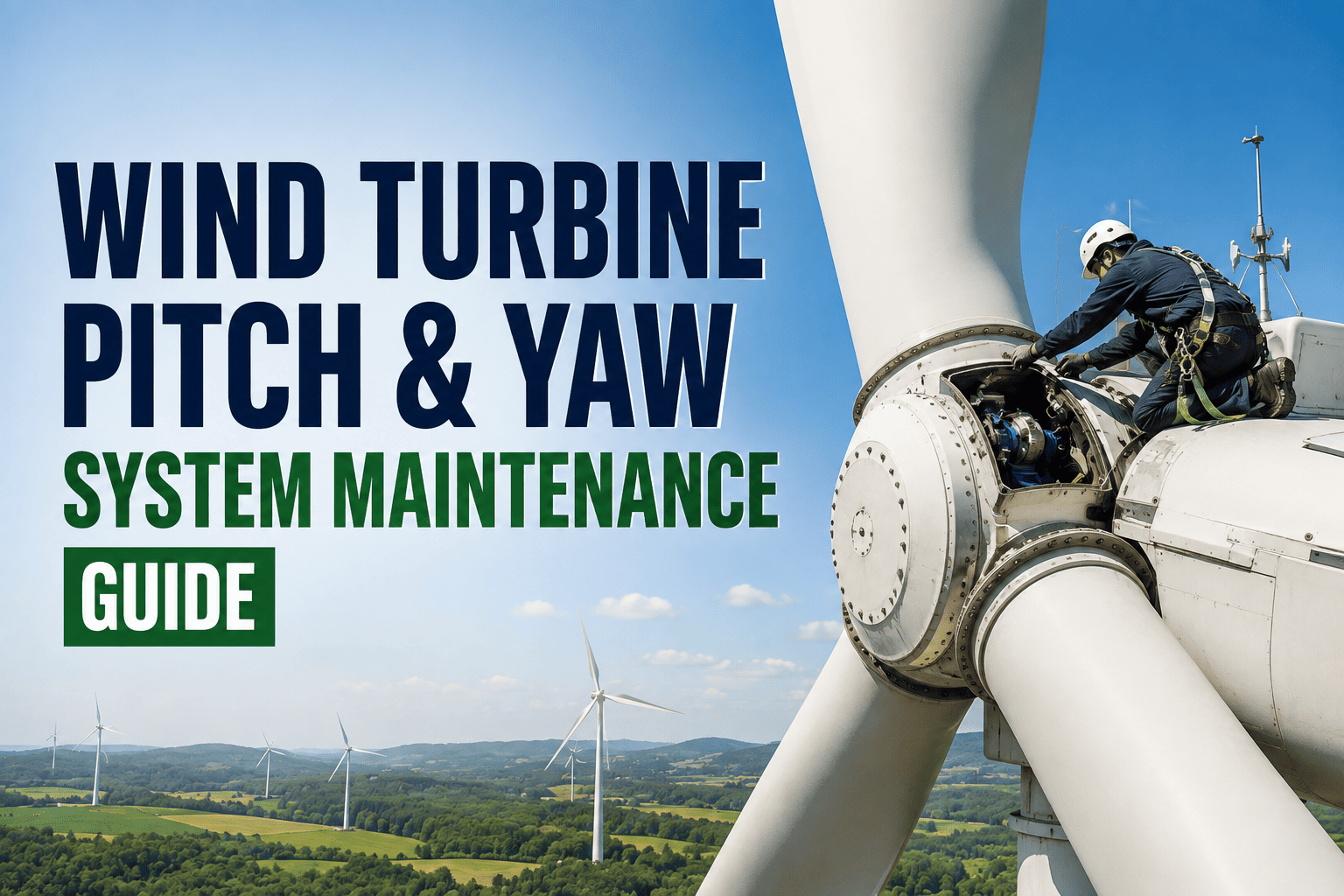
Every wind turbine makes two decisions constantly: how far to twist each blade into the wind, and which way to point the whole nacelle. The pitch system handles the first, the yaw system handles the second, and together they decide how much energy actually gets captured and how much stress the drivetrain absorbs while doing it. Both run on hydraulics, motors, gearboxes, and bearings that wear quietly for years before a fault finally shows up on a report. Sign up to log every pitch and yaw finding against a real service history instead of scattered technician notes.
Why It Matters
A yaw system that drifts a few degrees off the wind loses annual energy production without ever tripping an alarm. A pitch system that responds slowly during a gust is a safety system, not a comfort feature, since it's what feathers the blades to prevent overspeed. Neither fault is visible from the ground.
Where Pitch And Yaw Systems Actually Fail
| Component |
Common Fault |
Consequence |
| Pitch Bearing |
Grease starvation, raceway wear, bolt loosening |
Increased play and slower blade response under load |
| Hydraulic Pitch Unit |
Cylinder seal leaks, accumulator pressure loss |
Delayed feathering during an overspeed event |
| Electric Pitch Backup Power |
Battery or capacitor capacity fade |
Emergency feather may not complete on grid loss |
| Yaw Drive & Gearbox |
Oil contamination, gear tooth wear, motor overheating |
Slower or uneven nacelle rotation into the wind |
| Yaw Bearing & Cable Twist |
Ring bearing backlash, unmonitored cable twist count |
Chronic yaw error or a forced untwist shutdown |
Hydraulic, Electric, Drive, And Bearing: What Each System Needs
Hydraulic Pitch System
Central hydraulic power unit drives all three blades through cylinders, so accumulator precharge and fluid cleanliness need checking every cycle
Electric Pitch System
Independent motor per blade with a battery or capacitor backup, so backup power capacity testing matters as much as the motor itself
Yaw Drive & Gearbox
Multiple motor-gearbox units turn the nacelle together, so oil condition and brake pad wear need tracking per unit, not as an average
Yaw Bearing & Sensor
Wind vane sensor tells the yaw system where to point, so sensor drift is checked alongside bearing bolt torque and backlash
Track Pitch And Yaw Findings Against One History
Oxmaint logs hydraulic pressure checks, yaw bearing torque records, and cable twist counts against each turbine's history, so faults get scheduled by risk instead of sitting in an inspection log. Sign up for a free trial to start tracking your fleet, or book a demo to see it configured for your turbines.
Building A Pitch And Yaw Maintenance Program
Check Hydraulic Pressure And Accumulator Precharge
A pitch system that can't reach full stroke on demand is the slowest overspeed protection on the turbine
Torque-Check Pitch And Yaw Bearing Bolts On Schedule
Loosened bolts show up as backlash long before they show up as a failure, so torque checks catch it early
Monitor Yaw Error And Cable Twist Remotely
Persistent yaw error quietly erodes energy capture, and an unmonitored cable twist count ends in a forced shutdown
4
Regrease On Condition, Not Just A Fixed Calendar Date
Pitch and yaw bearings under heavy cyclical loads at coastal or high-turbulence sites need shorter intervals than the OEM default
How Yaw Misalignment Compounds Unrepaired
Sensor Drift Begins
Wind vane reading starts to lag reality
Yaw Error Persists
Nacelle sits a few degrees off the wind
AEP Loss Compounds
Energy capture drops without any alarm
Chronic Load On Drivetrain
Yaw drive and bearing take extra fatigue cycles
A small yaw error is a calibration fix that takes minutes. Left unmonitored, the same error becomes a fatigue problem across the yaw drive, gearbox, and bearing, and those repairs mean a crane and days of downtime instead of a technician and an afternoon.
The Payoff
Turbines with tracked pitch and yaw histories catch bearing backlash and sensor drift as a calibration visit. Turbines running on a fixed calendar schedule usually catch the same fault as a gearbox or bearing replacement. The difference is whether someone was watching the trend before it became a failure.
Frequently Asked Questions
Q
How often should pitch and yaw systems be inspected?
A full inspection once or twice a year is typical, alongside remote monitoring of hydraulic pressure, yaw error, and cable twist between visits. Turbines at high-turbulence or coastal sites usually need shorter intervals for bearing regreasing and bolt torque checks.
Q
What's the difference between hydraulic and electric pitch systems?
Hydraulic pitch systems use one central power unit and accumulator to drive all three blades through cylinders, while electric systems use an independent motor per blade with its own battery or capacitor backup. Hydraulic units need fluid and pressure checks; electric units need backup power capacity testing.
Q
Why does cable twist matter for yaw systems?
The nacelle can yaw many turns in the same direction over time, which twists the power and control cables running down the tower. Left untracked, the twist count hits its limit and forces an automatic shutdown until a technician manually unwinds it, costing unplanned downtime.
Give Every Pitch And Yaw Fault A Repair Priority
Oxmaint logs hydraulic checks, bearing torque records, yaw error trends, and cable twist counts against each turbine's history, so faults get scheduled by risk instead of filed away. Sign up for a free trial to bring your pitch and yaw inspections online, or book a demo to see it configured for your fleet.