An operator licence is not a permit you obtain once. It is a set of promises you repeat every single day, and the traffic commissioner will judge you on the evidence that you kept them. Most operators who end up at a public inquiry did not set out to run unroadworthy vehicles; they simply let inspection intervals drift, allowed driver defect reports to go unanswered, and discovered too late that fifteen months of records told a story they could not defend. Roadworthiness is a paperwork discipline as much as a workshop one. OxMaint maintenance management software keeps PMI schedules, driver walkaround defects, brake tests and rectification records in one auditable system. Start a free OxMaint trial or book a 30-minute demo to see your fleet's compliance position live.
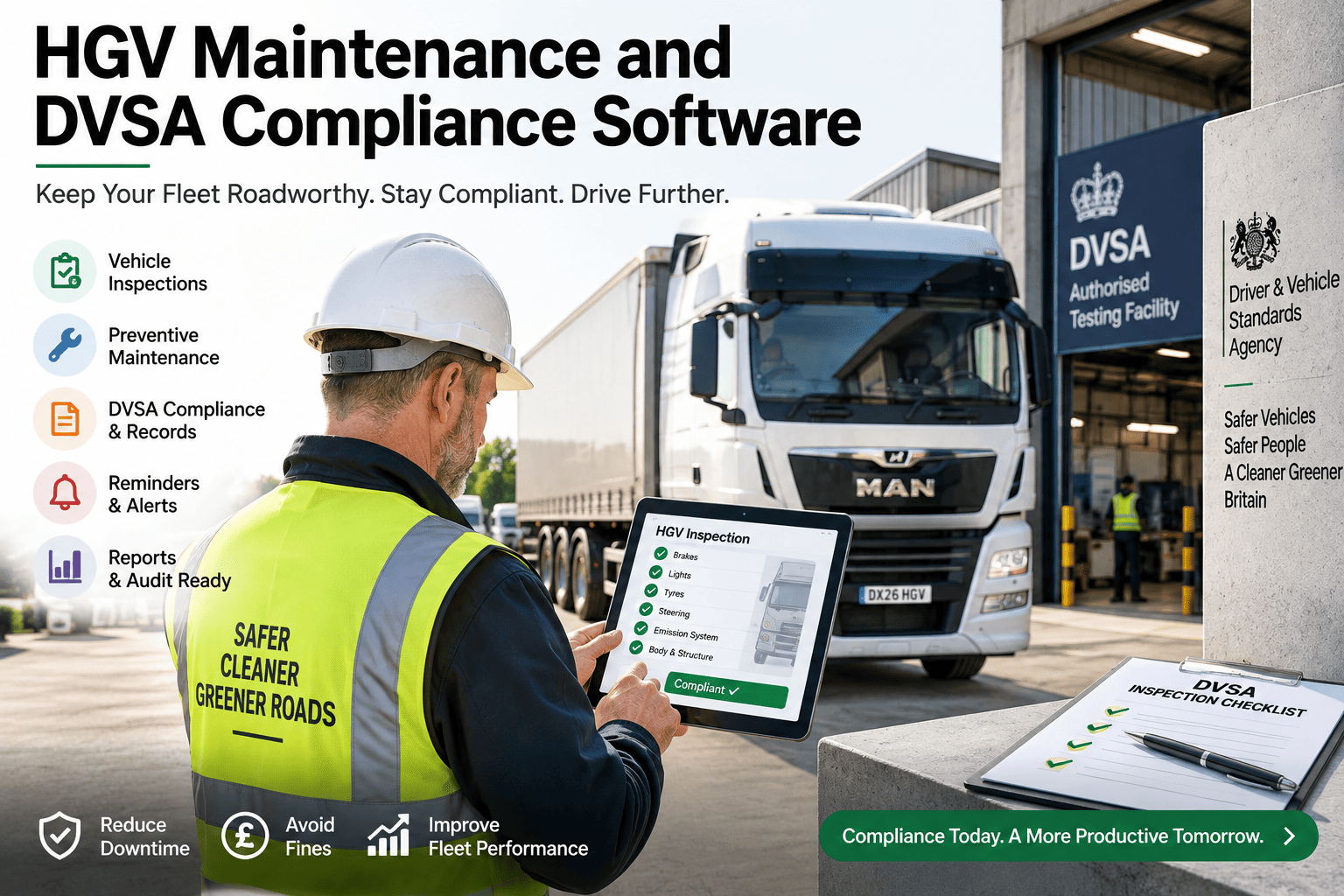
HGV Maintenance and DVSA Compliance Software
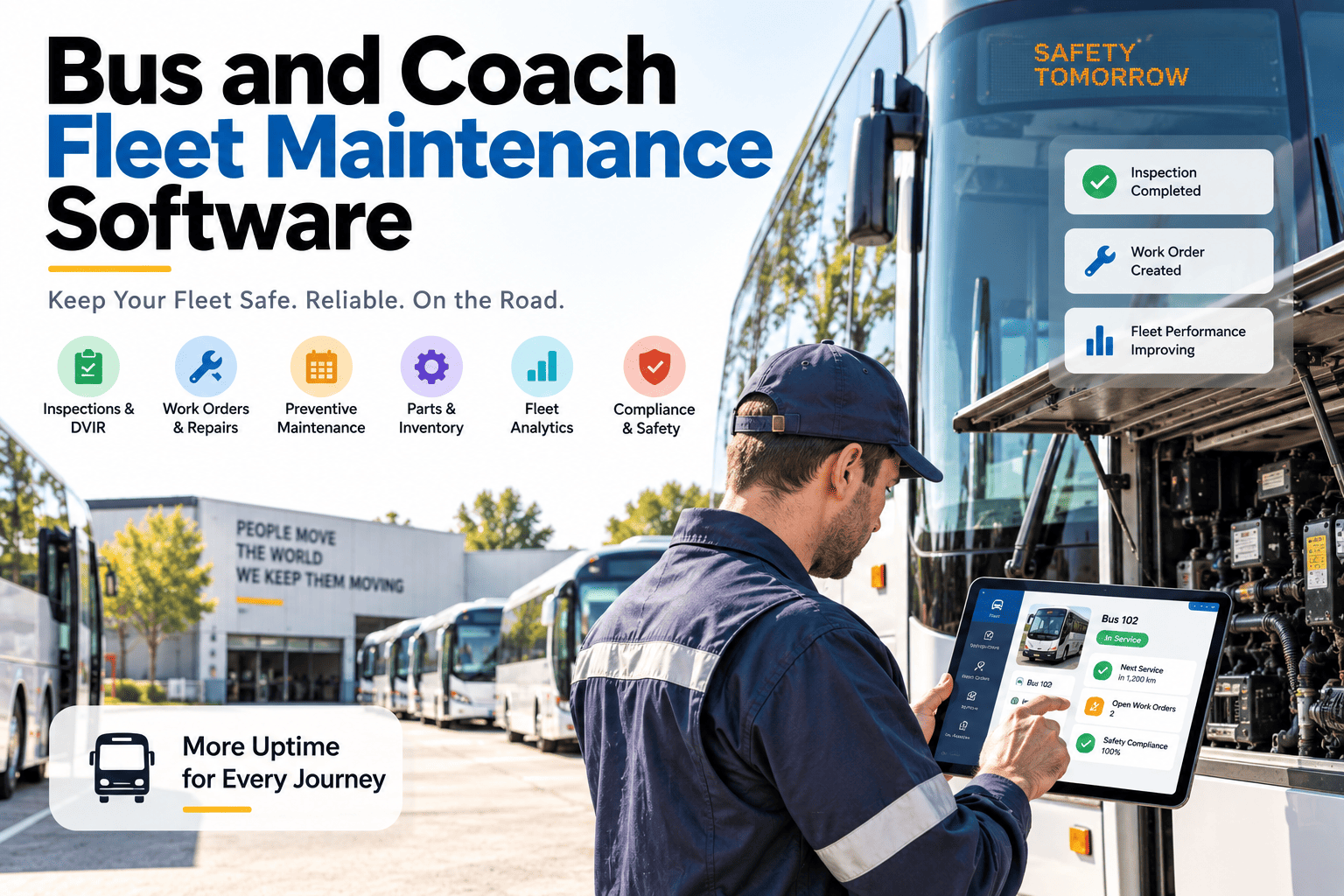
Schedule safety inspections by interval or mileage, capture driver walkaround checks on a phone, track every defect through to rectification, and hold fifteen months of DVSA-ready records for every vehicle and trailer in the fleet.
What You Promised When the Licence Was Granted
Every operator licence carries a set of undertakings, and the roadworthiness ones are the most frequently tested. They commit you to keeping vehicles and trailers fit and serviceable, to having drivers report defects in writing, to keeping defect and rectification records for fifteen months and producing them on request, and to inspecting vehicles at stated intervals. These are not aspirations. A traffic commissioner treats them as conditions of trust, and the standard applied is documentary: what does the paperwork show? An operator with a spotless workshop and a chaotic filing system is in a materially worse position than one with an ordinary workshop and an immaculate record. The four commitments below are where almost every compliance investigation begins.
Setting an Interval That Reflects How the Vehicle Actually Works
A single fleet-wide inspection frequency is easy to administer and almost always wrong. A tipper working a quarry, a fridge trailer on continental trunking and a light rigid doing urban multi-drop wear at entirely different rates, and the guidance expects the interval to reflect operating conditions, mileage, age and vehicle type. Intervals should also be reviewed as the fleet ages or the work changes, rather than being set once at licence application and never revisited. The table below shows how operators commonly structure this. OxMaint holds the interval per vehicle, generates the inspection ahead of the due date, and flags any vehicle approaching or exceeding its window.
| Operation type | Typical PMI interval | Primary driver of wear | Additional scrutiny |
|---|---|---|---|
| Long-haul trunking, newer fleet | Longer interval, high mileage per cycle | Mileage and component life | Tyre wear, brake lining trend, tachograph checks |
| Urban multi-drop and distribution | Mid-range interval | Stop-start braking, low-speed damage | Bodywork, mirrors, brake adjustment |
| Tipper, plant and off-road work | Shorter interval | Contamination, suspension and chassis stress | Body security, tipping gear, chassis corrosion |
| Refuse and municipal | Short interval, often mileage-independent | Duty cycle and hydraulic load | Bin lift, hydraulics, reversing aids |
| Trailers, including spot-hired | Own interval, tracked separately | Brakes, couplings, lighting, floor condition | EBS data, coupling wear, annual test history |
| Older vehicles approaching replacement | Shortened as age increases | Cumulative wear and corrosion | Brake performance, emissions, structural checks |
| Temperature-controlled units | Vehicle interval plus fridge service cycle | Continuous auxiliary engine running | Fridge run hours, refrigerant records |
Whatever interval you choose, the inspection itself must cover the full statutory list, be carried out by a competent person, and produce a signed sheet showing every item checked, the result, any defect found and the rectification. A sheet with blank columns is treated as an inspection that did not happen properly, so completeness matters as much as frequency.
OxMaint tracks every vehicle and trailer against its own interval, raises the inspection before it is due, blocks the record from closing while items are incomplete, and keeps fifteen months of signed evidence retrievable by vehicle, date or defect type in seconds.
From Walkaround to Rectification Without a Broken Link
The driver defect reporting system is the part of roadworthiness that operates furthest from the transport office, and it is where the most damaging gaps appear. A robust chain has five links, and an investigator will test every one of them by picking a defect at random and asking you to walk them through what happened next.
The Area Where Evidence Most Often Falls Short
Braking performance is now the clearest single indicator of a maintenance system's quality, and it is the area where operators are most frequently found wanting. Expectations have moved decisively toward laden testing, regular assessment across the year, and analysis of results rather than filing of printouts.
Why Good Records Change How Often You Are Stopped
Enforcement is risk-based. Roadside encounters, prohibitions and annual test results feed an operator's risk score, and a poor score attracts more attention, which produces more findings, which worsens the score further. The cycle runs the other way too, and that is the commercial argument for doing this properly.
Frequently Asked Questions
Can drivers complete walkaround checks in the app?
Does it handle trailers and hired-in units separately?
What if our maintenance is done by an external provider?
How quickly can records be produced for an audit?
How long does it take to get a fleet onto the system?
Your Licence Rests on Records You Either Have or You Do Not. Build Them Automatically.
OxMaint gives UK operators per-vehicle inspection scheduling, mobile driver walkaround checks with nil defect reporting, full defect-to-rectification tracking, brake test history, parts and labour costing, and fifteen months of retrievable evidence for every vehicle and trailer. Fewer prohibitions, better test results, and a file that stands up to any audit.