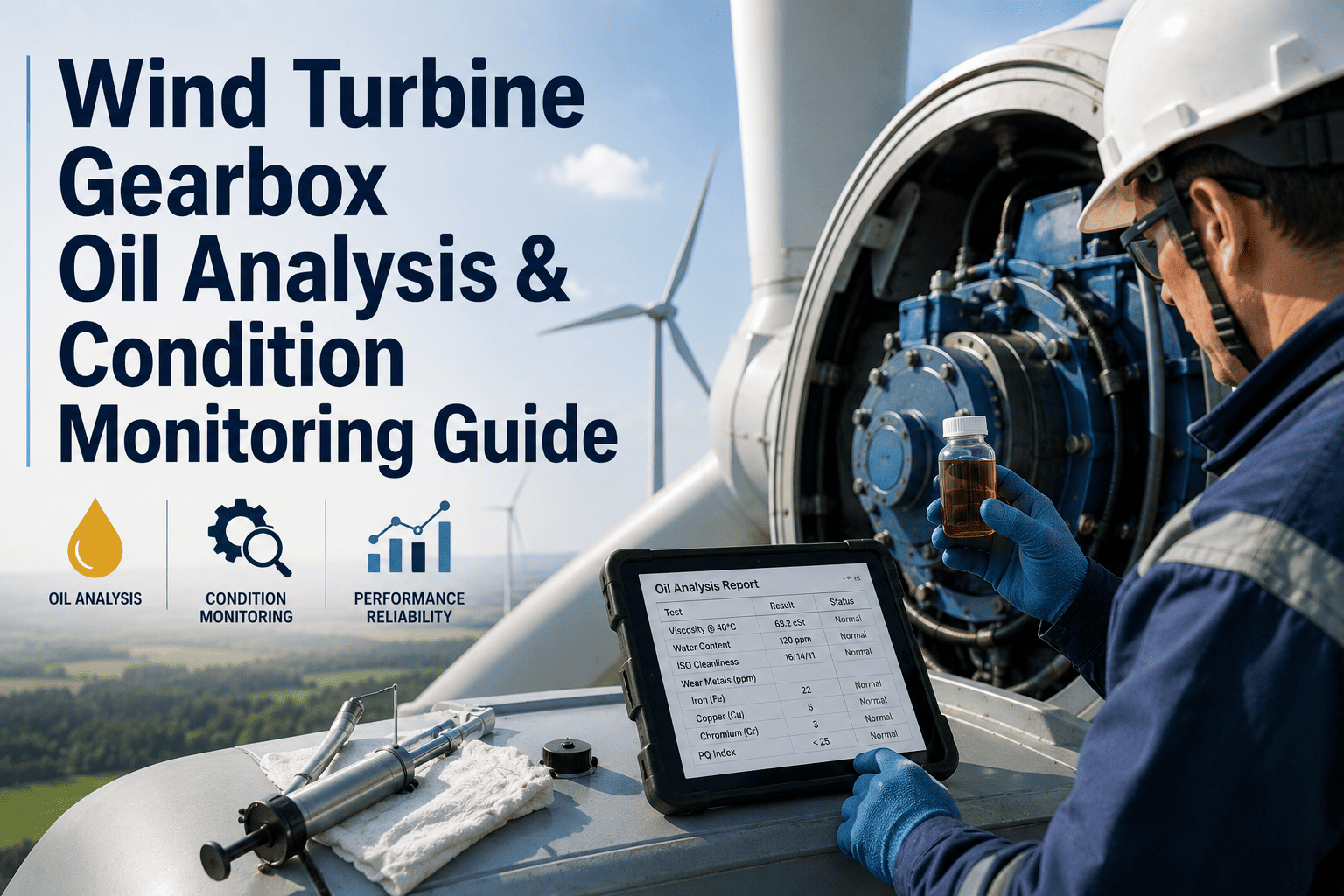
A wind turbine gearbox sits 80 meters up, sealed, and running unattended for weeks between visits. By the time a technician hears a whine or feels metal in a filter change, the gear teeth underneath have usually been wearing for months. Oil doesn't lie about what's happening inside the case, it just needs to be sampled and read before the damage shows up any other way. Sign up to log every oil sample against a turbine's own trend line instead of a one-time lab report.
Why It Matters
A gearbox replacement is one of the most expensive single line items in wind farm maintenance, often requiring a crane and weeks of downtime. Most of those failures give warning signs in the oil months in advance, in the form of rising wear metals or particle counts, long before vibration or noise become noticeable.
What Each Oil Test Actually Tells You
| Test |
What It Measures |
Warning Sign |
| Particle Count |
Oil cleanliness, reported as an ISO code across particle size ranges |
Rising codes point to contamination ingress or active internal wear |
| Wear Metals |
Dissolved metal concentrations for iron, copper, chromium and more |
A climbing trend on one metal points to a specific wearing component |
| Ferrography |
Size, shape and quantity of larger ferrous wear particles |
Cutting or fatigue-shaped particles signal active gear or bearing damage |
| Viscosity |
Oil film thickness available to separate gear and bearing surfaces |
Drift out of range weakens the film and accelerates surface wear |
| Water Content |
Moisture present in the oil, measured in parts per million |
Elevated levels drive corrosion and speed up additive depletion |
Gear Damage Modes Oil Analysis Catches Early
Micropitting
Fine surface fatigue on gear teeth, shows up as a steady rise in fine ferrous particles
Scuffing
Localized welding and tearing from film breakdown, linked to sharp viscosity drops
Spalling
Larger flakes breaking off a gear surface, seen as coarse cutting particles in ferrography
Bearing Axial Cracking
Known high-speed shaft bearing failure mode, flagged by a sharp iron spike between samples
Turn Scattered Lab Reports Into One Trend Per Turbine
Oxmaint logs every oil sample against the turbine's own history, so a rising wear metal or particle count gets flagged automatically instead of sitting in a PDF. Sign up for a free trial to start tracking your gearboxes, or book a demo to see it set up for your fleet.
Running A Gearbox Oil Sampling Program
Sample From The Same Point Every Time
A consistent sampling valve and running temperature keeps results comparable from one visit to the next instead of introducing noise
Run The Full Test Panel, Not Just Particle Count
Particle count alone misses gear-specific wear signals that spectrometry and ferrography catch, so all three belong in the same sample
Trend Results Against That Turbine's Own Baseline
A single high reading can be normal for one gearbox and abnormal for another, so the trend line matters more than the absolute number
4
Escalate To Borescope Or Vibration When Limits Are Crossed
Once oil data crosses an alarm threshold, a borescope inspection or vibration check confirms whether it's contamination or active gear damage
How A Missed Sample Turns Into A Gearbox Swap
Contamination Enters
Moisture or dirt ingress
Wear Particles Rise
Visible only in lab data
Gear Surface Damage
Micropitting or scuffing begins
Crane And Downtime
Full gearbox replacement
A gearbox doesn't announce contamination the way a leak announces itself on the ground. The oil carries that signal quietly for months, which is exactly the window a regular sampling program is built to catch.
The Payoff
Catching a wear trend at the oil-analysis stage usually means a filter change, an oil change, or a targeted inspection. Catching it later usually means a crane, a spare gearbox, and weeks of a turbine sitting idle. The lab work is the same either way, the timing is what changes the cost.
Frequently Asked Questions
Q
How often should wind turbine gearbox oil be sampled?
Most operators sample every six to twelve months as a baseline, with more frequent checks on aging gearboxes or units that have already shown an abnormal trend. Offshore turbines often sample more often given the higher cost of an unplanned crane visit.
Q
What's the difference between particle count and ferrography?
Particle count reports how many particles fall into each size range, which is good for tracking overall cleanliness. Ferrography examines the shape and composition of the larger particles directly, which is what actually identifies the type of gear or bearing damage in progress.
Q
Can oil analysis actually predict a gearbox failure in advance?
It can't predict an exact failure date, but a rising wear metal or particle trend reliably shows that damage is progressing well before it would be audible or visible. That window is usually enough time to plan a repair instead of reacting to an unplanned shutdown.
Catch Gearbox Wear Before It Becomes A Crane Job
Oxmaint tracks every oil sample, wear metal reading, and inspection against each turbine's own history, so a bad trend gets flagged automatically. Sign up for a free trial to bring your gearbox monitoring online, or book a demo to see it set up for your fleet.