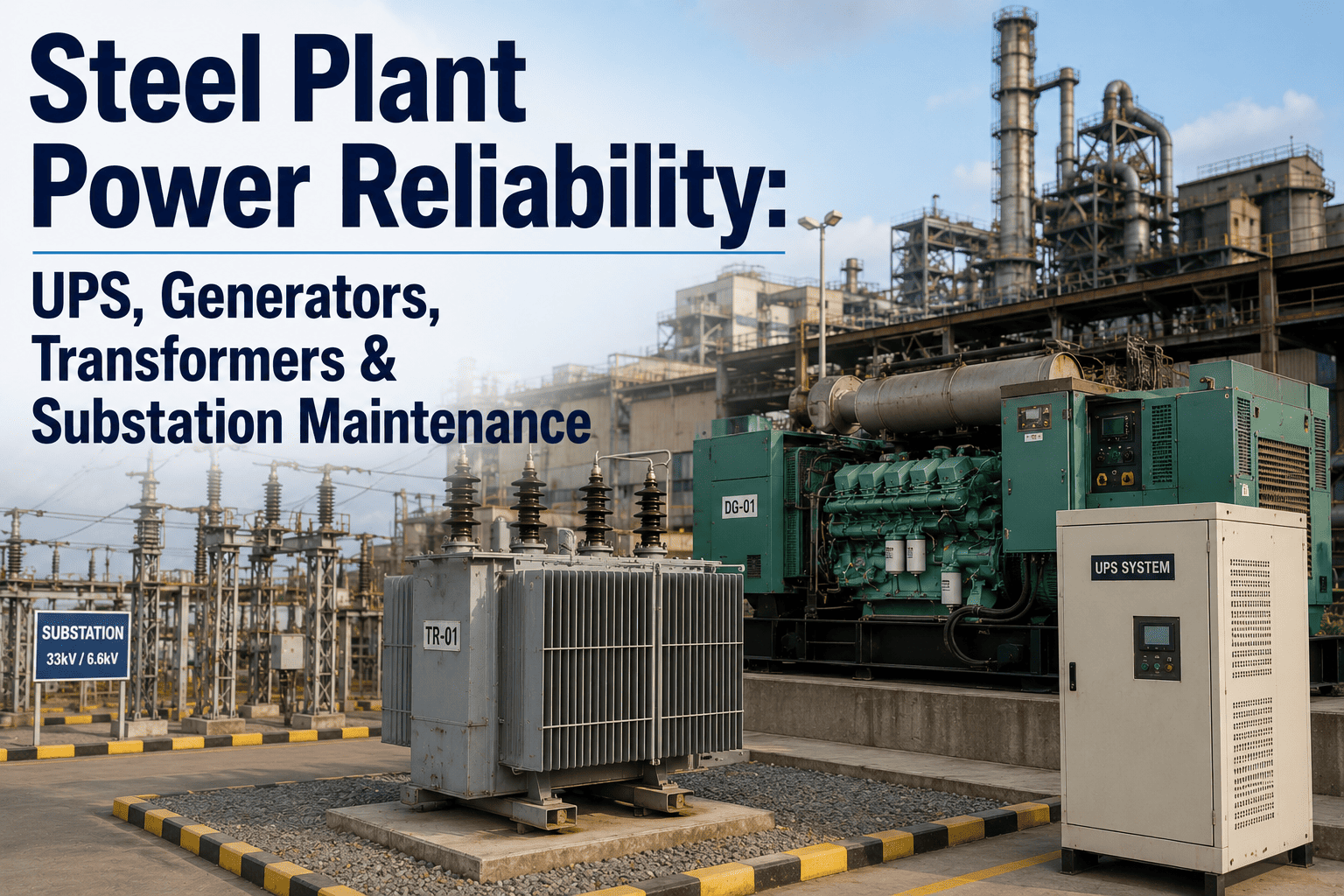
A transformer doesn't give much warning before it fails, it runs quietly for years, then goes from fine to catastrophic in a matter of hours once internal arcing starts. Electrical assets don't wear the same way mechanical ones do, and treating them with the same maintenance logic is how a plant ends up with an outage nobody saw coming. Sign up to see how Oxmaint tracks the specific signals that actually predict electrical failure.
Weeks to Months
Typical early warning window dissolved gas analysis can give before a transformer fault becomes critical
3-5 Years
Typical service life of standard UPS batteries before capacity drops meaningfully
Monthly
Common frequency for backup generator load testing to confirm real-world start reliability
Minutes
How quickly a substation hot spot found by thermal imaging can be scheduled for repair before it fails
Why Electrical Assets Fail Differently Than Mechanical Ones
A bearing gives you vibration and noise on the way out. A transformer or switchgear cabinet can look and sound completely normal right up until an internal fault develops, and once it does, the failure is fast and often severe. That's why electrical maintenance depends on specialized signals, dissolved gas analysis, thermal imaging, insulation resistance, rather than the visual and audible inspection that works fine for a motor or pump.
Four Critical Assets and What Actually Needs Monitoring
| Asset |
Key Monitoring Method |
What It Catches |
| Power transformers |
Dissolved gas analysis and oil temperature trending |
Internal arcing, overheating, and insulation breakdown |
| UPS systems |
Battery capacity testing and runtime verification |
Batteries that will fail to hold charge during a real outage |
| Backup generators |
Regular load bank testing under real electrical demand |
A generator that starts fine unloaded but stalls under real load |
| Substations and switchgear |
Thermal imaging of connections and busbars |
Loose or corroded connections heating up before they fail |
Electrical Inspections That Don't Depend on Memory
Oxmaint schedules recurring DGA sampling, thermal imaging rounds, UPS battery tests, and generator load tests as standing checklists, so nothing critical gets pushed past its window. Sign up for a free trial to build your first electrical asset checklist, or book a demo and we'll walk through it against your own switchgear and transformers.
Reading a Transformer's Dissolved Gas Analysis Report
| Gas Detected |
Typical Underlying Fault |
| Elevated hydrogen and methane |
Low-energy internal arcing or partial discharge |
| Rising ethylene levels |
Thermal fault developing in the oil at higher temperatures |
| Acetylene present |
High-energy arcing, typically treated as urgent |
Reactive Electrical Maintenance vs Condition-Based Monitoring
Reactive Maintenance
A transformer or generator is only checked when something goes wrong
Backup power's reliability is untested until the moment it's actually needed
A single fault can cascade into a plant-wide outage
Condition-Based Monitoring
DGA, thermal imaging, and load tests run on a fixed recurring schedule
Backup power proven ready before it's ever actually called on
Developing faults get flagged and scheduled while still minor
How Oxmaint Supports Power Reliability
Oxmaint schedules DGA sampling, thermal imaging rounds, UPS battery tests, and generator load tests as recurring checklists tied to each electrical asset, so critical inspections happen on schedule instead of depending on memory. Test results are logged against the asset over time, making a developing trend visible long before it becomes an outage. Book a demo to see it set up against your own substation and backup power systems.
Frequently Asked Questions
Q
How often should transformer oil be sampled for dissolved gas analysis?
Annually is common for most power transformers, with more frequent sampling for critical units or ones already showing an early warning trend that needs closer tracking.
Q
Why does a generator need a load test if it starts fine unloaded?
Starting without a load proves the engine turns over, not that it can actually carry the plant's real electrical demand. A load bank test is the only way to confirm it performs the way it would during an actual outage.
Q
Do UPS batteries need replacing on a schedule even if they still seem to work?
Yes, capacity degrades gradually and a battery that seems fine on a quick check can still fail to deliver full runtime during an actual outage. Scheduled capacity testing catches that decline before it matters.
Q
What should happen immediately after a thermal scan finds a hot connection?
The severity of the temperature rise determines urgency, a minor rise can typically be scheduled for the next planned outage, while a significant hot spot usually warrants an immediate de-energized repair before it progresses to failure.
Know Your Power Is Ready Before You Ever Actually Need It
Oxmaint gives steel plant teams scheduled DGA sampling, thermal imaging rounds, UPS battery testing, and generator load test tracking, all logged against every electrical asset over time. Sign up for a free trial to build your first checklist, or book a demo and we'll walk through it against your own power infrastructure.