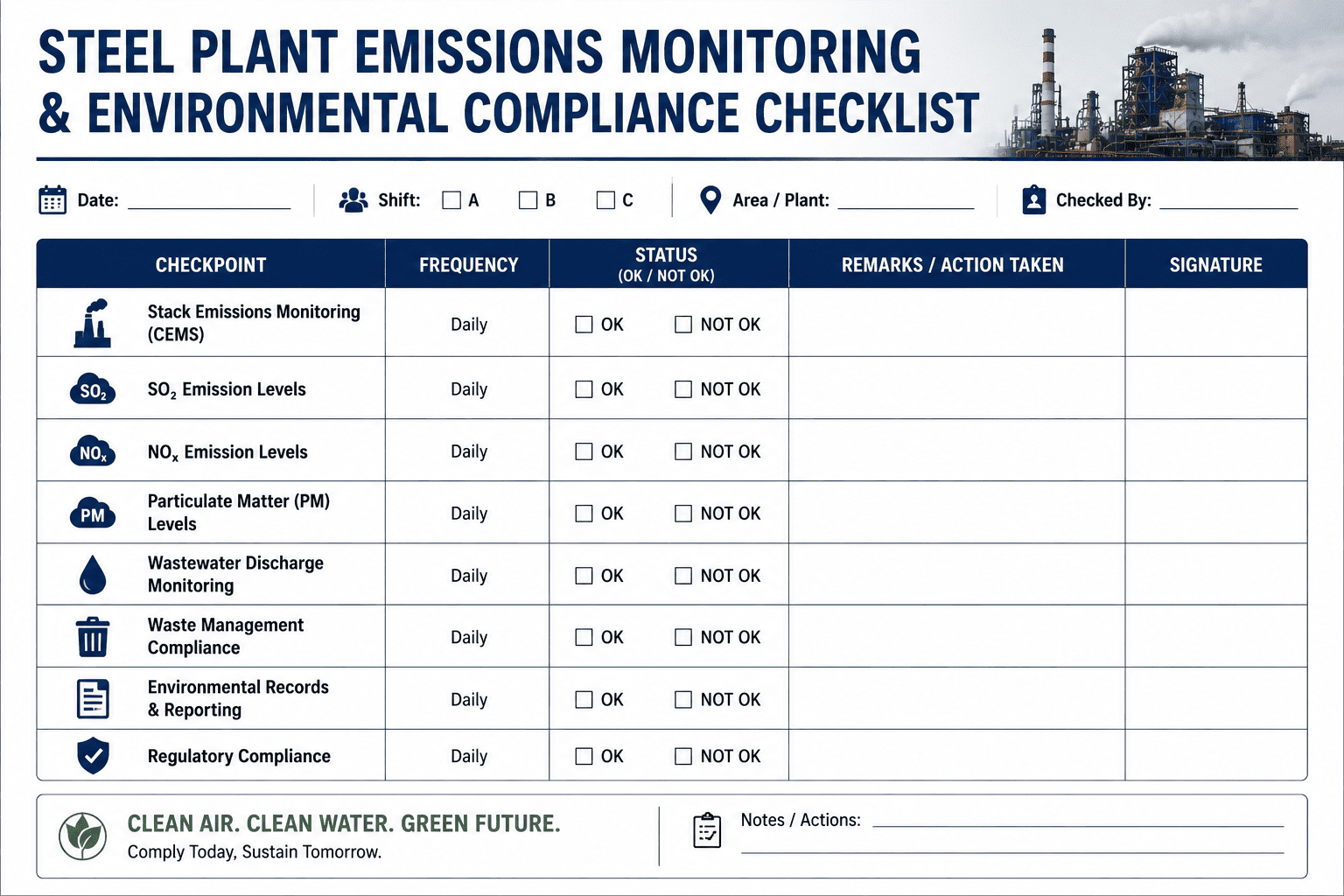
A steel plant doesn't have one emissions problem, it has five running at once. Particulate from the baghouse, NOx from the reheat furnace, SO2 and CO from combustion, opacity from the EAF, all measured continuously, all tied to a permit limit that doesn't care which unit was running when the number moved. Sign up to track every pollutant, every calibration, and every exceedance against your permit in one place.
Why It Matters
A steel plant's environmental compliance record is judged on completeness, not just performance. A missed calibration or an unlogged deviation reads the same to an inspector as an actual exceedance, so the checklist matters as much as the emissions themselves.
The Pollutants On Every Steel Plant Permit
Particulate Matter
Tracked by opacity and bag leak detection, driven mostly by baghouse condition
NOx
Measured by chemiluminescent analyzer, rises with combustion temperature and air-fuel ratio
SO2
Measured by UV analyzer, tied directly to fuel sulfur content and coke quality
CO
Measured by non-dispersive infrared analyzer, signals incomplete combustion
Opacity
Visible stack darkness reading, an early indicator of filter bypass or bag failure
CO2
Tracked for greenhouse gas reporting, calculated from fuel consumption and production volume
The Compliance Checklist, Item By Item
Compare CEMS readings to permit limits: pull stack values at the required averaging interval and flag anything approaching the threshold, not just what has already crossed it
Confirm daily zero and span checks are logged: a missing calibration entry invalidates that day's data regardless of what the analyzer actually read
Check baghouse differential pressure: a rising or falling trend outside the normal band signals filter clogging or a bag failure before opacity confirms it
Log every startup, shutdown, and malfunction event: SSM periods have their own reporting rules and are the first thing an inspector cross-checks against CEMS gaps
Reconcile the deviation log before the reporting period closes: every exceedance needs a documented cause and corrective action, not just a timestamp
See Every Pollutant Against Every Limit, In One View
Oxmaint pulls PM, NOx, SO2, and CO readings against your permit thresholds, flags a drift or exceedance the moment it happens, and keeps calibration and deviation records audit-ready. Sign up for a free trial to run it on your own plant data, or book a demo to see it configured for your permit.
Where Exceedances Actually Come From
Most exceedances trace back to a change somewhere upstream of the stack, not a sudden analyzer fault. A coke shipment with higher sulfur pushes SO2 up before anyone adjusts for it. A furnace running hotter than usual to hit a production target pushes NOx with it. A baghouse running past its cleaning cycle lets particulate creep upward for hours before opacity confirms a problem. Reading the CEMS trend next to production and fuel data catches the cause days before the permit limit does.
Pollutant, Source & Monitoring Method
| Pollutant |
Typical Source |
Monitoring Method |
| Particulate matter |
EAF, sinter plant, baghouse bypass |
Opacity monitor, bag leak detector |
| NOx |
Reheat furnace, high-temperature combustion |
Chemiluminescent analyzer |
| SO2 |
Coke and fuel sulfur content |
UV fluorescence analyzer |
| CO |
Incomplete combustion, poor air-fuel ratio |
Non-dispersive infrared analyzer |
The Takeaway
Environmental compliance in a steel plant is a recordkeeping exercise built on top of a monitoring exercise. The plants that stay clean on inspection aren't the ones with the fewest process upsets, they're the ones whose calibration, deviation, and SSM logs are complete enough that every reading can be explained.
Frequently Asked Questions
Q
Which pollutants require continuous monitoring in a steel plant?
Most permits require continuous monitoring of particulate matter or opacity, NOx, SO2, and CO from major combustion and process sources, with CO2 tracked separately for greenhouse gas reporting. The exact list depends on the process type and permit conditions for each unit.
Q
How long does an exceedance need to last before it's reportable?
Reportable duration varies by pollutant and standard, commonly four consecutive hours above the limit, though some standards set the threshold at two hours. The applicable permit or NESHAP subpart always governs the specific duration for that unit.
Q
What records does an inspector actually ask to see first?
Calibration logs and the deviation or exceedance record are usually the first two requests, since they show whether the monitoring data itself can be trusted before anyone looks at the emission values. Startup, shutdown, and malfunction logs typically follow right after.
One Checklist For Every Pollutant On Your Permit
Oxmaint keeps PM, NOx, SO2, and CO readings, calibration records, and deviation logs together across every stack in your plant, so nothing falls through between the monitor and the compliance report. Sign up for a free trial to run it on your own plant data, or book a demo to see it configured for your permit.