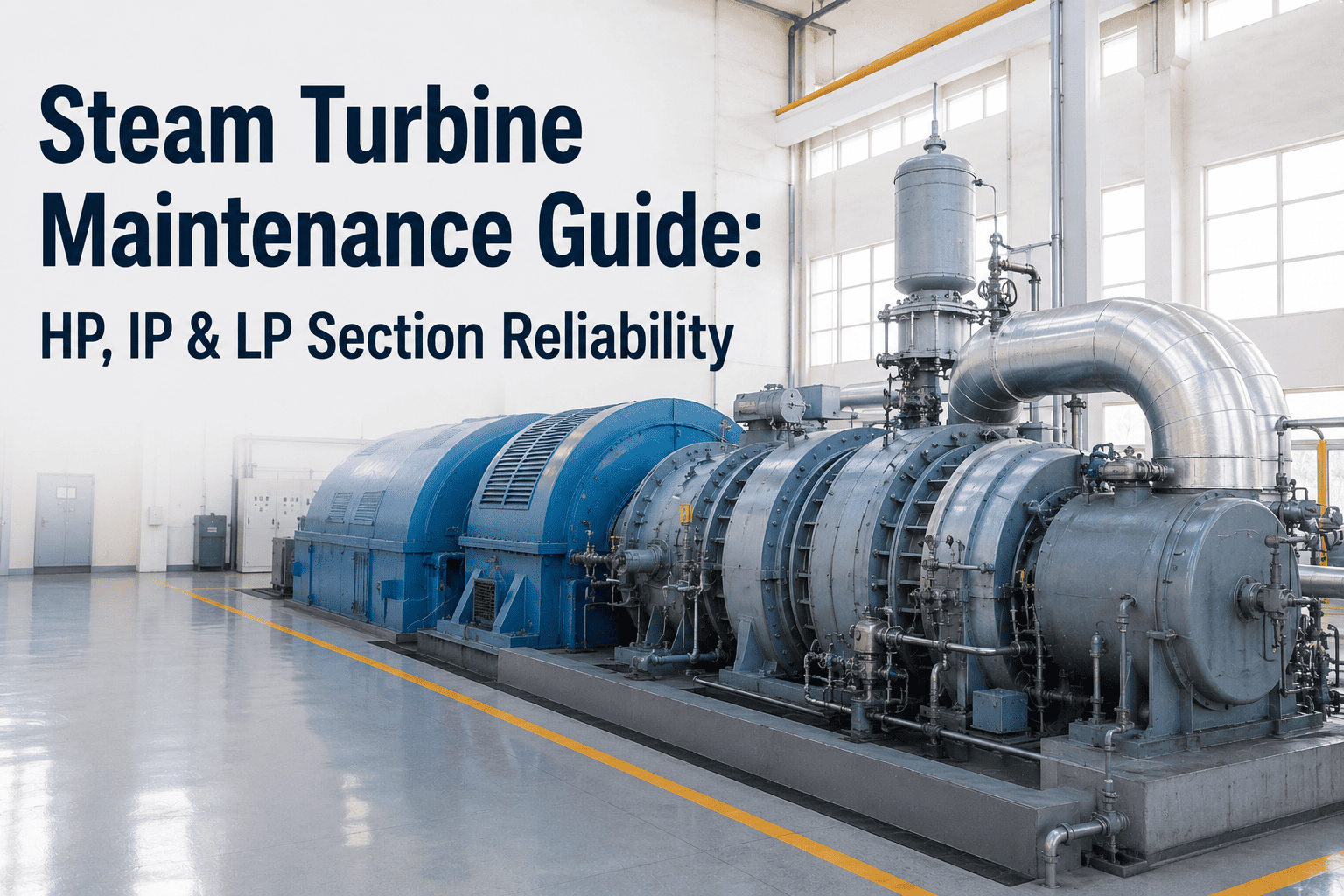
A steam turbine doesn't fail as one unit, its HP, IP, and LP sections each carry a different stress profile and a different failure signature. The HP section fights the highest temperatures and pressures, the IP section absorbs thermal cycling from load swings, and the LP section wrestles with moisture erosion and the longest blades in the machine. Treating all three the same way misses the early warning each one actually gives. A CMMS like OxMaint tracks vibration trends, bearing temperatures, and blade inspection history against every turbine section, so a developing fault gets caught on a trend chart instead of during a forced outage.
Track Every Turbine Section From One Dashboard
Vibration trends, bearing temperatures, and blade inspection records for HP, IP, and LP sections in one place.
HP, IP, and LP: Three Sections, Three Failure Modes
| Aspect | HP Section | IP Section | LP Section |
|---|---|---|---|
| Main Risk | Creep and thermal fatigue from sustained high pressure and temperature | Thermal cycling stress during load changes and startups | Moisture erosion on the last-stage blades |
| Key Check | Casing distortion and rotor bore inspection at major outages | Blade root and diaphragm crack inspection | Blade tip erosion and moisture separator performance checks |
| Consequence of Neglect | Steam leakage past seals and reduced thermal efficiency | Blade root cracking that can propagate to a catastrophic failure | Reduced last-stage efficiency and eventual blade replacement |
Four Signals That Predict Turbine Trouble
Vibration Signature
A rising vibration trend at specific frequencies points to imbalance, misalignment, or bearing wear well before damage occurs.
Bearing Temperature
A slow climb in bearing metal temperature usually signals lubrication breakdown or increasing radial load.
Blade & Nozzle Erosion
Solid particle and moisture erosion thins blade edges gradually, cutting stage efficiency long before a visible failure.
Seal Clearance Drift
Widening labyrinth seal clearances let steam bypass the blades, quietly eroding overall turbine efficiency.
A Turbine Maintenance Rhythm
Continuous Vibration Monitoring
Track online vibration and shaft position data around the clock to catch deviations as they start.
Monthly Bearing & Oil Checks
Log bearing temperatures and lube oil condition to catch lubrication issues before they reach the bearing.
Outage Blade Inspection
Inspect blades, diaphragms, and seals section by section during every scheduled outage window.
Annual Alignment & Balance Check
Verify rotor alignment and balance to keep vibration levels within design limits year over year.
Steam Turbine Maintenance Maturity
Run to Failure
The turbine runs without trend tracking until vibration or a trip alarm forces an unplanned shutdown.
Outage-Based Inspection
Sections get inspected during scheduled outages, but readings between outages aren't tracked as a trend.
Condition-Based Monitoring
Vibration, temperature, and clearance data feed a live trend line, flagging drift long before an outage is needed.
Why Section-Level Tracking Matters
A steam turbine outage is one of the most expensive events on a power plant's calendar, and a fault that starts in one section rarely stays isolated, a cracked IP blade root or a worn HP seal can escalate into a full unit trip if it goes unnoticed between outages. Tracking each section's own set of indicators, rather than treating the turbine as a single asset, is what turns a developing fault into a planned repair instead of a forced outage.
Section-level trend tracking is what keeps a turbine running through its full planned overhaul interval instead of tripping unexpectedly. Sign up free to start tracking vibration and bearing data across every turbine section today, or book a demo to see how a live trend line catches a developing fault before your next outage.
Give Every HP, IP, and LP Section Its Own Trend Line
Vibration monitoring, bearing checks, and outage inspection records, tracked section by section.
Frequently Asked Questions
How often should steam turbine vibration be monitored?
Vibration should be monitored continuously through online sensors, with a full trend review at least weekly.
Which turbine section fails most often?
The LP section typically sees the most wear over time due to moisture erosion on its long last-stage blades.
What causes IP section blade cracking?
Repeated thermal cycling during startups and load changes fatigues blade roots, which is why frequent-cycling units need closer inspection.
How does bearing temperature relate to turbine health?
A steady rise in bearing metal temperature often precedes a vibration alarm, making it a useful early indicator on its own.
Can predictive maintenance extend the outage interval?
Yes, condition-based data lets plants confirm a section is healthy enough to safely extend the run to the next planned outage.







