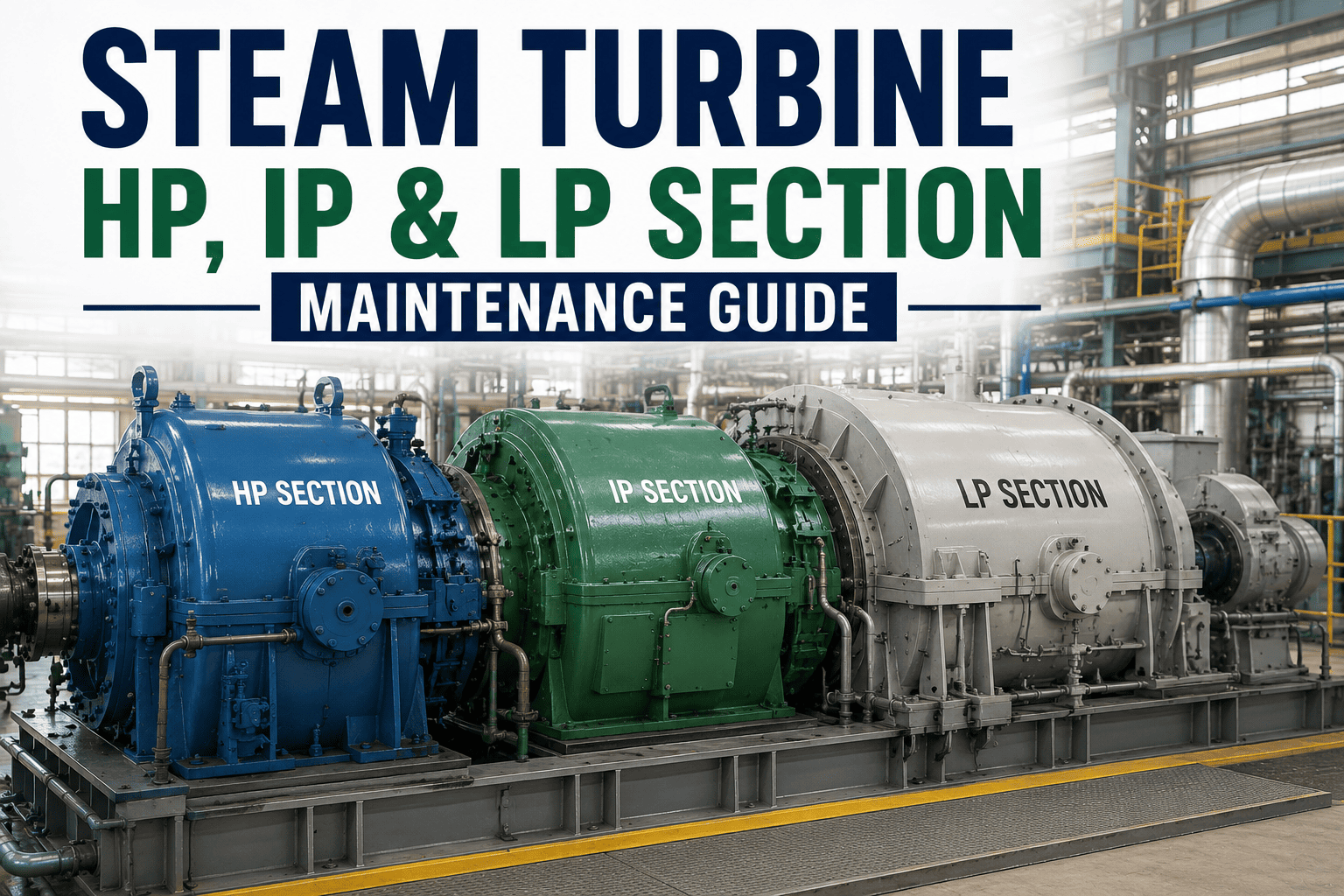
A steam turbine isn't one machine, it's three sections living under radically different conditions inside the same casing. The HP section sees the hottest, highest-pressure steam in the plant. The IP section runs cooler but handles far more volume after reheat. The LP section deals with wet steam moving at blade-tip speeds that can exceed 500 meters per second. Apply one overhaul schedule to all three and you'll miss the failure mode each one is actually prone to. Sign up to track bearing vibration, blade inspection findings, and seal clearance data separately for each section, tied to real operating hours.
Why It Matters
Shaft vibration measured at each journal bearing can reveal imbalance, misalignment, seal rub, or blade damage weeks before it forces an outage. But the signature that shows up in an HP bearing rarely means the same thing as the same signature in an LP bearing, context by section is what turns a vibration trend into an actual diagnosis.
Three Sections, Three Different Jobs
HP Section
Superheated steam at peak temperature and pressure, the most thermally stressed component in the plant
IP Section
Reheated steam at higher volume flow, running cooler but far more of it
LP Section
Wet, low-pressure steam at the highest blade velocity, most exposed to erosion
Bearings & Vibration
Proximity probes at each journal reveal degradation before failure
Blade Erosion
Leading-edge wear from steam impurities and moisture, tracked stage by stage
Shaft Seals & Clearances
Grow over operating hours, driving up heat rate long before anything trips
What Reliability Teams Actually Watch For
Vibration frequency pattern: 1x running speed points to imbalance, other patterns point to misalignment, bearing wear, or seal rub, each with a distinct signature
Shaft eccentricity position: the steady-state centerline within bearing clearance, revealing a sustained preload that amplitude alone won't show
Blade leading-edge condition: checked by borescope at every planned outage, no casing removal needed for visible stages
LP last-stage blades: the highest-consequence component in the steam path, watched closely for pitting that can seed stress corrosion cracking
Gland seal clearance growth: compared against original design fit at each outage, worn seals let steam bypass the blading and raise heat rate
Equivalent operating hours: tracked per section, since HP, IP, and LP components age against different wear mechanisms, not one shared clock
Stop Planning Overhauls From Scattered Spreadsheets
OxMaint links vibration trends, blade inspection findings, and seal condition records to each turbine section, so your next outage starts with a complete history, not a guess. Sign up for a free trial to explore it on your own turbine, or book a demo to see it configured for your plant.
Section, Primary Failure Mode & Inspection Method
| Section |
Primary Failure Mode |
Inspection Method |
| HP Section |
Leading-edge erosion, fir-tree root fatigue cracking |
Borescope every planned outage |
| IP Section |
Deposit accumulation, casing joint distortion, rotor creep |
Blade deposit survey, joint blue-checking at outage |
| LP Section |
Wet-steam pitting, stress corrosion cracking, tenon fretting |
Dye penetrant testing, escalate to PAUT if indicated |
| Shaft Seals, All Sections |
Clearance growth, seal rub during startup and shutdown |
Cold clearance survey against hot allowances each outage |
The Takeaway
Treating HP, IP, and LP as one maintenance plan misses what makes each section fail. Track vibration, blade condition, and seal clearance separately by section and tied to real operating hours, and the next outage becomes a planned campaign instead of a scramble.
Frequently Asked Questions
Q
Why is the LP section considered the highest risk?
LP last-stage blades run in wet steam where pitting can seed stress corrosion cracking, and they carry the longest chord span at the highest tip speed in the whole turbine. A blade failure here doesn't stay contained, it cascades damage through the downstream diaphragms, nozzle assemblies, and the condenser, making it the single most consequential failure mode in the machine.
Q
Why does shaft seal clearance matter if the turbine isn't showing symptoms?
Seal clearance grows gradually with operating hours, and a worn seal lets steam bypass the blading entirely rather than doing useful work, which quietly raises heat rate. In the HP section specifically, degraded seals can also let superheated steam reach bearing housings and oil systems, a problem that doesn't announce itself until it's already serious.
Q
How early can vibration monitoring actually catch a developing fault?
Well-tuned vibration trending at each journal bearing can flag developing issues, imbalance, misalignment, bearing wear, or seal rub, roughly a month to three months before they would otherwise force an unplanned outage. That window is what allows a repair to be scheduled into a planned outage instead of reacting to a forced shutdown.
Give Every Turbine Section Its Own Maintenance History
OxMaint tracks bearing vibration baselines, blade inspection findings, and seal clearance trends by section, and ties it all to your next overhaul campaign. Sign up for a free trial to explore it on your own steam turbine, or book a demo to see it configured for your plant.