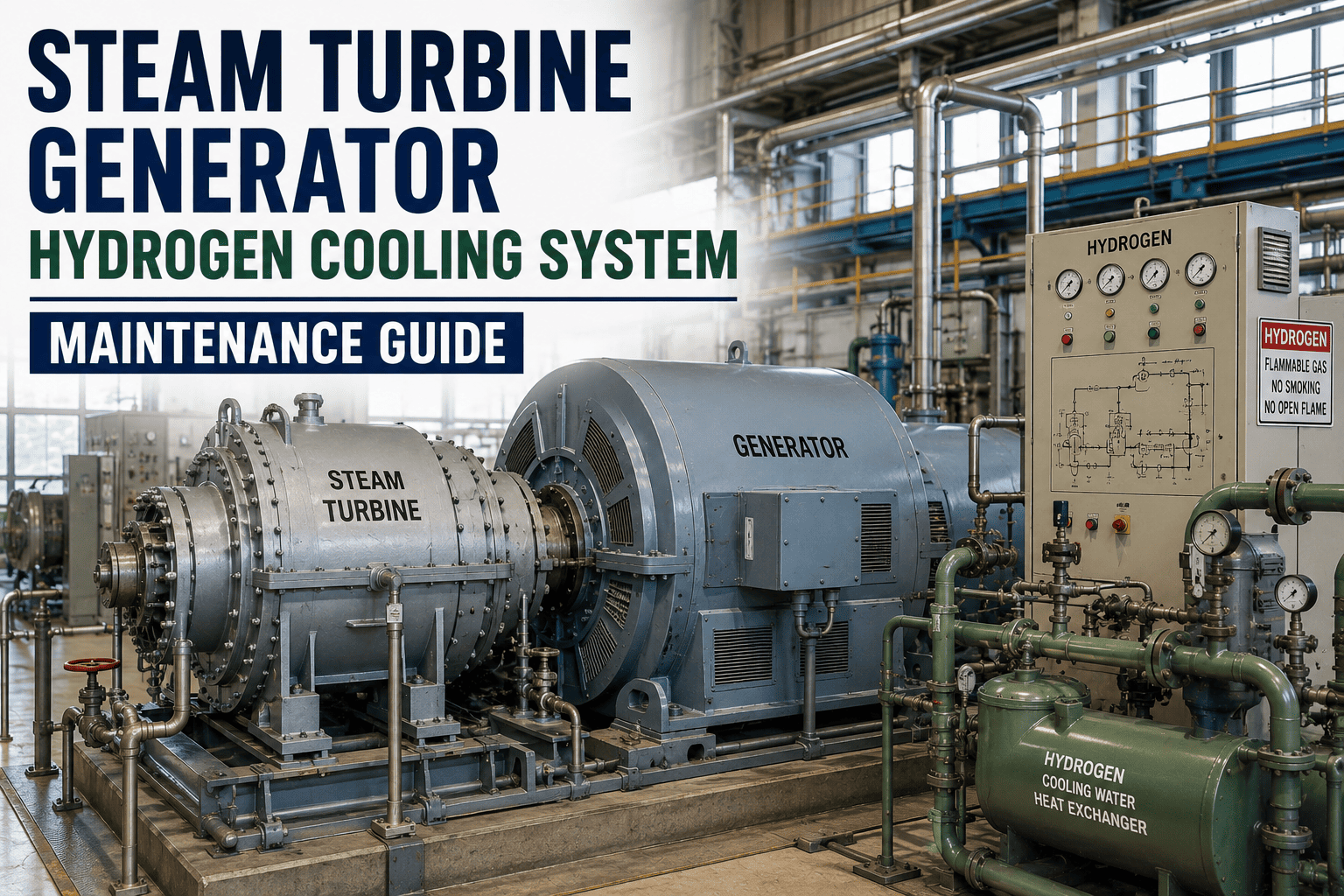
Hydrogen cools a large generator better than almost anything else, its low density and high thermal conductivity make it the industry standard for big steam turbine generators. That same property is what makes the cooling system unforgiving to neglect. A slow purity drift, a seal oil pressure that's drifted out of margin, or a dew point creeping upward rarely trips an alarm on day one, they just quietly erode efficiency until a forced outage or a safety incident makes the neglect impossible to ignore. Sign up to log purity, seal oil, and dew point readings against the generator and get flagged before any of them cross into unsafe territory.
Why It Matters
Hydrogen at the wrong concentration in air is explosive, so every fill, drain, and purge is done through an inert buffer gas, never directly between hydrogen and open air. Most reported hydrogen incidents at generating stations trace back to a purging procedure that wasn't followed correctly, not to equipment failure.
Six Things That Keep The System Running Safely
Hydrogen Purity
Continuously monitored, generator efficiency and safety both depend on staying high
Seal Oil System
Kept above casing gas pressure to stop hydrogen from escaping at the shaft
Dryers & Dew Point
Removes moisture that would otherwise drag purity and insulation life down
Leak Detection
Static seals, bushings, and joints checked with tracer gas during outages
CO2 Purging
The required buffer gas between hydrogen and air on every fill or drain
Scavenging Rate
Adjusted upward automatically when purity starts to fall
What Reliability Teams Check Routinely
Purity meter reading confirmed: compared against the casing gas monitor, with scavenging flow increased automatically if purity trends down
Seal oil differential checked: pressure difference between seal oil and casing gas verified, since a shrinking margin is what lets hydrogen escape at the shaft
Dew point monitored: kept a safe margin below the minimum casing temperature, with immediate action if it rises toward the alarm limit
Gas cooler water side inspected: pressure and temperature checked at each cooler, trapped air vented to prevent a cooling-water leak into the gas system
Leak survey performed at outage: system purged and backfilled with CO2 so a tracer-gas camera can pinpoint leaks that hydrogen alone would hide
Alarms and emergency systems tested: purity meter calibration, safety valve operation, and emergency seal oil pump start-up all verified periodically
Stop Watching Purity Drift Without A Trend
OxMaint logs hydrogen purity, seal oil differential, and dew point readings against the generator, and fires a work order the moment any of them approach an alarm limit. Sign up for a free trial to run it on your own generator, or book a demo to see it configured for your plant.
Focus Area, What It Protects Against & Typical Check
| Focus Area |
What It Protects Against |
Typical Check |
| Hydrogen Purity |
Efficiency loss, windage friction, forced outage |
Continuous purity meter, alarm around 80 percent |
| Seal Oil Differential |
Hydrogen escaping past the shaft seals |
Continuous pressure differential monitoring |
| Dew Point & Dryer |
Purity loss and insulation degradation from moisture |
Dew point sensor, alarm near 0°C at pressure |
| Static & Piping Leaks |
Hydrogen consumption creep, safety exposure |
CO2-tracer camera survey during planned outage |
The Takeaway
A hydrogen-cooled generator rewards discipline and punishes shortcuts, purity, seal oil differential, and dew point all need to be watched continuously, not just checked at outage. Get that discipline right and the system delivers efficient cooling safely, for years between major overhauls.
Frequently Asked Questions
Q
Why does hydrogen purity matter beyond just safety?
Purity affects efficiency directly. Lower purity means more air or other gas mixed in, which increases windage friction on the spinning rotor and reduces the cooling effectiveness the hydrogen was chosen for in the first place. That's on top of the fact that purity dropping too low can force a shutdown before the generator even gets back to full efficiency.
Q
Why is CO2 always used when filling or draining hydrogen?
Hydrogen and air form an explosive mixture across a wide concentration range, so the casing is never taken directly from air to hydrogen or back. CO2 acts as an inert buffer gas in between, and it also happens to make leak detection easier afterward, since a tracer-gas camera can pinpoint CO2 escaping far more reliably than it can hydrogen.
Q
Why does the seal oil system get so much attention?
The seal oil is what keeps hydrogen contained where the rotor shaft passes through the casing, held at a pressure slightly above the casing gas so oil flows inward rather than gas flowing out. If that differential shrinks, hydrogen consumption rises and purity falls, which is why seal oil pressure is one of the most closely watched readings on the whole system.
Give Your Hydrogen Cooling System A Trend, Not Just A Reading
OxMaint tracks hydrogen purity, seal oil differential, and dew point per generator, and fires a prioritized work order the moment any reading moves toward an alarm limit. Sign up for a free trial to explore it on your own generator, or book a demo to see it configured for your plant.