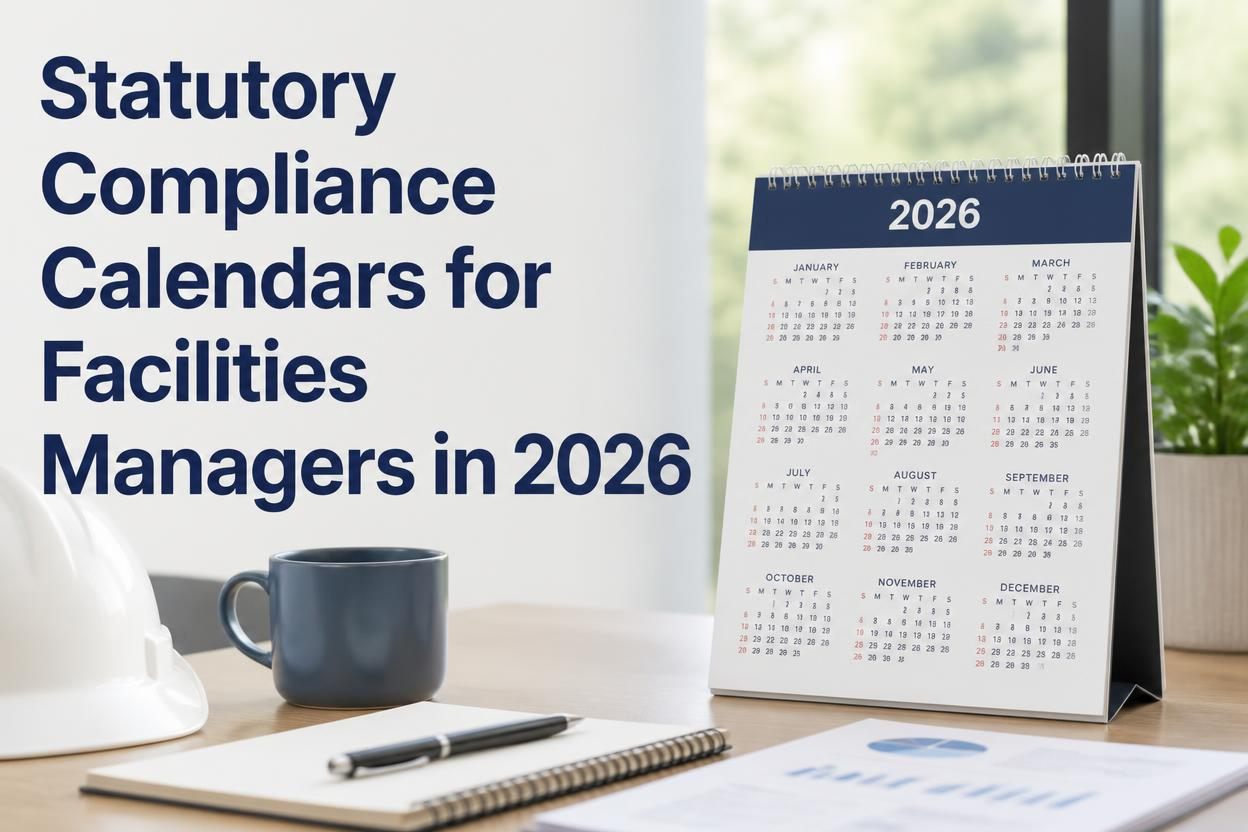
Seven statutory systems, seven different testing rhythms, and one missed date that lands on the desk of whoever's name is on the compliance file. Fire alarms, emergency lighting, gas, electrical, water, lifts, and air conditioning don't run on the same clock — which is exactly why so many FM compliance calendars quietly fall apart. Sign up to build yours properly, or book a demo to see a live compliance calendar in Oxmaint.
7
Statutory systems most UK buildings must schedule and evidence every year
4
Testing rhythms to track: weekly and monthly, six-monthly, annual, and five-yearly
1
Missed anniversary date is often the only difference between compliant and uninsured
12
Months a rolling calendar needs to cover in one continuous view, not a fresh sheet each January
Before You Build the Calendar
Most of these standards aren't law in themselves. BS 5839, BS 5266, and the rest are recognised codes of practice that courts and insurers use to judge whether you've met your underlying legal duty. Following them properly is how you demonstrate compliance, not a separate box-ticking exercise on top of it.
The Four Testing Rhythms Behind Every Calendar
Once you stop thinking of compliance as seven separate systems and start thinking of it as four recurring rhythms, the calendar gets much easier to build.
Rhythm 1
Weekly / Monthly
Fire alarm call point tests and emergency lighting flick tests, done in-house.
Rhythm 2
Six-Monthly
Fire alarm servicing and lift thorough examinations by an accredited engineer.
Rhythm 3
Annual
Gas safety checks, full emergency lighting discharge tests, and fire risk assessment reviews.
Rhythm 4
Five-Yearly
Electrical installation condition reports and air conditioning energy inspections.
The Full 2026 Compliance Calendar at a Glance
This is the reference table most compliance officers end up rebuilding from scratch every year. Sign up to Oxmaint to keep it live against your actual asset register instead.
| System |
Standard / Reference |
Frequency |
| Fire alarm testing |
BS 5839-1 |
Weekly user test, six-monthly service, annual inspection |
| Emergency lighting |
BS 5266-1 / BS EN 50172 |
Monthly flick test, annual full duration discharge test |
| Gas safety |
Gas Safety (Installation and Use) Regulations |
Annual, by a Gas Safe registered engineer |
| Electrical installation |
EICR under BS 7671 |
Typically every five years for commercial premises |
| Water and Legionella |
HSE L8 ACOP |
Ongoing monitoring, risk assessment reviewed regularly |
| Lifts and lifting equipment |
LOLER 1998 |
Six-monthly for passenger-carrying lifts |
| Air conditioning |
TM44, Energy Performance of Buildings Regulations |
Every five years for systems above 12kW output |
Stop Rebuilding This Table Every January
Oxmaint holds every statutory date against the actual asset it applies to, with reminders sent before the deadline, not after.
Where FM Compliance Calendars Actually Break Down
The standards themselves are well documented. What fails is usually the tracking around them.
Gap 01
Different Systems Live in Different Spreadsheets
The lift examiner's calendar sits with facilities, the gas certificate sits with maintenance, and nobody has ever compared the two side by side.
Gap 02
Five-Yearly Dates Get Forgotten Between Renewals
An EICR or TM44 report due once every five years is exactly the kind of date a busy team loses track of, because nobody's routine touches it monthly.
Gap 03
The Logbook and the Diary Don't Match
Weekly fire alarm tests get logged in a physical book on site, but nobody's checking that book against the digital reminder that supposedly triggered it.
Gap 04
Multi-Site Portfolios Have No Single View
One site's lift examination lapses while another site's is up to date, and the difference only surfaces when an insurer or auditor asks directly.
Building a Calendar That Actually Holds
01
List Every Asset Against Its Statutory Duty
Not every duty applies to every site
Start from the asset register, not the standards list. A site with no lift doesn't need a LOLER line item; a site with no air conditioning above 12kW doesn't need TM44.
02
Assign One Named Owner per System
Shared ownership usually means no ownership
Every statutory line needs one person accountable for booking the contractor and confirming the certificate landed, not a general team inbox.
03
Set Reminders Ahead of the Deadline, Not On It
Booking a contractor takes longer than people expect
A five-yearly EICR needs a reminder months out, not the week the current report expires, to leave time to book an available engineer.
04
Store the Certificate Against the Asset, Not a Folder
An auditor asks about the asset, not the paperwork system
Filing certificates against the specific lift, boiler, or panel they cover means the answer to "is this compliant" is one click away, not one email chain.
Frequently Asked Questions
Q
Are BS 5839 and BS 5266 actually legal requirements?
Not directly. The legal duty comes from the Regulatory Reform (Fire Safety) Order 2005, which requires equipment to be kept in efficient working order. BS 5839 and BS 5266 are the recognised standards enforcement officers and insurers use to judge whether that duty has been met.
Q
Does every lift need a LOLER examination every six months?
Passenger-carrying lifts and lifting equipment used to lift people need a thorough examination every six months. Other lifting equipment not used for people generally falls on a twelve-month cycle, though a risk assessment can shorten either interval if conditions warrant it.
Q
Is a formal Legionella test certificate a legal requirement?
Not in the same way as an EICR or gas certificate. The duty under the L8 Approved Code of Practice is to carry out and regularly review a risk assessment and control measures, with evidence of ongoing monitoring, rather than a single pass or fail certificate.
Q
Can a CMMS replace a dedicated compliance spreadsheet?
Yes, and it typically does the job better, because each statutory date sits against the actual asset it applies to. That means renewal reminders, certificate storage, and audit history live in one searchable place instead of a spreadsheet someone has to remember to update.
Put Your 2026 Compliance Calendar on Autopilot
Oxmaint tracks every statutory date against the asset it belongs to, across every site you manage, and sends reminders to the named owner before deadlines pass. Fire, electrical, gas, water, lifts, and air conditioning, all in one compliance view.
Statutory Compliance Tracking
Certificate Storage
Multi-Site Compliance View
Renewal Reminders