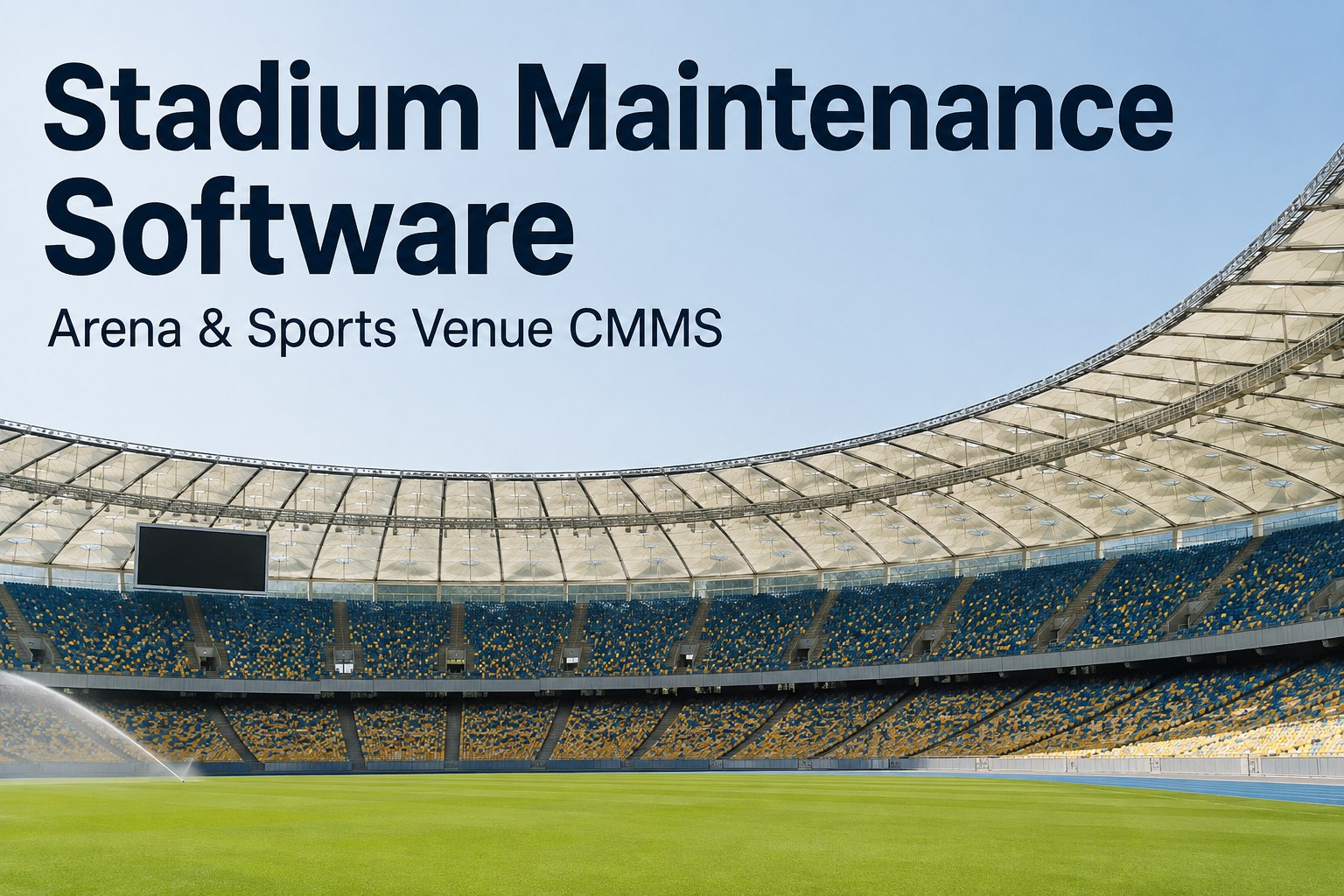
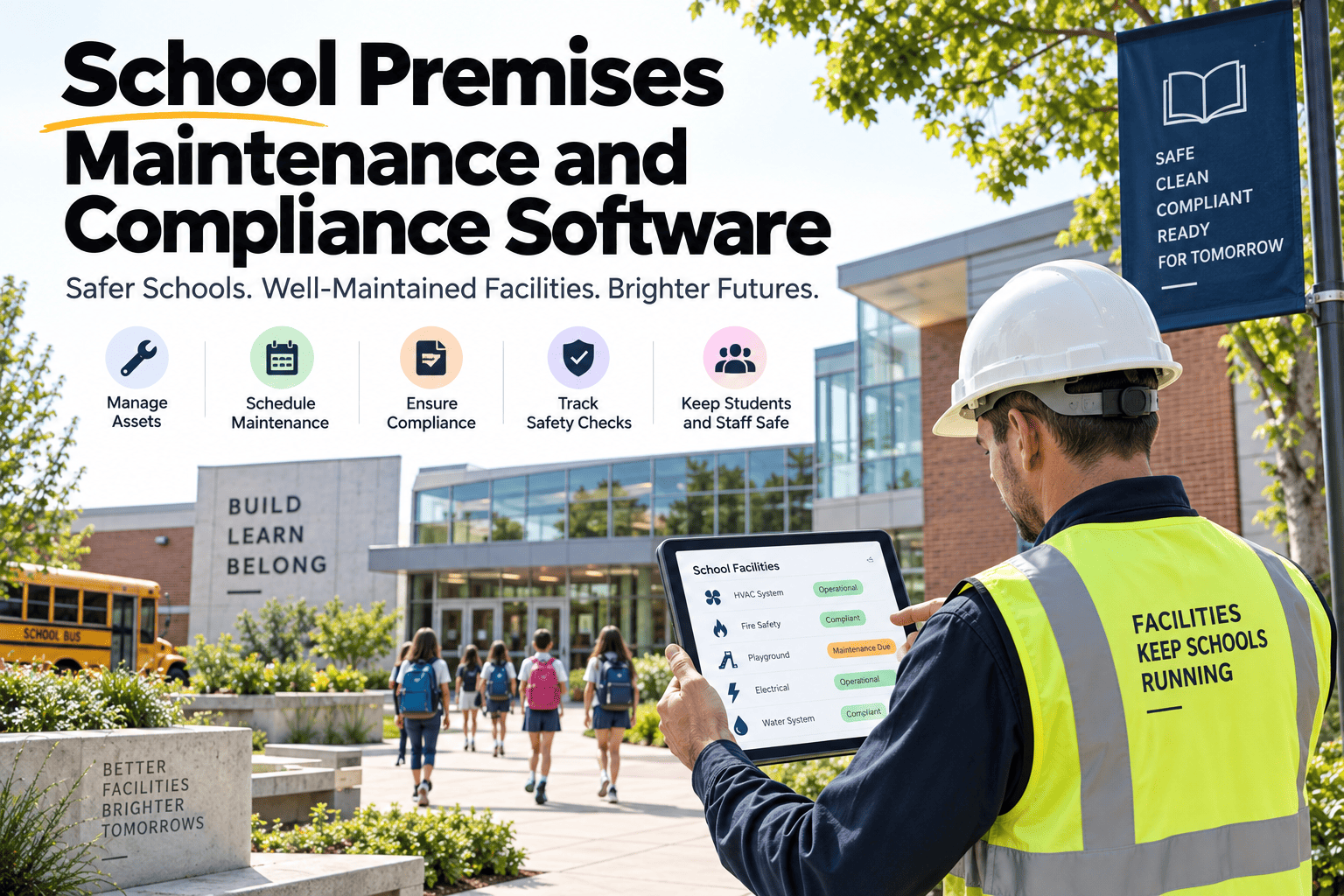
A stadium is the most demanding facility in UK engineering. Empty for 320 days a year, then packed with 30,000 people who need every toilet, turnstile, floodlight and emergency exit working on the dot. Miss one and the safety certificate is at risk. Miss a Green Guide cycle and the local authority can pull the licence. Venues that keep matchday smooth aren't the ones with newest kit — they're the ones where every PPM, statutory test and event-day check sits inside one system. Book a demo to see stadium workflows in action.
◆ VENUE OPERATIONS · SAFETY CERTIFICATE · EVENT-DAY READINESS
A stadium doesn't need to be perfect on Tuesday. It needs to be perfect on Saturday at 3 p.m. — and that's a very different maintenance problem.
Every floodlight, every turnstile, every emergency exit, every scoreboard — held under one event-driven maintenance system.
MATCHDAY READINESS COUNTDOWN · T-MINUS TO KICK-OFF
T-14d
T-7d
T-72h
T-24h
KO
320
Non-event days per season · Where PPM must fit
6h
Typical event-day inspection window before gates open
100%
Safety-critical asset sign-off before every event
The Venue Anatomy — What Actually Sits Under the Safety Certificate
A stadium is not a building, it's six interlocking building systems each with its own PPM cadence, statutory regime and event-day check. Green Guide compliance (the SGSA's "Guide to Safety at Sports Grounds") applies duty across all six, and a working CMMS holds them as a single asset hierarchy rather than six unconnected registers. Sign up free to bring venue systems into one asset hierarchy.
VENUE SUB-SYSTEMS · GREEN GUIDE SCOPE
Six Systems · One Safety Certificate
STRUCTURE
Stands · Barriers · Crush rails · Roofs · Terracing · Structural fixings
Statutory · Annual structural engineer inspection
EGRESS & CROWD FLOW
Turnstiles · Exit gates · Vomitories · Staircases · Emergency lighting · Signage
Statutory · Event-day sign-off · Green Guide critical
BUILDING SERVICES
HVAC · Hot water · Cold water · Drainage · Kitchens · Concessions plant
Regulated · L8 Legionella · Gas Safety · F-Gas
ELECTRICAL & FLOODLIGHT
HV switchgear · Floodlight arrays · Broadcast power · Standby generators · UPS
Statutory · EICR · Generator load test
FIRE & LIFE SAFETY
Fire alarms · Emergency lighting · Sprinklers · Extinguishers · Fire doors · PA/VA
Statutory · RRO 2005 · BS 5839 · BS 5266
PITCH & MEDIA
Undersoil heating · Irrigation · Broadcast rigging · Scoreboards · LED perimeter · Cameras
Regulated · LOLER for rigging · Broadcast contracts
The Safety Certificate — What Local Authorities Actually Audit
Every UK sports ground with capacity over the SGSA threshold operates under a General Safety Certificate issued by the local authority. The certificate specifies capacity, permitted activities, and the maintenance and inspection regime that must run against the venue. Missing an inspection, or failing to produce evidence when audited, doesn't produce a warning — it produces a capacity reduction or licence suspension. The evidence chain matters as much as the work itself. Book a demo to see safety certificate evidence workflow live.
STADIUM COMPLIANCE MAP
Regime → Frequency → Evidence
Green Guide (SGSA)
Structural, egress, crush barriers, sightlines — 6th edition guidance under Safety of Sports Grounds Act 1975
Evidence · Annual structural inspection · Barrier load test · Capacity calc
Annual + Event
Fire & RRO 2005
Fire risk assessment, alarm testing (BS 5839), emergency lighting (BS 5266), fire doors, extinguishers
Evidence · Weekly alarm test · Monthly EM lighting · Annual FRA
Continuous
Legionella L8 / HSG 274
Water system risk assessment, temperature monitoring, TMV servicing, cooling tower duty
Evidence · Monthly temps · Quarterly TMV · 2-yearly WRA review
Monthly
Electrical EICR
Full periodic inspection and testing of fixed installation · BS 7671 · Category classification of defects
Evidence · EICR report · Remedial work orders · Re-test certificate
5-yearly
LOLER (Broadcast Rigging)
Thorough examination of camera rigging, media platforms, lifting equipment used on match day
Evidence · TE certificate · Defect notification · Pre-event verification
6-monthly
The Matchday Countdown — Every Check, Every Sign-Off, Every Event
What separates a stadium from a normal building is that everything must be verifiably ready at a specific moment. A hospital can absorb a broken toilet in one wing; a stadium with a broken toilet in one concourse fails its sanitary capacity calculation and reduces permitted attendance. The event-day workflow below is what a properly configured CMMS actually runs.
T-14 DAYS
Baseline Confirmation
All statutory PPMs current · Outstanding defects triaged · Safety-critical assets confirmed operational · Contractors scheduled
T-7 DAYS
Systems Testing
Floodlight full-load test · Standby generator run · PA/VA broadcast test · Fire alarm verification · Turnstile function check
T-72 HOURS
Final Fault Window
Any defect found here is repairable pre-event · Toilet count · Emergency lighting sweep · Barrier integrity · Broadcast platform LOLER verify
T-24 HOURS
Cosmetic & Signage
Signage complete · Directional wayfinding checked · Media positions ready · Concessions plant sanitation confirmed
T-6 HOURS
Match Day Sign-Off
Full event-day inspection walk · Safety officer sign-off · Certificate valid · Any issue triggers capacity or delay decision · Gates open
◆ STADIUM & ARENA DEMO
See the Full Venue Workflow in 30 Minutes
Venue asset hierarchies with Green Guide integration, statutory compliance calendars, event-day readiness workflows, contractor management, defect triage and audit-ready evidence packs for local authority safety advisory groups.
Where the Value Actually Shows Up — Four Venue Outcomes
Beyond compliance, structured venue maintenance delivers measurable operational outcomes that stadium engineering directors and finance teams both notice. These are the four that consistently appear as ROI justification on UK stadium CMMS deployments. Sign up free to build these outcomes into your venue's maintenance system.
01 · SAFETY CERTIFICATE
Zero Capacity Reductions
Every statutory inspection current, every defect tracked, every remedial documented — safety advisory groups find the evidence they're looking for on the first request.
02 · EVENT-DAY UPTIME
Nothing Fails on Matchday
The T-minus workflow catches issues at T-72h or T-7d, not T-1h. Structured pre-event verification means match day operations are boring — which is exactly what you want.
03 · CONTRACTOR CONTROL
Every Access, Every Job Logged
Contractor management workflow with permit-to-work, RAMS approval, on-site sign-in and post-work sign-off. Full audit trail for insurance and safety enquiry.
04 · CAPITAL PLANNING
Asset Lifecycle Visible
Asset age, condition, remaining life and replacement cost aggregate into 5- and 10-year capital plans, giving CFOs the numbers they need for budgeting cycles.
Expert Perspective — Why Venue Engineering Is a Workflow Problem
"
Every stadium engineering director in the country will tell you the same two things. First: the technical work is not hard. The maintenance regimes are well documented, the standards are stable, and the contractor supply chain knows what it's doing. Second: the paperwork will finish you. A modern UK venue runs against Green Guide compliance, RRO fire safety, L8 water regime, EICR five-yearly cycle, LOLER for broadcast infrastructure, PSSR for pressure systems, Gas Safety, F-Gas for refrigeration, and something like fifteen other regulatory regimes — each with different frequencies, different competent-person requirements, and different evidence structures. Losing track of any of them is a safety certificate risk. Trying to manage that through spreadsheets and email is what turns venue engineering into a fire-fighting job. The sites that solve it aren't the ones with the newest kit — they're the ones that have got everything sitting in one system that surfaces the next thing due, the outstanding defects, and the event-day readiness state as three things on the same screen. That's what a properly deployed CMMS does. Everything else is basically well-organised discipline.
— UK Stadium & Venue Engineering Practice
01
Venue-wide asset hierarchy
Structure, egress, services, electrical, fire, pitch and media as one asset tree with per-system PPM cadence.
02
Statutory calendars
Green Guide, RRO, L8, EICR, LOLER, PSSR all in one calendar with alerts, evidence chain and audit-ready export.
03
Event-day workflow
T-14 to T-6 checklist series with safety officer sign-off structural to the event record.
04
Contractor control
Permit-to-work, RAMS approval, on-site sign-in tied to every contractor visit and work order.
Who Uses Oxmaint for UK Stadiums & Arenas
The platform is used by the UK roles that keep venues running day-to-day: stadium engineering directors and heads of facilities across Premier League, EFL, SPFL and rugby grounds, arena and multi-purpose venue engineers managing music and entertainment programmes, safety officers responsible for General Safety Certificate compliance, matchday operations managers coordinating pre-event verification, facilities managers at horse racing courses and motorsport venues, cricket ground engineers with pitch, pavilion and broadcast infrastructure, and estates directors at university sports venues and municipal sports facilities running Green Guide-compliant grounds.
Getting Stadium Maintenance Live in 30-60 Days
Deployment starts with the venue asset register — every sub-system (structure, egress, services, electrical, fire, pitch/media) mapped to its assets with location, criticality and statutory regime attached. PPM cycles configure per regime with type-appropriate cadence. Event-day workflow templates deploy with T-14/T-7/T-72h/T-24h/T-6h check series and safety officer sign-off. Statutory calendars populate for Green Guide, RRO 2005, L8 water regime, EICR, LOLER (for broadcast rigging), PSSR (for any pressure systems), Gas Safety and F-Gas. Contractor management workflow configures with permit-to-work, RAMS approval and on-site sign-in. Most UK venues see venue register, PPM cycles and event-day workflow live within 30-60 days. Sign up free to scope your venue's deployment.
◆ EVERY MATCHDAY. EVERY EVENT. EVERY CERTIFICATE INTACT.
One Venue. One System. Every Regulator Satisfied.
Oxmaint gives UK stadium and arena operators the full venue cycle in one platform — Green Guide-integrated asset hierarchies, statutory compliance calendars, T-minus event-day workflows, contractor control and audit-ready evidence for safety advisory groups.
Frequently Asked Questions
What is stadium maintenance software?
Stadium maintenance software is a CMMS configured specifically for sports venues — Premier League, EFL, SPFL, rugby grounds, cricket grounds, arenas, racing courses and multi-purpose entertainment venues. It holds each venue with sub-system hierarchies (structure, egress, building services, electrical/floodlight, fire and life safety, pitch and media), integrates statutory calendars for Green Guide, RRO 2005 fire safety, L8 water regime, EICR, LOLER, PSSR, Gas Safety and F-Gas, runs event-day readiness workflows with T-14 through T-6 checklists, manages contractor permit-to-work and RAMS approvals, and produces audit-ready evidence packs for local authority safety advisory groups and insurance inspections.
How does it help with Green Guide compliance?
The Sports Grounds Safety Authority's Green Guide (6th edition) sets duty across structural integrity, egress capacity, crush barrier loading, sightlines and safety-critical systems. Oxmaint structures venue assets so each Green Guide requirement maps to specific tracked assets with annual structural inspection, barrier load test, sightline verification and capacity calculation records. Every inspection produces a dated evidence entry against the asset, defects classify against severity, and remedial work orders track through to closure with re-inspection sign-off. When the safety advisory group reviews compliance, evidence packs export directly from the platform — no last-minute email trawling. Duty ownership stays with the venue safety officer; the software provides the structural evidence system.
Does it support the event-day readiness workflow?
Yes. Event-day workflow templates deploy as a countdown series from T-14 days through T-6 hours before kick-off. Each stage carries its own checklist — T-14 baseline confirmation with all statutory PPMs current, T-7 systems testing (floodlight full-load, generator run, PA/VA broadcast, fire alarm), T-72h final fault window, T-24h cosmetic and signage, T-6h final walk with safety officer sign-off. Every check captures on mobile with photograph and timestamp, and any red-flag finding triggers an escalation workflow that reaches the operations director immediately. The complete event-day evidence pack retains against the event record for safety advisory group and insurer review, giving structural traceability that emails and spreadsheets cannot provide.
Can it manage contractor access and permit-to-work?
Yes. Every contractor visit runs through a permit-to-work workflow — visit booked, RAMS (risk assessment and method statement) uploaded and reviewed, permit issued with scope and time window, on-site sign-in with induction verification, work executed against a work order, post-work sign-off, and permit closure. Contractor competency records (SSIP membership, trade certification, insurance validity) hold per contractor with expiry alerts. Hot-work permits, working-at-height, confined space and any specialist regime configures with appropriate approval workflow. Full contractor visit history is auditable for the local authority, HSE if required, and insurance following any incident — turning contractor management from a filing cabinet into a live system.
How long does deployment typically take for a UK venue?
A single Premier League, EFL or similar-scale venue typically goes live within 30-60 days — venue asset register import with sub-system hierarchies (structure, egress, services, electrical, fire, pitch and media), PPM cycle configuration per statutory regime, event-day workflow templates with T-14 through T-6 checklists and safety officer sign-off, statutory calendars populated for Green Guide, RRO, L8, EICR, LOLER, PSSR and Gas Safety, contractor permit-to-work workflow with RAMS approval, and mobile deployment to venue engineering and matchday operations teams. Multi-venue portfolios (racecourse groups, arena chains, university sports estates) typically complete within a quarter. Statutory calendar migration from existing paper or spreadsheet systems is the largest single scoping variable.