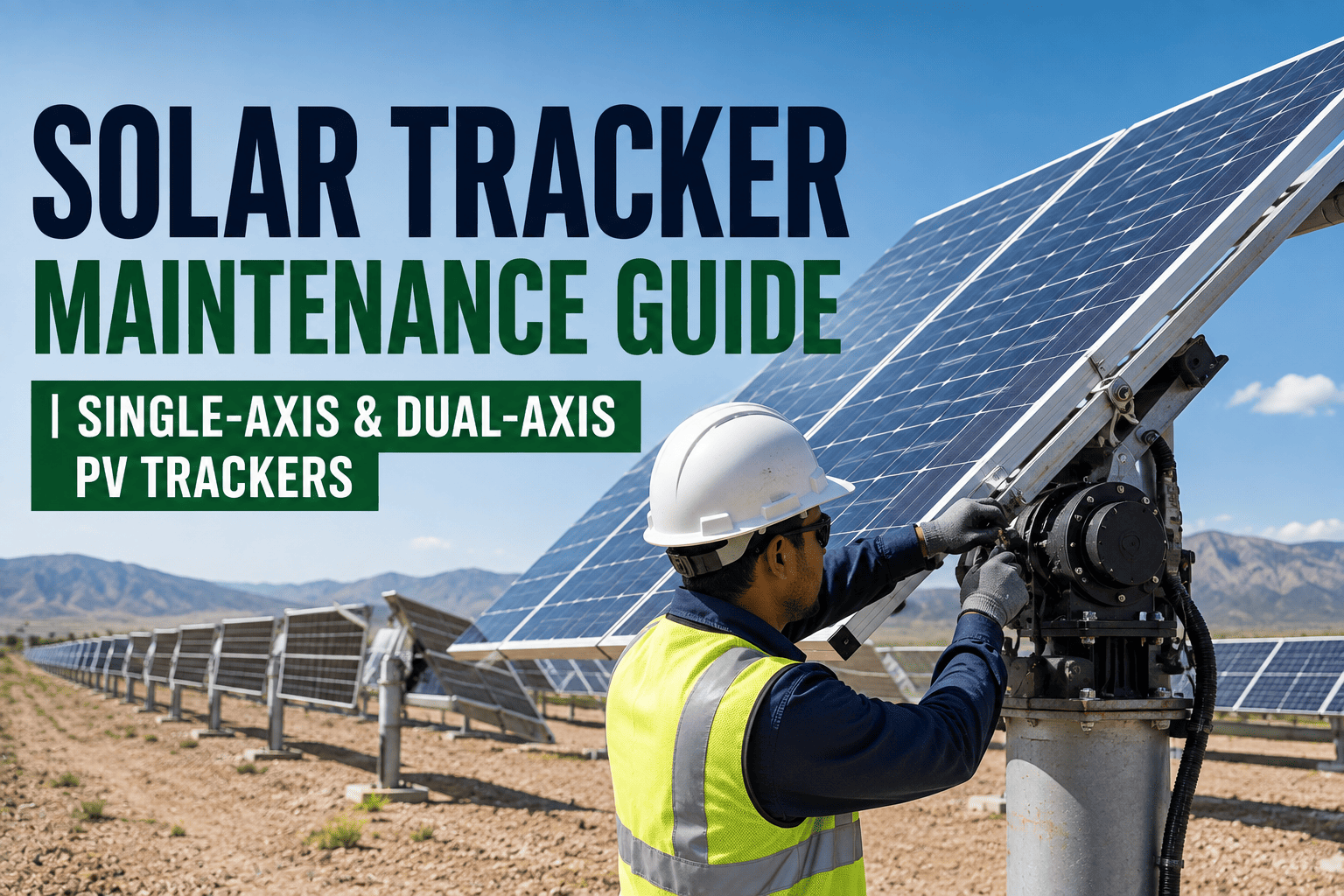
A tracker that stops chasing the sun doesn't always throw an alarm. It can sit a few degrees off true, day after day, and the plant just produces less than it should without anyone noticing until the monthly report comes in low. Trackers add 15-25% more annual yield over fixed-tilt systems, but only while the drive, gearbox, and bearings are actually working the way they were commissioned to. Sign up to log inspections and drive-train service history against every tracker row instead of a binder in the site office.
Why It Matters
A single-axis tracker that drifts just a few degrees off its tracking angle loses production every single hour it's misaligned, not just once. Left uncorrected, that small drift also puts extra torque on the drive motor and gearbox, turning a cheap calibration fix into an expensive drive-train replacement.
Single-Axis vs Dual-Axis: What Actually Needs Maintenance
| Tracker Type |
Moving Parts To Watch |
Common Failure Point |
| Single-Axis (Horizontal) |
One row drive motor, slew gearbox, and torque tube bearings per row |
Torque tube bearing wear from wind load over long row spans |
| Dual-Axis |
Azimuth and elevation motors, two gearboxes, slew bearing at the mast |
Elevation gearbox strain from carrying more weight against gravity |
| Both Types |
Controller firmware, GPS or astronomical tracking algorithm, wind stow sensor |
Angle drift between the algorithm's assumed position and actual panel position |
The Four Components That Fail First
Drive Motors
Brush wear and overheating show up as slow or stalled movement long before the motor stops entirely
Slew Gearboxes
Backlash from worn gear teeth causes a lag between the command sent and the angle actually reached
Bearings & Bushings
Grease loss under repeated wind loading lets play develop, which shows up first as a faint squeak or wobble
Dampers & Stow Sensors
A sluggish damper or a slow wind sensor delays stow response right when a gust event needs it fastest
Catch Drift Before It Becomes A Drive Replacement
Oxmaint logs motor run-time, gearbox torque readings, and bearing inspections against every row, so drift and wear show up as a trend instead of a surprise callout. Sign up for a free trial to start tracking your tracker fleet, or book a demo to see it set up for your site.
Building A Tracker Maintenance Program
Baseline Every Row's Actual Angle
Check commanded angle against actual panel angle at commissioning, so any future drift has a true reference point
Inspect Gearboxes On Torque, Not Just Time
A rising torque reading at the same commanded angle is an earlier warning of gear wear than any fixed inspection date
Grease Bearings On A Wind-Load Schedule
High-wind rows cycle more often than sheltered rows, so their bearings need shorter regreasing intervals than the plant average
4
Test Stow Response Before Storm Season
A full stow drill catches a slow damper or lagging sensor while there's still time to fix it before a real wind event
How Misalignment Escalates If Ignored
Minor Drift
A few degrees off, barely visible on site
Yield Loss
Row underperforms its neighbors on sunny days
Drive Strain
Motor and gearbox work harder to reach each angle
Stow Failure Risk
Row may not stow reliably before a wind event
A few degrees of drift is a controller recalibration. Left through a season of extra motor strain, the same row can need a gearbox replacement, for output the row had already been losing every single day it sat off-angle.
The Payoff
Rows maintained on torque and angle readings get a small motor or gearbox fix for the cost of a routine inspection. Rows maintained only when they visibly stop tracking need a full drive-train swap, plus every day of yield lost while the fault went unnoticed.
Frequently Asked Questions
Q
How often should solar trackers be inspected?
Most operators check controller angle logs monthly and do a physical drive, gearbox, and bearing inspection quarterly, with high-wind or coastal sites needing shorter intervals due to faster wear.
Q
Do dual-axis trackers cost more to maintain than single-axis?
Yes, generally. Dual-axis trackers carry two motors and two gearboxes per unit instead of one, which roughly doubles the drive-train components a maintenance program has to inspect and service.
Q
What's the earliest sign of a failing tracker gearbox?
A growing lag between the angle the controller commands and the angle the row actually reaches, often called backlash, shows up well before any grinding noise or visible damage.
Stop Losing Yield To Trackers That Quietly Drift
Oxmaint logs angle drift, torque readings, and drive-train service history against every tracker row, so maintenance decisions are backed by data instead of a site walk. Sign up for a free trial to bring your tracker fleet online, or book a demo to see it configured for your plant.