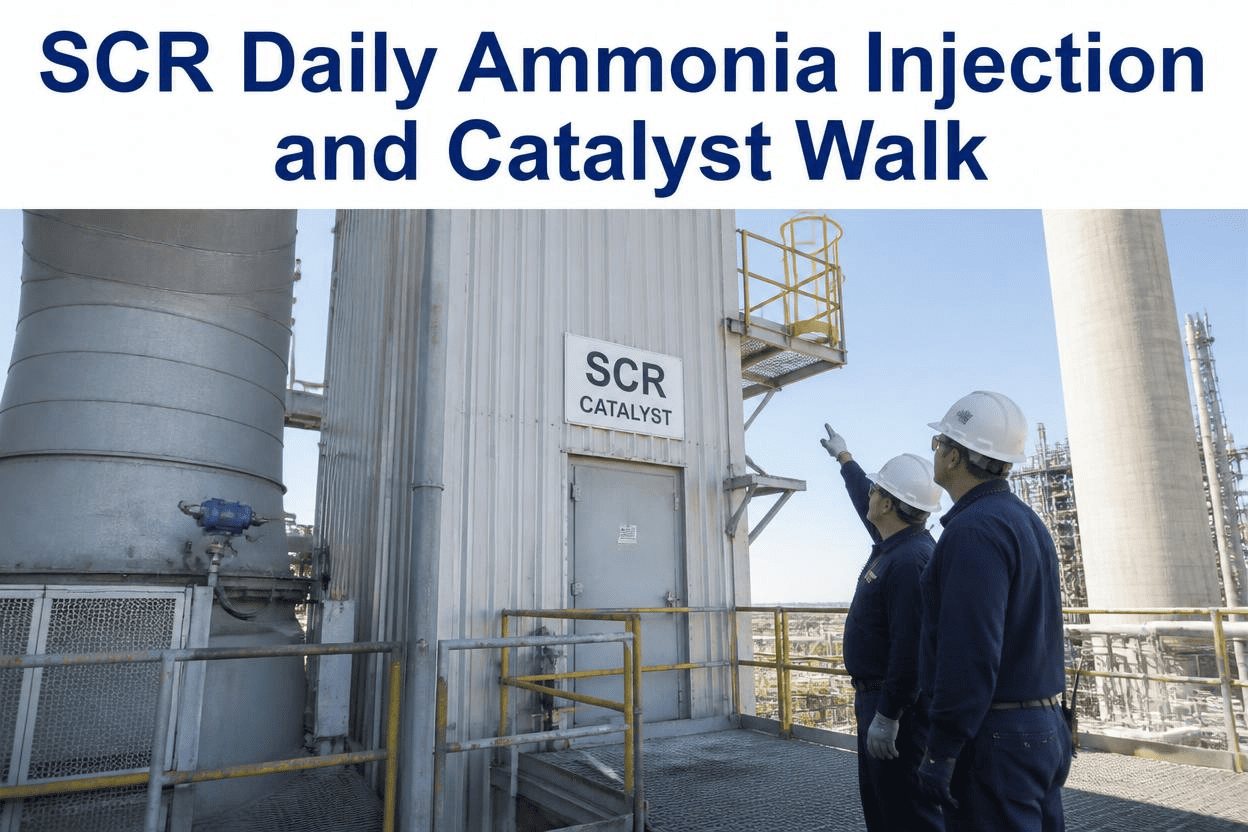
An SCR system running 3 ppm ammonia slip and one running 12 ppm both pass a glance from the control room, since neither trips an alarm on its own. But that gap means one unit is bleeding unreacted ammonia into the stack while quietly fouling downstream equipment, and the only way to catch it before a compliance report flags it is a daily walk that reads slip, NOx, and catalyst zone condition in the same order every shift. Sign up to see how a digital SCR walk runs on your own units.
Why It Matters
SCR performance rarely fails suddenly. It drifts — ammonia injection grid slowly falling out of tune, catalyst activity declining a percent at a time, slip creeping up past the compliance threshold over weeks. Every one of those trends is visible on a daily walk if NH3 slip, NOx output, and catalyst zone readings get logged consistently. A skipped reading isn't just a gap on a sheet, it's a missed early signal on a system that's directly tied to emissions compliance.
What A Complete SCR Walk Actually Covers
Five checkpoints make up a proper walk. Miss one and the sign-off still looks complete while that system runs unmonitored until the next shift.
NH3 Slip
Slip reading checked against the compliance threshold at the stack analyzer, not estimated from yesterday's trend
NOx Output
Inlet and outlet NOx logged together so removal efficiency can be checked against the target rate
Ammonia Injection Grid
Nozzle pressure and flow distribution checked for any zone drifting out of the injection target
Catalyst Zone
Differential pressure across the catalyst bed checked for signs of plugging or early activity loss
CMMS Sign-Off
Every reading timestamped and attributed to the operator, with out-of-range values flagged automatically
Walking The SCR In Order
1
Start With NH3 Slip
Read the stack analyzer first, since a rising slip value reframes what the rest of the walk's injection and catalyst checks are looking for.
2
Log Inlet And Outlet NOx
Record both readings together while the slip figure is still fresh, so removal efficiency can be checked against target in the same pass.
3
Check The Injection Grid
Verify nozzle pressure and flow zone by zone, since an uneven grid is one of the most common causes of high localized slip.
4
Read The Catalyst Zone
Check differential pressure across the bed against baseline, not by memory of the last shift's numbers.
5
Close Out In The CMMS
Sign off the walk digitally so every reading is timestamped, and let the system flag anything outside range to the next shift automatically.
A Walk That Flags Compliance Risk Before It's A Report
Sign up for a free trial to build your SCR daily walk in minutes, or book a demo to see how out-of-range readings get flagged to the next shift automatically.
Where SCR Walks Break Down
Slip Read From Trend, Not Live Analyzer
A "close enough to yesterday" entry replaces the actual reading, and a slow rise past threshold never gets caught
NOx Efficiency Never Calculated
Inlet and outlet get logged separately, so nobody notices removal rate is quietly declining
Injection Grid Checked Only On Complaint
A drifting zone runs uncorrected for weeks because nobody walks it unless slip is already flagged
Catalyst DP Not Trended
A single reading without comparison to baseline misses gradual plugging until it's already restricting flow
Paper Sheets With No Timestamp
Without a timestamp attached to each reading, nobody can tell how long a warning sign was sitting there
Walk Order Changes Shift To Shift
Without a fixed sequence, comparing today's readings against yesterday's stops being reliable
Frequently Asked Questions
Q
Why does NH3 slip matter more than just the NOx reading?
Slip is unreacted ammonia passing through the system, and it's tied directly to compliance limits and downstream fouling on air heaters and other equipment. A NOx reading alone can look fine even while slip is climbing, which is why both get checked together on the same walk.
Q
How is a digital walk different from a paper log for the SCR?
A paper sheet records that a check happened. A digital walk in a CMMS timestamps each reading, attributes it to the operator, and can flag out-of-range values automatically so the next shift sees the exception without hunting through the log.
Q
Can the checklist be adjusted for a specific SCR configuration?
Yes. The five core checkpoints apply broadly, but fields like number of catalyst layers, injection grid zones, or reagent type can be set per unit so the walk matches the actual system on site.
Turn The Clipboard Walk Into A Timestamped Record
Oxmaint builds your daily SCR walk into a mobile checklist that captures NH3 slip, NOx, injection grid, and catalyst zone readings with a timestamp on every entry, and flags exceptions before they reach the next shift. Sign up for a free trial to set up your first walk, or book a demo to see it against your own SCR configuration.