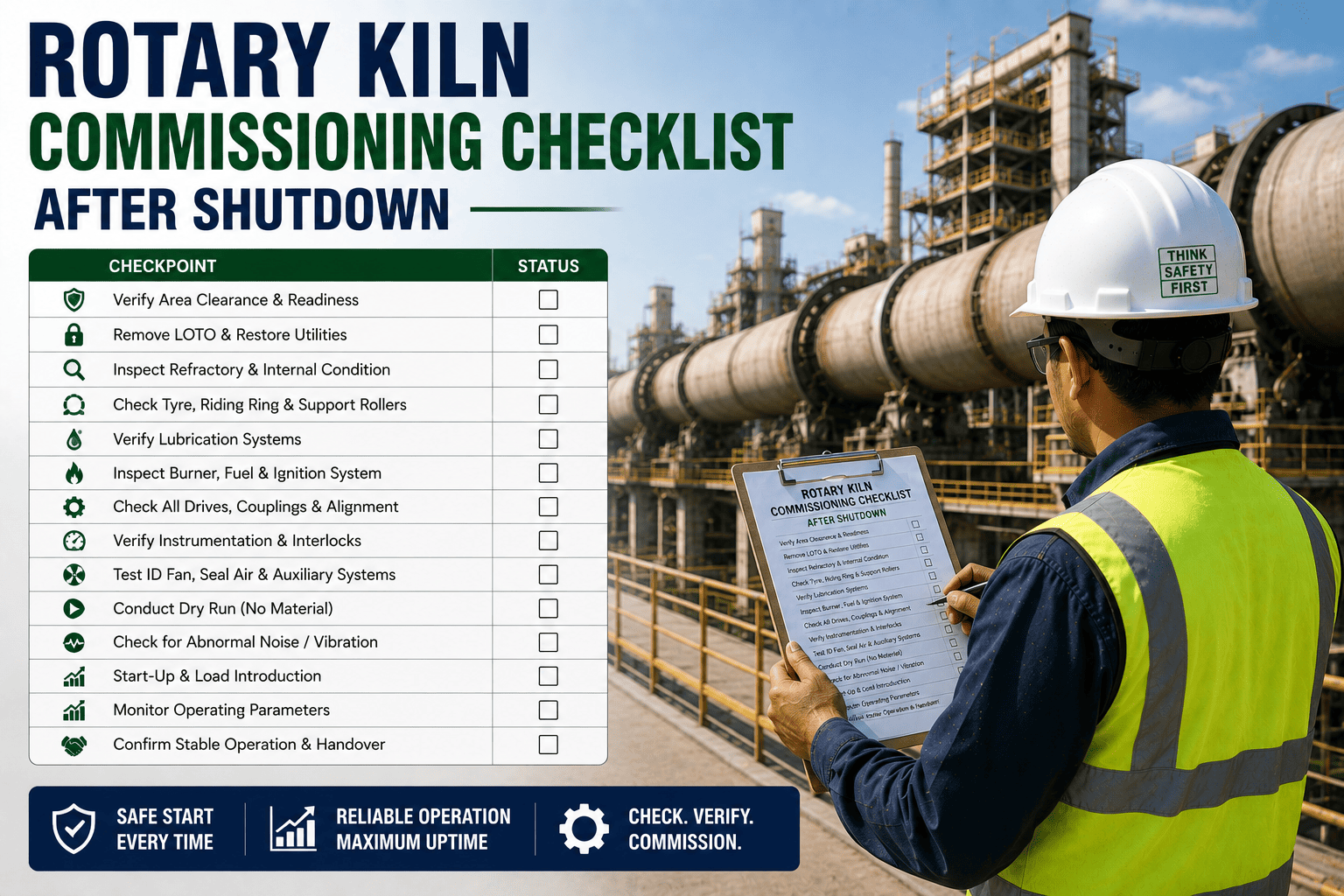
Bringing a rotary kiln back online after a shutdown is riskier than the shutdown itself, since one missed alignment check or an untested instrument can turn a routine startup into another unplanned stop within days. This checklist covers the verification steps worth completing before the kiln takes its first turn again. Sign up to run this commissioning checklist as a guided digital process for every restart.
3 Stages
Verification phases every kiln should clear before it returns to production
First 72 Hrs
Window where most post-shutdown failures reveal themselves
Cold Alignment
The one check that has to happen before the refractory is cured or fired
Zero Shortcuts
Tolerance for skipping the curing schedule just to hit a startup date
Why Commissioning Deserves Its Own Checklist
Every job completed during a shutdown is a variable introduced into the kiln. New refractory, refitted bearings, and realigned tyres all behave differently under load than they did on paper. Commissioning is where those variables get confirmed before the kiln is trusted to run unattended again.
Refractory & Mechanical Verification
Inspect New Refractory Lining
Check joints, anchors, and brick courses for gaps before any heat is applied
Confirm Cold Shell Alignment
Verify tyre and roller alignment while the shell is cold, since heat will mask small errors until it's too late
Torque Check Bolted Connections
Recheck bolt torque on girth gear segments, tyre pads, and drive couplings after any work touched them
Don't Let A Rushed Startup Undo The Shutdown
Oxmaint turns commissioning into a signed-off digital checklist, so no step gets skipped just to hit a startup deadline. Sign up for a free trial to run your next commissioning, or book a demo to see it in action.
Alignment & Instrumentation Checks
Calibrate Temperature Sensors
Verify shell and bearing thermocouples against a reference before relying on their readings during startup
Test Vibration Monitoring
Confirm bearing vibration sensors are transmitting live data before the drive is engaged
Verify Lubrication Flow
Confirm oil is reaching every bearing and gear mesh point before the kiln is rotated under power
Startup & Curing Procedure
Follow The Refractory Curing Schedule
Bring temperature up in the stages the refractory supplier specifies, even if it extends the startup timeline
Run The Kiln On Auxiliary Drive
Rotate slowly on the auxiliary drive first to confirm nothing binds before switching to the main drive
Log Baseline Readings
Record shell temperature, bearing readings, and current draw once stable, so this becomes the new baseline for comparison
What A Skipped Step Can Cost You
| Check Skipped |
Likely Consequence |
| Cold alignment check |
Misalignment shows up as tyre wobble once the shell heats up and expands |
| Refractory curing schedule |
Thermal shock cracks the new lining within the first few days of operation |
| Sensor calibration |
A real fault gets missed because the reading was never trustworthy to begin with |
| Auxiliary drive test run |
A binding component gets discovered only after the main drive is already under load |
Where A CMMS Fits Into Commissioning
Oxmaint turns this commissioning checklist into a sign-off sequence tied to the kiln asset, so every reading is logged and every check is confirmed complete before the kiln is handed back to operations.
Frequently Asked Questions
Q
Why is alignment checked cold instead of after startup?
A cold shell hasn't expanded yet, so any misalignment is easier to measure and correct before heat masks it or turns it into a running problem.
Q
How long does refractory curing typically take?
Curing schedules vary by supplier and lining type, but most require a staged temperature rise over one to three days rather than a fast fire-up.
Q
Can a CMMS track commissioning sign-offs?
Yes, a CMMS can log each commissioning check against the kiln asset with a timestamp and responsible person, creating a clear record before the unit returns to production.
Commission Your Kiln With Confidence, Not Guesswork
Oxmaint guides your team through every commissioning check and logs the readings automatically, so the kiln goes back into production only when it's actually ready. Sign up for a free trial to run your next commissioning, or book a demo to see it in action.