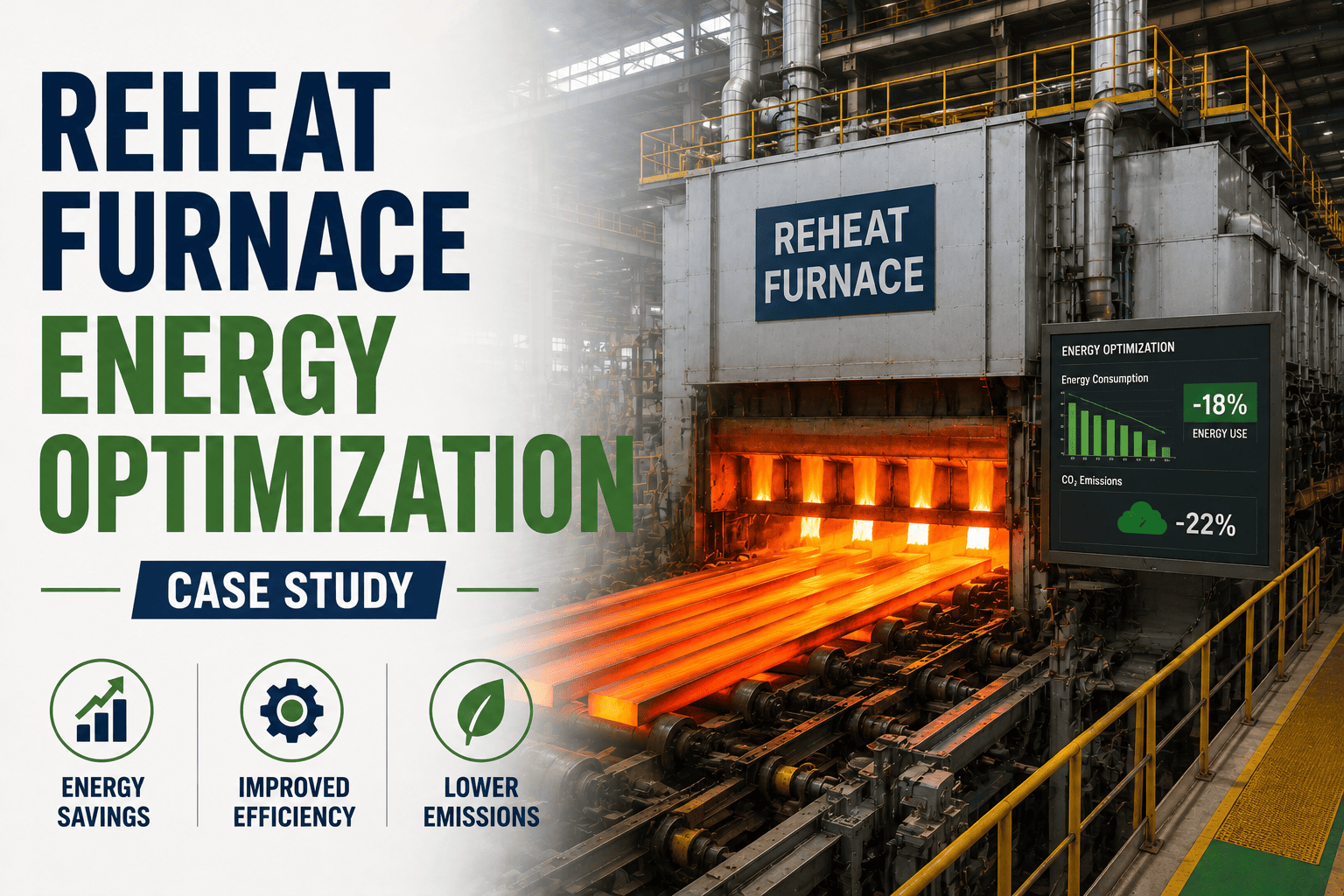
Reheat Furnace Energy Optimization

By Mark strong on August 1, 2026

reheat-furnace-energy-optimization

A reheating furnace can account for 60 to 80% of a rolling mill's total fuel spend, which means small, invisible losses turn into real money fast. An air-fuel ratio drifting just 3 to 5% above stoichiometric can push gas consumption up 8 to 12% per heat cycle, and none of it shows up anywhere until the monthly gas invoice arrives. This case study covers how one reheat furnace operation used a CMMS to catch burner drift, false air infiltration, and recuperator fouling early, and brought fuel consumption down without slowing the furnace or the mill behind it. Sign up to see this kind of tracking against your own furnace data.

The Challenge

Burner tuning happened on a fixed interval regardless of how far the air-fuel ratio had actually drifted, door and seal leaks let false air infiltrate the furnace and dilute combustion without anyone noticing, and the recuperator kept running well past the point where scale fouling had cut its waste heat recovery. Every one of these losses was individually small and collectively expensive, and none of them triggered an alarm on their own.

Results After Structured Combustion Monitoring

-7% Fuel Use
Reduction in specific fuel consumption per tonne reheated after burner, seal, and recuperator monitoring went live
Zero Unplanned Stops
Unplanned furnace stoppages tied to burner or door seal failure in the year following rollout
30% Recovery Restored
Waste heat recovery brought back up from a fouled 15% toward the clean-baseline 25 to 35% range

Where The Fuel Savings Came From

Burner Tuning & O2 Trim
False Air Sealing
Recuperator Cleaning
Roughly half of the total fuel reduction came from tightening air-fuel ratios on drifting burners, with false air sealing at doors and skid pipes and recuperator fouling cleanup splitting the rest.
Catch Burner Drift Before It Shows Up On The Gas Invoice

Oxmaint tracks burner air-fuel ratio, door seal condition, and recuperator differential pressure in one place, so fuel loss is caught at the source instead of the invoice. Sign up for a free trial to run it against your own furnace, or book a demo to walk through this case study in detail.

Reheat Furnace Maintenance Before And After

Area Before After
Burner tuning Fixed interval, regardless of actual drift Triggered by logged air-fuel ratio deviation per burner ID
False air infiltration Found through rising fuel use with no clear cause Door seal and skid pipe condition inspected on a set schedule
Recuperator condition Scale fouling assessed at annual inspection only Differential pressure and preheat air temperature logged weekly
Zone combustion data Reviewed manually from periodic flue gas readings Zone O2 and CO trends logged and compared against baseline
The Results

None of the individual fixes were dramatic, a burner tuned a few weeks earlier, a door seal replaced before it fully failed, a recuperator cleaned before fouling got severe. Stacked together across a full year, they added up to a meaningful drop in fuel per tonne and a furnace that stopped losing production days to reactive burner and seal failures.

Frequently Asked Questions

Q What is false air infiltration and why does it waste fuel?
False air is unmetered ambient air that leaks into the furnace through worn door seals, skid pipe openings, or damaged refractory, diluting the combustion mix so burners have to work harder to hold temperature.
Q How much fuel can a drifting burner actually waste?
An air-fuel ratio only 3 to 5% above stoichiometric can raise gas consumption by 8 to 12% for that heat cycle, which is why catching drift early matters more than the size of the drift suggests.
Q Does a recuperator need to fail completely to waste fuel?
No, scale fouling can cut waste heat recovery from a healthy 25 to 35% of flue gas enthalpy down to 15% or less while the recuperator is still fully operational, which is why it needs its own monitoring rather than a pass or fail check.

Bring This Result To Your Reheat Furnace

Oxmaint tracks burner tuning, door seal condition, and recuperator health in one CMMS, so fuel loss is caught at the source instead of on the monthly invoice. Sign up for a free trial to see it against your own furnace data, or book a demo to walk through the full case study.



Share This Story, Choose Your Platform!