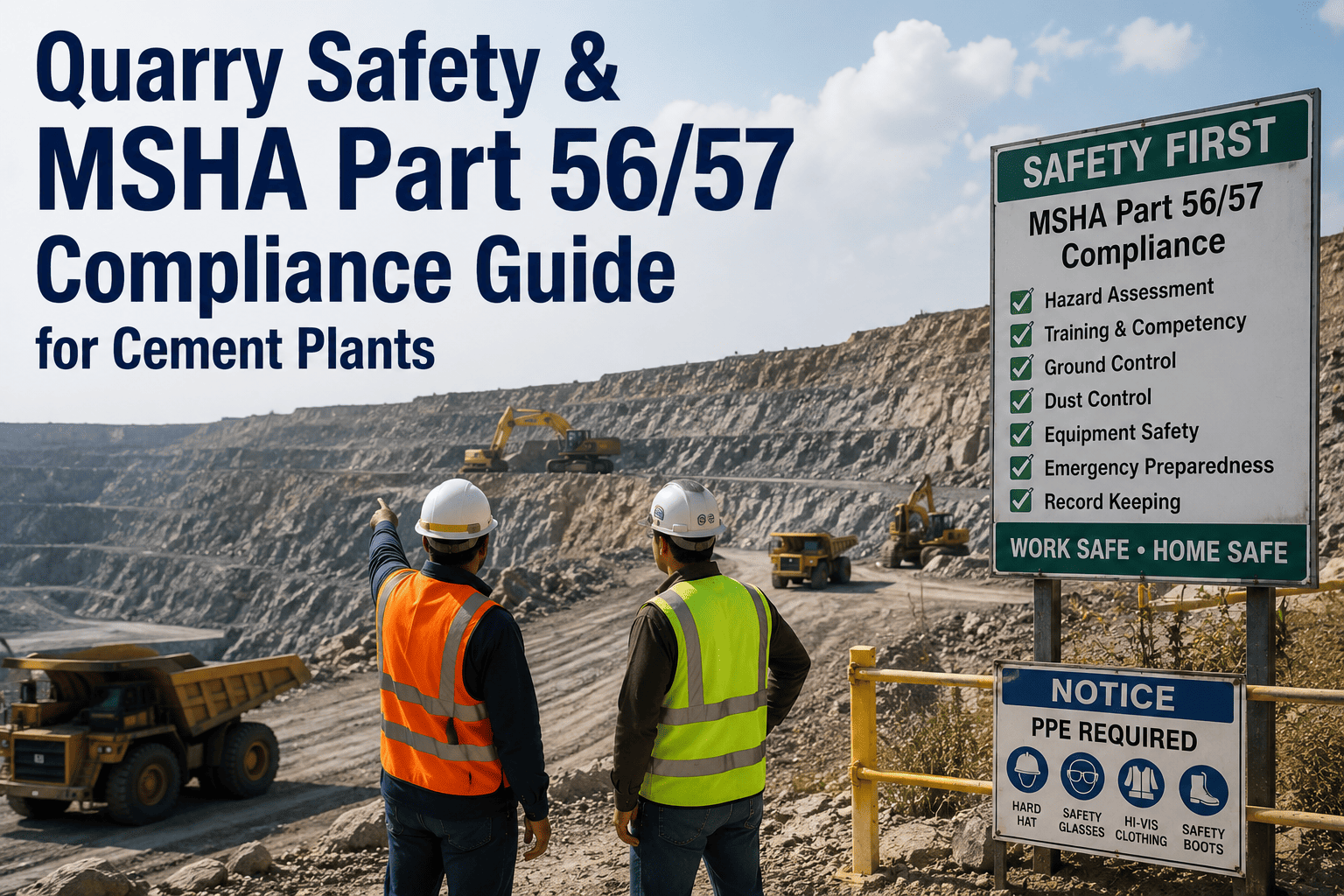
Quarry operations sit at the center of every cement plant's raw material supply — and they carry some of the highest injury rates in the mining sector. Highwall failures, mobile equipment collisions, and unguarded conveyors don't just risk MSHA citations; they risk lives and force costly stop-work orders. MSHA Part 56 governs surface metal/nonmetal mines while Part 57 covers underground operations — and most cement quarries fall under Part 56 with select underground workings under Part 57. A CMMS like OxMaint turns these standards into automated inspection schedules, training trackers, and audit-ready records so your team can sign up in minutes and start closing compliance gaps before an inspector ever shows up.
MSHA Part 56 vs Part 57: What Applies to Your Quarry
Ground Control and Highwalls
Scaling loose material, monitoring bench angles, and inspecting for cracks or bulges before crews work below. Ground failure remains a leading cause of quarry fatalities.
Mobile Equipment Safety
Haul trucks, loaders, and dozers require documented pre-operational checks — brakes, backup alarms, mirrors, and seat belts — before every shift.
Electrical Safety
Lockout/tagout on crushers and conveyors, grounding checks, and cable insulation testing prevent contact injuries and equipment fires.
Guarding of Machinery
Conveyor pinch points, crusher access, and rotating shafts must have fixed guards in place — missing guards are among the most cited MSHA violations.
Workplace Examinations
A competent person must examine each working place for hazards before miners begin work, with corrective action documented for anything found.
Quarry Safety Inspection Checklist by Frequency
OxMaint auto-generates these checklists per site — assigned to the right technician, with photo evidence and digital sign-off.
Common Quarry Hazards and CMMS Prevention
| Hazard | Risk | Root Cause | OxMaint Prevention |
|---|---|---|---|
| Highwall / ground failure | Burial, fatality | Undetected cracks, missed scaling | Monthly ground control PM with photo log and alerts |
| Mobile equipment collision | Serious injury, fatality | Blind spots, missed pre-op check | Daily pre-operational checklist with defect escalation |
| Unguarded moving machinery | Amputation, entanglement | Missing or damaged guards | Weekly guarding inspection with corrective work orders |
| Electrical contact | Shock, burns, fire | Poor grounding, damaged insulation | Monthly electrical PM with insulation test logging |
| Fall from elevation | Serious injury, fatality | Damaged walkways, missing handrails | Weekly structure inspection with instant defect flagging |
| Silica dust exposure | Long-term respiratory illness | Failed suppression systems | Daily dust system check with runtime tracking |
MSHA Training and Recordkeeping Requirements
OxMaint vs. Competitors
| Capability | OxMaint | MaintainX | UpKeep | Fiix | Limble | IBM Maximo |
|---|---|---|---|---|---|---|
| MSHA Part 56/57 templates | Yes | No | No | No | No | Custom |
| Workplace exam logging | Yes | Limited | Limited | No | No | Yes |
| Ground control tracking | Yes | No | No | No | No | Custom |
| Training/recordkeeping automation | Yes | Limited | Limited | Limited | Limited | Yes |
| Multi-site fleet view | Yes | Limited | Limited | Yes | Limited | Yes |
| Setup | Minutes | Hours | Hours | Days | Hours | Months |
Implementation Roadmap
Results
Data Security
Frequently Asked Questions
What is the difference between MSHA Part 56 and Part 57?
Part 56 covers surface metal and nonmetal mines, including most cement quarries. Part 57 covers underground operations. Many cement plants operate primarily under Part 56 with select underground workings falling under Part 57.
How often is a workplace examination required?
A competent person must examine each working place at least once per shift before miners begin work, documenting any hazards found and the corrective action taken.
What training does a new quarry miner need?
New miners require 24 hours of training before working independently, plus site-specific task training whenever assigned new equipment or duties.
What records does MSHA expect during an inspection?
Workplace examination logs, equipment pre-operational checks, training and refresher records, and ground control inspection history. OxMaint generates all of this automatically as your team works.
Can OxMaint manage multiple quarry sites at once?
Yes. OxMaint provides a single dashboard across every quarry site with site-specific checklists, training tracking, and portfolio-wide compliance reporting.







