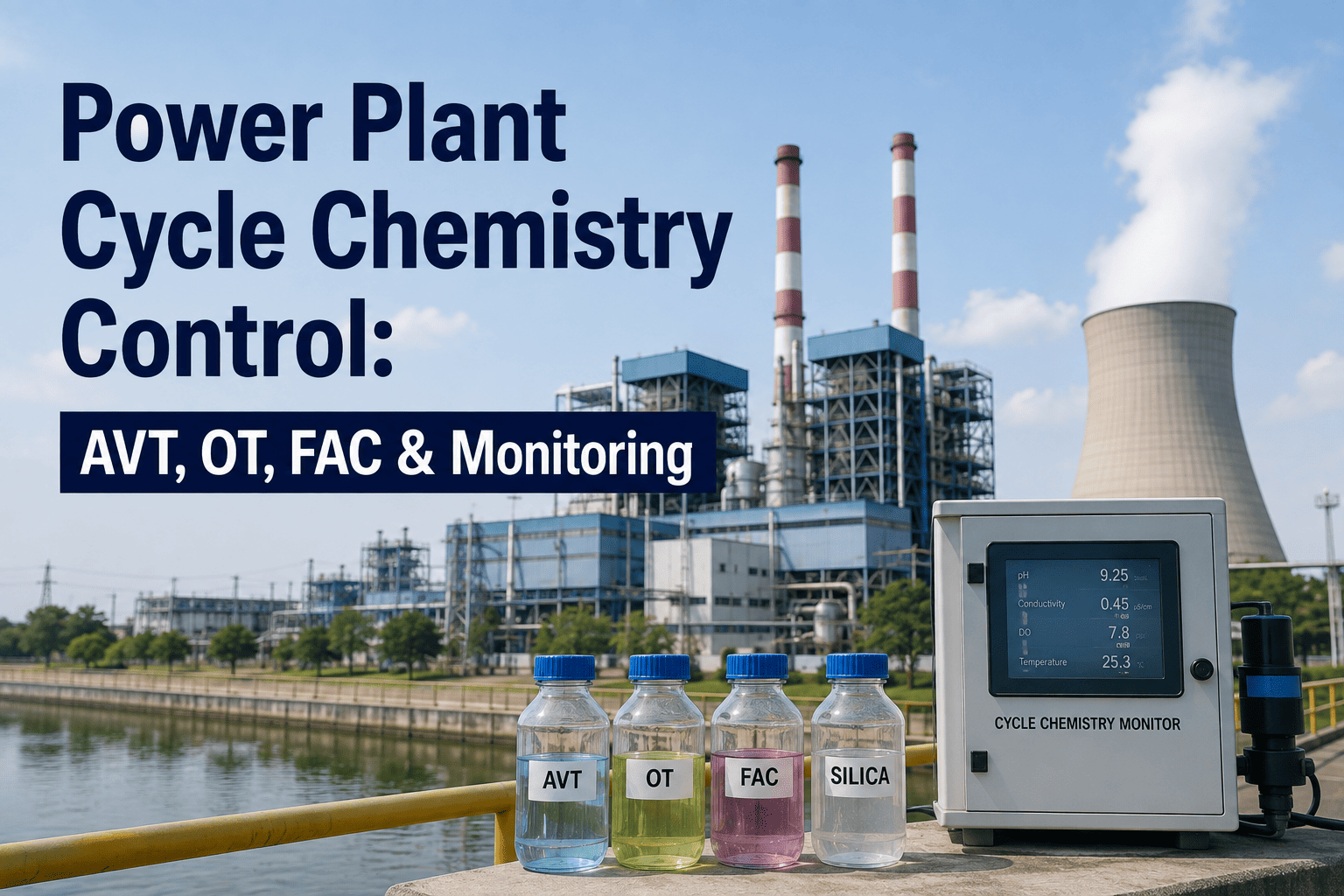
Cycle chemistry rarely fails a plant in one dramatic moment. It fails one drifted pH reading, one skipped dissolved oxygen check, one hydrazine dose logged late, until flow-accelerated corrosion has already thinned a bend nobody was watching. AVT, OT, and phosphate programs all work on paper. What separates a plant that runs decades without a chemistry-related failure from one that doesn't is whether every reading gets logged, trended, and acted on. Sign up to track pH, conductivity, dissolved oxygen, and iron transport against limits for every unit in your fleet.
Why It Matters
Flow-accelerated corrosion has taken down units with no warning beyond a chemistry trend nobody plotted. Wrong oxygen levels in an AVT(R) feedwater system corrode carbon steel piping from the inside, and that damage is invisible until a tube or elbow fails. Consistent chemistry monitoring is what turns an invisible failure mode into a predictable maintenance item.
Comparing The Cycle Chemistry Treatment Programs
| Program |
Feedwater Condition |
Best Fit |
Main Risk If Mismanaged |
| AVT(R) |
Reducing, oxygen scavenger dosed |
All-ferrous systems with mixed metallurgy |
Flow-accelerated corrosion in carbon steel piping |
| AVT(O) |
Slightly oxidizing, no scavenger |
High purity feedwater, low FAC risk units |
Corrosion if oxygen drifts outside the narrow band |
| OT |
Oxygenated, controlled O2 injection |
Supercritical units with very pure makeup water |
Rapid corrosion if condensate purity isn't guaranteed |
| Phosphate / Caustic |
Buffered boiler water pH |
Drum boilers needing pH buffering capacity |
Phosphate hideout during load swings |
The Parameters Every Program Depends On
pH
Kept within a tight band to minimize both general corrosion and caustic attack across feedwater and boiler water
Dissolved Oxygen
The single most program-defining reading, since every AVT and OT limit is built around a target oxygen range
Cation Conductivity
A rising trend is often the first sign of condenser in-leakage or makeup water contamination reaching the cycle
Iron Transport
Elevated iron in feedwater samples is the clearest direct evidence that flow-accelerated corrosion is underway
Stop Chasing Chemistry Logs Across Shifts
Oxmaint records pH, dissolved oxygen, conductivity, and iron transport against your program limits for every unit, so a drift gets flagged before it becomes corrosion. Sign up for a free trial to bring chemistry tracking to your fleet, or book a demo to see it configured for your program.
How Flow-Accelerated Corrosion Progresses Unwatched
Oxygen Drift
Reading outside band
Wall Thinning
Iron transport climbs
Critical Thickness
Inspection catches it, or not
Pipe Failure
Unplanned outage
FAC gives almost no visible warning until the wall is thin enough to fail. A logged oxygen trend and periodic iron transport checks are what turn this into a scheduled pipe replacement instead of a rupture during startup.
Building A Chemistry Monitoring Routine
Set Limits For The Chosen Program
pH, oxygen, conductivity, and iron limits are set to match whichever program the unit runs, since a limit borrowed from a different program will be wrong
Log Every Shift Reading Against Those Limits
Manual grab samples and online analyzers both feed the same trend, so a reading logged inconsistently is a gap the next shift can't see
Trend Iron Transport Against Inspection Findings
Comparing periodic iron transport readings to actual wall thickness loss at outages confirms whether the program is holding or drifting
4
Review Drift Patterns Before Every Outage
A pattern of near-limit excursions in the weeks before an outage tells the inspection team exactly which piping runs to prioritize
The Payoff
A chemistry program that's logged, trended, and reviewed against outage findings turns FAC from a surprise into a predictable line item on the inspection scope. A program that exists only as paper limits nobody checks against real trends offers no protection at all, no matter how correct the limits are on paper.
Frequently Asked Questions
Q
How do I know which cycle chemistry program is right for my unit?
The choice depends mostly on metallurgy and makeup water purity. All-ferrous systems typically run AVT(R), high purity systems with low FAC risk can run AVT(O), and supercritical units with very clean condensate are the usual candidates for OT. Drum boilers needing pH buffering often stay on phosphate or caustic treatment.
Q
Why does dissolved oxygen matter so much more than other readings?
Because oxygen level is what defines the treatment program itself. AVT(R) depends on a low, reducing oxygen level, AVT(O) depends on a narrow slightly oxidizing band, and OT depends on a higher controlled oxygen level. A drift outside the defined band effectively puts the unit on the wrong program without anyone deciding that.
Q
Can chemistry monitoring alone prevent flow-accelerated corrosion?
Monitoring reduces the risk substantially by keeping oxygen and pH within the band that limits FAC, but it works alongside periodic wall thickness inspection at known high-risk locations. Chemistry control slows the corrosion rate; inspection confirms the piping is still within safe limits.
Keep Every Chemistry Reading In One Trend
Oxmaint records pH, dissolved oxygen, conductivity, and iron transport against your program limits for every unit in the fleet, so a drift never sits unnoticed between shifts. Sign up for a free trial to bring chemistry tracking to your units, or book a demo to see it configured for your program.