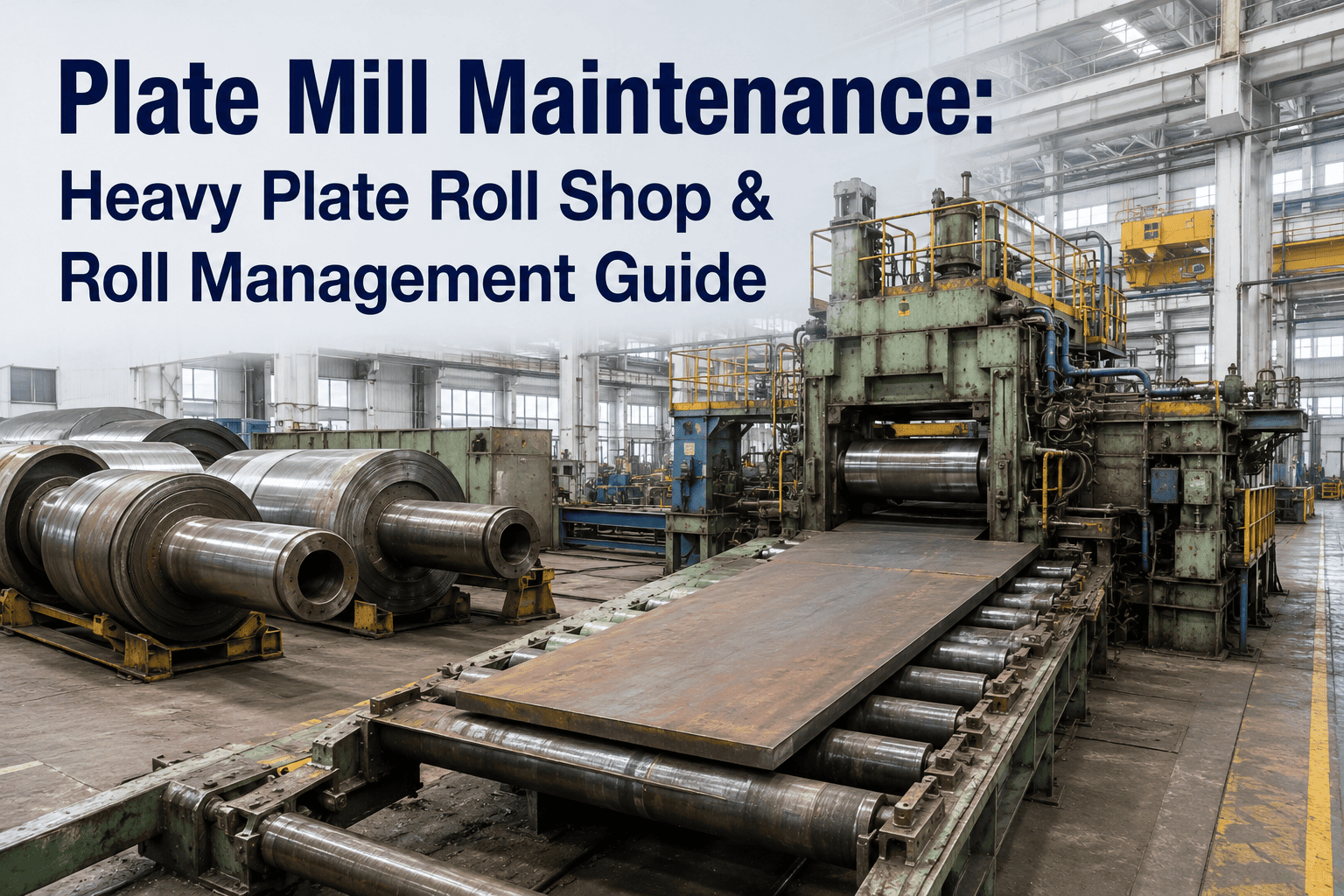
Plate Mill Maintenance: Heavy Plate Roll Shop & Roll Management Guide

By Mark strong on July 17, 2026

plate-mill-maintenance-roll-shop-guide

A plate mill lives or dies on its rolls. Heavy gauge steel does not forgive a work roll with an uneven crown, a backup roll bearing running hot, or a leveler cassette out of flatness tolerance. Unlike thinner strip products, plate cannot be pulled through a second pass to fix a shape defect, once the plate is off the mill, the shape, flatness and surface finish are set. Sign up to see how Oxmaint tracks work rolls, backup rolls and levelers across your plate mill roll shop in one place.

3 Roll Types
Work rolls, backup rolls and leveler rolls each wear on a different cycle
0 Second Pass
Heavy plate does not get re-rolled to correct a shape or crown defect
1 Hot Bearing
On a backup roll neck is often the first sign of an unplanned mill stop

The Roll Shop Is the Real Engine Room

Why Roll Condition Decides Plate Quality

Every plate that comes off the mill carries the exact profile of the rolls that shaped it. A work roll with uneven wear transfers a crown error straight into the plate, a backup roll under excess load deflects and changes the rolling gap mid-pass, and a leveler cassette with worn rolls leaves residual stress that only shows up as camber once the plate is cut. None of these can be corrected after the fact, they have to be caught in the roll shop before the roll ever goes back on the mill.

Where Roll Wear Actually Shows Up

Work Rolls

Surface wear and thermal fatigue from direct contact with hot plate gradually change the roll crown, producing thickness variation across the plate width that grinding schedules are meant to catch early.

Backup Rolls

Bearing wear and neck fatigue under sustained separating force show up first as a temperature rise, and if missed, escalate into roll deflection that distorts flatness across the whole pass.

Leveler Rolls

Uneven roll gap or worn leveler rolls leave residual stress in the plate that does not appear on the mill, it shows up later as camber or twist once the plate is cut to length.

Roll Shop Checks That Actually Prevent Rejects

Asset Common Wear or Failure Mode Preventive Task
Work rolls Crown drift and surface spalling from repeated hot contact cycles Roll profile measurement and grinding schedule tracking per campaign
Backup roll bearings Neck bearing wear under sustained separating force during heavy passes Bearing temperature and vibration monitoring on fixed intervals
Leveler cassette Roll gap unevenness introducing residual stress and camber Leveler roll gap calibration check before each production run
Roll chocks & bearings Chock housing wear allowing lateral roll movement under load Chock alignment and clearance inspection at roll change
Hydraulic screw down Position drift affecting gap accuracy pass over pass Screw down position and seal condition check on schedule
Every Roll, Every Bearing, One Reliability Record

Oxmaint registers work rolls, backup rolls, leveler rolls, chocks and screw down assemblies as tracked assets with their own wear history, so a flatness or camber issue can be traced back to the exact roll that caused it. Sign up for a free trial to see it against your own plate mill, or book a demo and we will walk through your roll shop.

Fixed Grinding Schedules vs Predictive Maintenance

Approach How It Plays Out Result on Plate Quality
Reactive repair Flatness or camber issue is caught only at final plate inspection Full batch downgrade risk and unplanned mill downtime
Fixed schedule grinding Work rolls reground at set intervals regardless of actual crown wear Rolls pulled too early or run too long between regrinds
Predictive maintenance Roll profile, bearing temperature and leveler gap trended against real wear data Regrinds and roll changes timed to actual condition, not the calendar
How Oxmaint Supports Plate Mill Roll Shop Reliability

Oxmaint tracks work rolls, backup rolls, leveler rolls, chocks and hydraulic screw downs as individual assets, logging inspection readings and wear trends against each one. A backup roll bearing running hot or a work roll approaching its regrind limit triggers a work order early, before it ever shows up as a rejected plate. Book a demo to see it mapped against your own roll shop.

Frequently Asked Questions

Q Why does plate mill maintenance depend so heavily on roll condition?
Because heavy plate is not re-rolled to fix a shape defect the way thinner strip can be, so the exact profile of the work roll, backup roll and leveler carries straight through into the finished plate.
Q What usually causes a backup roll to overheat during rolling?
Sustained separating force during heavy plate passes gradually wears the neck bearings, and a rising bearing temperature is typically the earliest warning sign before deflection affects flatness.
Q Why does camber show up only after the plate is cut to length?
Uneven leveler roll gap leaves residual stress locked inside the plate during rolling, and that stress only releases and shows up as camber or twist once the plate is trimmed and cut.
Q How can a plate mill move from fixed grinding schedules to predictive maintenance?
Register each roll shop asset, work rolls, backup rolls, levelers, chocks and screw downs, as a tracked asset, then log condition readings against it so wear is caught and acted on before it reaches a finished plate.

Catch Roll Wear Before It Reaches a Finished Plate

Oxmaint gives steel plant teams work roll profile tracking, backup roll bearing monitoring, leveler gap checks and predictive maintenance across the entire plate mill roll shop. Sign up for a free trial to explore it yourself, or book a demo and we will walk through it against your own mill.

Share This Story, Choose Your Platform!