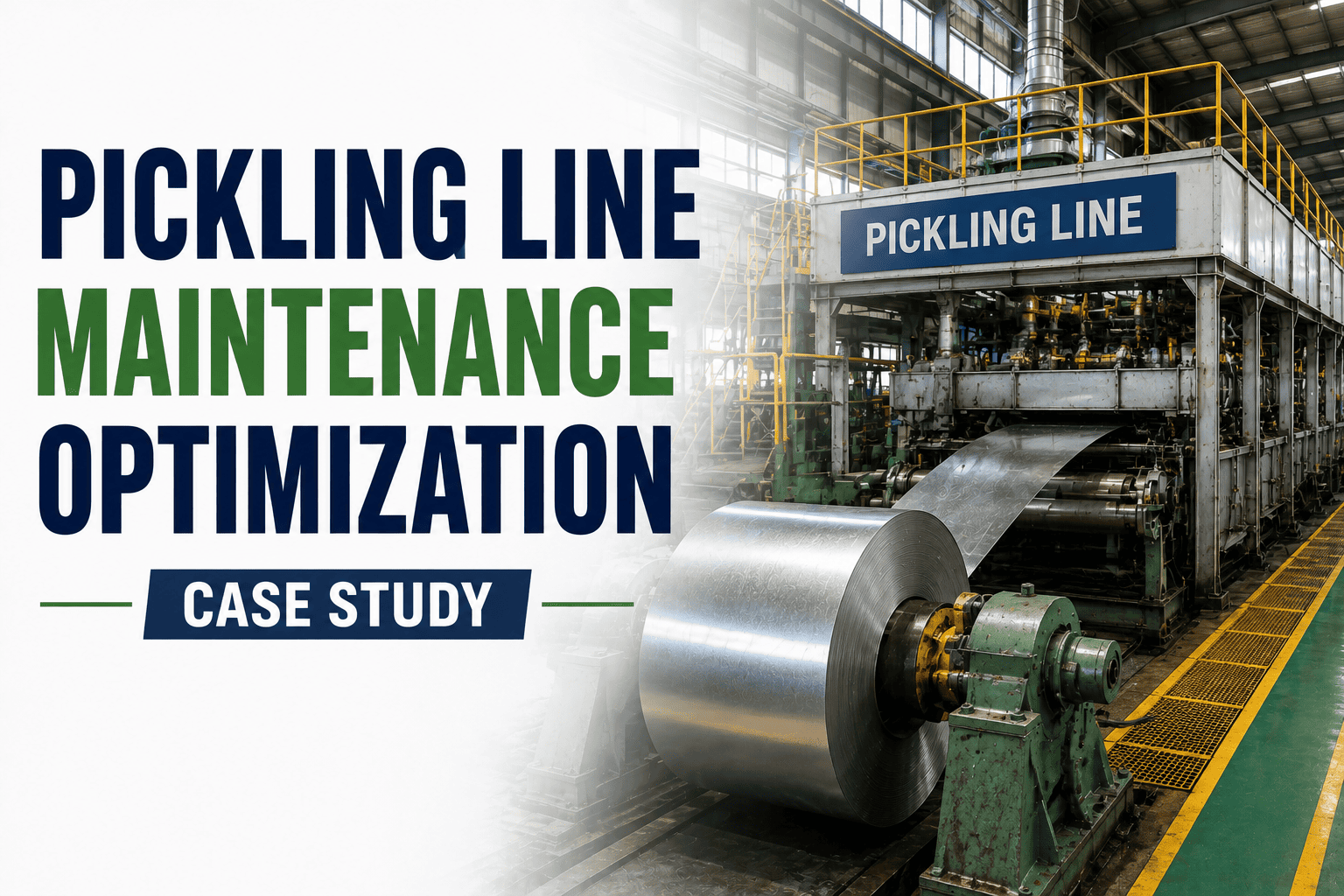
A steel pickling line only works if the acid stays in spec, the tank linings stay intact, and the regeneration plant keeps recovering hydrochloric acid instead of losing it to fouled absorption columns. Most lines still run this on shift logs and clipboard inspections, which means a lining crack is found after acid leaks into secondary containment, and a scrubber pressure drop is found when the HCl alarm goes off. This case study covers how one pickling line moved to CMMS-tracked tank and regeneration monitoring, cut acid consumption, and stopped losing production hours to reactive tank repairs. Sign up to see the same monitoring set up against your own pickling line.
Acid concentration and temperature were checked by hand once or twice a shift, tank lining wear was assessed only during scheduled outages, and the regeneration plant's absorption column fouling was invisible until recovery efficiency had already dropped. Acid consumption crept up quarter over quarter because operators were compensating for regeneration losses instead of catching the fouling that caused them.
Results After Switching To Condition-Based Monitoring
Acid Consumption, Before And After
Oxmaint tracks tank lining condition, acid concentration, and regeneration plant fouling in one system, so acid loss gets caught at the source. Sign up for a free trial to run it against your own pickling line, or book a demo to walk through this case study in detail.
Pickling Line Maintenance Before And After
Once tank lining, scrubber pressure, and regeneration fouling were all visible in one place, the line stopped paying for acid it was losing to inefficiency, and stopped discovering tank problems by way of a leak. Compliance documentation that used to take a week to assemble before an audit was generated in minutes, and every inspection had a timestamped record behind it.
Frequently Asked Questions
Bring This Result To Your Pickling Line
Oxmaint tracks tank lining, acid concentration, and regeneration plant health in one CMMS, so acid loss and tank wear are caught before they become a leak or a rising acid bill. Sign up for a free trial to see it against your own pickling line data, or book a demo to walk through the full case study.