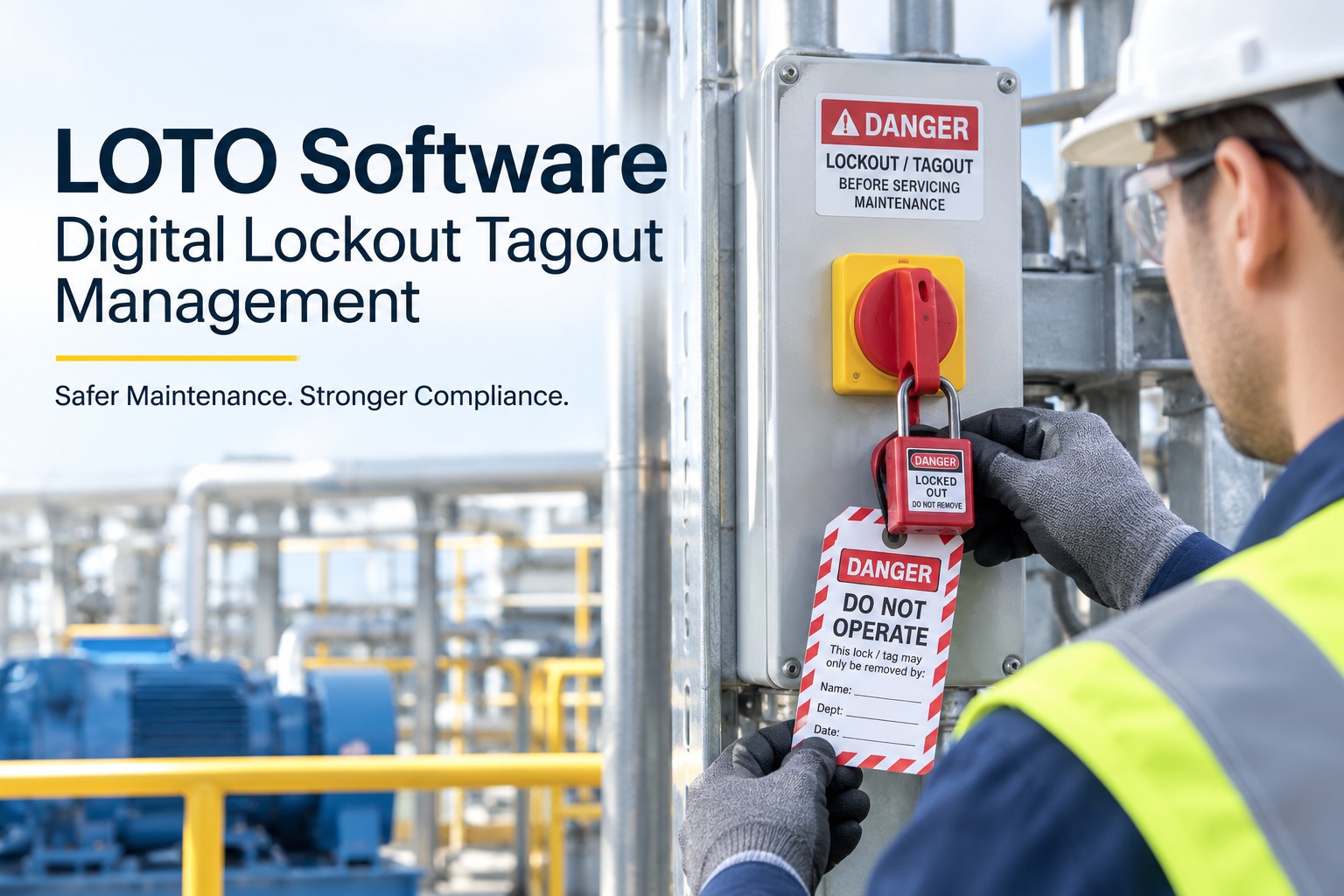
A technician padlocks the disconnect on a filler drive motor, hangs a tag, puts the key in his pocket. A contractor asks one question: "Have you proved it dead?" He hadn't. That single missing step — a padlock with no voltage verification — is how someone touches a circuit that a second supply still feeds. HSE data shows around 25 people die in UK electrical accidents at work every year, with far more serious injuries from uncontrolled energy release. Oxmaint gives maintenance teams a digital LOTO workflow that enforces every step. Book a demo to see LOTO workflows in action.
!
UK ENERGY ISOLATION · WHY LOTO EXISTS
One lock, one key, one authorised person — proved dead before hands go near
PUWER 1998 Regulation 19 requires equipment to have means of isolation. Electricity at Work Regulations 1989 Regulation 13 requires precautions against re-energisation during work. Together they mandate a written, verifiable isolation procedure for every hazardous energy source.
The Seven Hazardous Energies — Every LOTO Procedure Must Address These
Most people think LOTO means "turn off the electricity". It doesn't. Every piece of maintained equipment carries multiple energy forms — and every one must be identified, isolated and dissipated before work begins. Missing a single stored-energy source is how technicians get injured on "isolated" equipment. The six categories below cover every energy type UK maintenance teams meet on the shop floor, plus the seventh — human error — that combines them all.
Electrical
Mains, battery, backup supply, capacitors. Requires two-pole voltage indicator + proving unit. Regulation 13 EAW 1989.
Mechanical
Rotating parts, springs, counterweights, flywheels. Requires physical blocking, restraint or complete de-energisation.
Hydraulic
Pressurised oil in cylinders, accumulators, hoses. Must be bled to zero pressure with residual verification before disconnection.
Pneumatic
Compressed air in receivers, lines, cylinders. Must be vented to atmosphere and blocked before opening any pneumatic circuit.
Thermal
Steam, hot surfaces, cryogenic fluids. Requires temperature verification and dissipation time before contact.
Chemical
Process fluids, reactive materials, hazardous gases. Requires line breaking, blanking, purging per COSHH controls.
The seventh energy source is human — assumed isolation, missed step, cut-off lock, unfinished work at shift change. Every documented LOTO fatality involves at least one of these human failures alongside the physical energy source.
The LOTOTO Process — 8 Steps That Can't Be Skipped
UK best practice extends LOTO into LOTOTO — Lockout, Tagout, Tryout — adding the critical verification step that separates "I locked it" from "I proved it was dead". Every one of the 8 steps below must be documented and completed in order. Skipping the try-out step is the single most common pattern in UK maintenance fatalities involving energy release.
01
Prepare & notify
Identify equipment, all energy sources, controls required. Notify affected personnel that isolation is about to happen.
02
Orderly shutdown
Follow the equipment's normal shutdown sequence. Never begin isolation on running equipment.
03
Isolate every energy source
Disconnect electrical, close valves, block mechanical parts, vent pneumatic and hydraulic systems. Every source, not just the main one.
04
Apply personal lockout device
Each authorised worker applies their own personal padlock. One person, one lock, one key — held by the worker throughout.
05
Attach tag with details
Tag names the worker, work being done, contact details, expected duration. Provides visual warning and accountability.
06
Dissipate stored energy
Release pressure, discharge capacitors, wait for thermal cool-down, release springs. Locked ≠ safe until stored energy is gone.
07
Try-out · Prove it dead
Attempt to start the equipment via normal controls. For electrical, use two-pole voltage indicator + proving unit. Zero energy verified.
08
Work · then reverse the process
Carry out work. On completion, reverse every step: clear area, restore stored energy safely, remove personal locks, tags, then re-energise.
See Digital LOTO in Action
Walk through digital LOTO procedure templates per asset, mobile isolation checklists with photo evidence at every step, LOTOTO try-out verification capture, and permit-to-work integration — configured against your site's isolation procedures. Thirty minutes with the Oxmaint team.
LOTO vs Safe Isolation — The Terminology That Trips UK Sites Up
UK teams routinely mix "LOTO" and "safe isolation" as if they mean the same thing. They overlap but they're not identical — different regulatory families, different verification standards, different scopes of energy. Getting the terminology confused is usually harmless; getting the procedure confused is how people die on maintained equipment. The panel below clarifies exactly where they differ and where they converge.
SAFE ISOLATION
UK & European terminology
ScopeElectrical dead working (primarily)
RegulationEAW 1989 Reg 13 & 14
VerificationTwo-pole voltage indicator + proving unit
FocusProving conductor is dead at point of work
DefaultDead working — live work is exception
LOCKOUT/TAGOUT
US & global equipment terminology
ScopeAll hazardous energy · every source
RegulationPUWER 1998 (UK) · OSHA 1910.147 (US)
VerificationTry-out — attempt normal start
FocusPreventing accidental re-energisation
DefaultWritten procedure per equipment type
Compliant UK sites combine both — LOTOTO for the physical lockout and Safe Isolation for the electrical verification at point of work. Oxmaint templates cover both regimes. Sign up free to build your first LOTO procedure.
Where Paper-Based LOTO Actually Fails
The failure modes across UK sites are consistent: LOTO forms filed after the work, with no photo evidence of the actual lockout state. Try-out step ticked without being performed. Personal padlocks cut off at shift change because "the original worker went home". Contractor padlocks confused with maintenance padlocks on the same isolation hasp. No record of which stored-energy sources were dissipated. When something goes wrong, the paperwork exists — but the audit trail is unverifiable. Digital LOTO closes each of these gaps: photo required at every physical step, try-out verification captured on-device, personal locks tied to individual user credentials, and every isolation linked to the specific work order it protects. Sign up free to eliminate paper LOTO gaps.
Expert Perspective — What Makes a Digital LOTO Actually Prevent Incidents
"
Every LOTO fatality investigation eventually reaches the same finding — the paperwork looked fine on paper. What was missing was proof: proof the try-out actually happened, proof the stored energy was dissipated, proof the personal lock was still on when work resumed after break. Paper systems can't provide this proof because paper doesn't timestamp itself, doesn't attach photos, doesn't lock signatures to individuals. Digital LOTO does. Every step timestamped and attributable, every physical action photographed, every isolation linked to the work order it protects. When something does go wrong — and eventually something will — the digital audit trail is what tells investigators whether the procedure was followed or bypassed. That evidence chain is the whole point.
01
Photo at every physical step
Lock applied · tag attached · try-out result · voltage-indicator reading. Physical proof, timestamped, geo-tagged.
02
One person · one lock · one key
Personal padlocks tied to individual user credentials. Nobody else's LOTO record shows your name.
03
Try-out cannot be skipped
Workflow blocks progression until try-out step is completed and photographed. Physical enforcement, not honour system.
04
Linked to the work order
Every LOTO record ties to the WO it protects. Full evidence chain from isolation to work completion to re-energisation.
Who Uses Oxmaint for LOTO Management
The platform is used by the UK operational roles that carry energy isolation accountability: maintenance managers running LOTO programmes across manufacturing sites, health & safety managers auditing isolation procedure compliance, engineering managers coordinating shutdown and turnaround isolations across multi-source assets, reliability engineers linking LOTO history to equipment failure patterns, EHS managers running competent-person training and authorisation records, facilities managers managing HVAC and utilities isolation across multi-building portfolios, and contractors requiring visibility of client LOTO procedures before mobilisation. Each role sees the same LOTO data filtered to their view — active isolations, procedure templates, incident investigation evidence or authorised-person register. Sign up free to configure roles for your LOTO programme.
Getting LOTO Live Across Your Site
Deployment starts with importing your existing equipment register and any current LOTO procedures — most sites have a subset of "critical asset" procedures documented and a long tail undocumented. Oxmaint templates cover the standard 8-step LOTOTO structure per energy source; site-specific isolation points, valve numbers and physical lockout devices configure inline per asset. Authorised-person register imports from existing training records. Mobile deployment to maintenance and contractor teams goes live within the first two weeks; most sites have their top 50 asset LOTO procedures digitised inside 30 days. Book a walkthrough to see live UK LOTO deployments.
Turn LOTO From Paper Ritual Into Verifiable Safety Evidence
Oxmaint gives maintenance and safety teams one platform for digital LOTO procedures, mobile isolation checklists with photo evidence, LOTOTO try-out verification, authorised-person controls and full linkage to the work order — architected around the way UK sites actually work.
Frequently Asked Questions
What is LOTO and why does UK maintenance need it?
LOTO (Lockout/Tagout) is a safety procedure that isolates hazardous energy sources on equipment before maintenance work begins, ensuring the equipment cannot be re-energised or release stored energy while workers are on or near it. UK maintenance operates under PUWER 1998 (Provision and Use of Work Equipment Regulations) which requires suitable means of isolation, and the Electricity at Work Regulations 1989 which specifically requires precautions against re-energisation. HSE data shows around 25 people die every year in UK electrical accidents at work, with many more suffering serious injuries — most preventable through disciplined LOTO practice.
What's the difference between LOTO and LOTOTO?
LOTO is Lockout/Tagout — isolating the energy source and applying a lock and tag. LOTOTO adds the critical Try-Out step: after locking and tagging, the worker attempts to start the equipment via its normal controls to verify the isolation is effective. For electrical work, this includes using a two-pole voltage indicator (verified against a proving unit) at the point of work. UK best practice treats LOTOTO as the minimum standard — LOTO without try-out has been the cause of multiple documented fatalities where an assumed-isolated circuit was still energised via a second supply the technician hadn't identified.
What energy sources need to be isolated under LOTO?
Six categories cover every industrial energy source: Electrical (mains, battery, backup supplies, stored capacitor charge), Mechanical (rotating parts, springs, counterweights, flywheels), Hydraulic (pressurised oil in cylinders, accumulators, hoses), Pneumatic (compressed air in receivers and lines), Thermal (steam, hot surfaces, cryogenic fluids), and Chemical (process fluids, reactive materials, hazardous gases). Every equipment-specific LOTO procedure must identify every energy source present, specify how each is isolated and dissipated, and provide verification steps for each. Missing a single stored-energy source is the most common cause of injury on "isolated" equipment.
Can LOTO checklists be completed on mobile?
Yes. Oxmaint's LOTO workflow is fully mobile — the authorised technician follows the isolation checklist on the device, captures photo evidence at each physical step (lock applied, tag attached, valve closed, try-out result), records the two-pole voltage-indicator reading where applicable, and completes the workflow with the personal user credentials tied to their padlock. Everything is timestamped and geo-tagged. The mobile app works offline in plant rooms and basements — records sync when the device reconnects.
Can LOTO records be linked to work orders?
Yes — this is the core value of managing LOTO inside a CMMS rather than a standalone LOTO app. Every LOTO record ties to the specific work order the isolation protects; every work order shows the current isolation status of the asset it's raised against; every completed WO carries the LOTO record as part of its evidence pack. This gives maintenance managers real-time visibility of which assets are currently isolated and by whom, gives incident investigators a complete evidence chain from isolation to work to re-energisation, and gives auditors the traceable LOTO history HSE inspectors typically request.