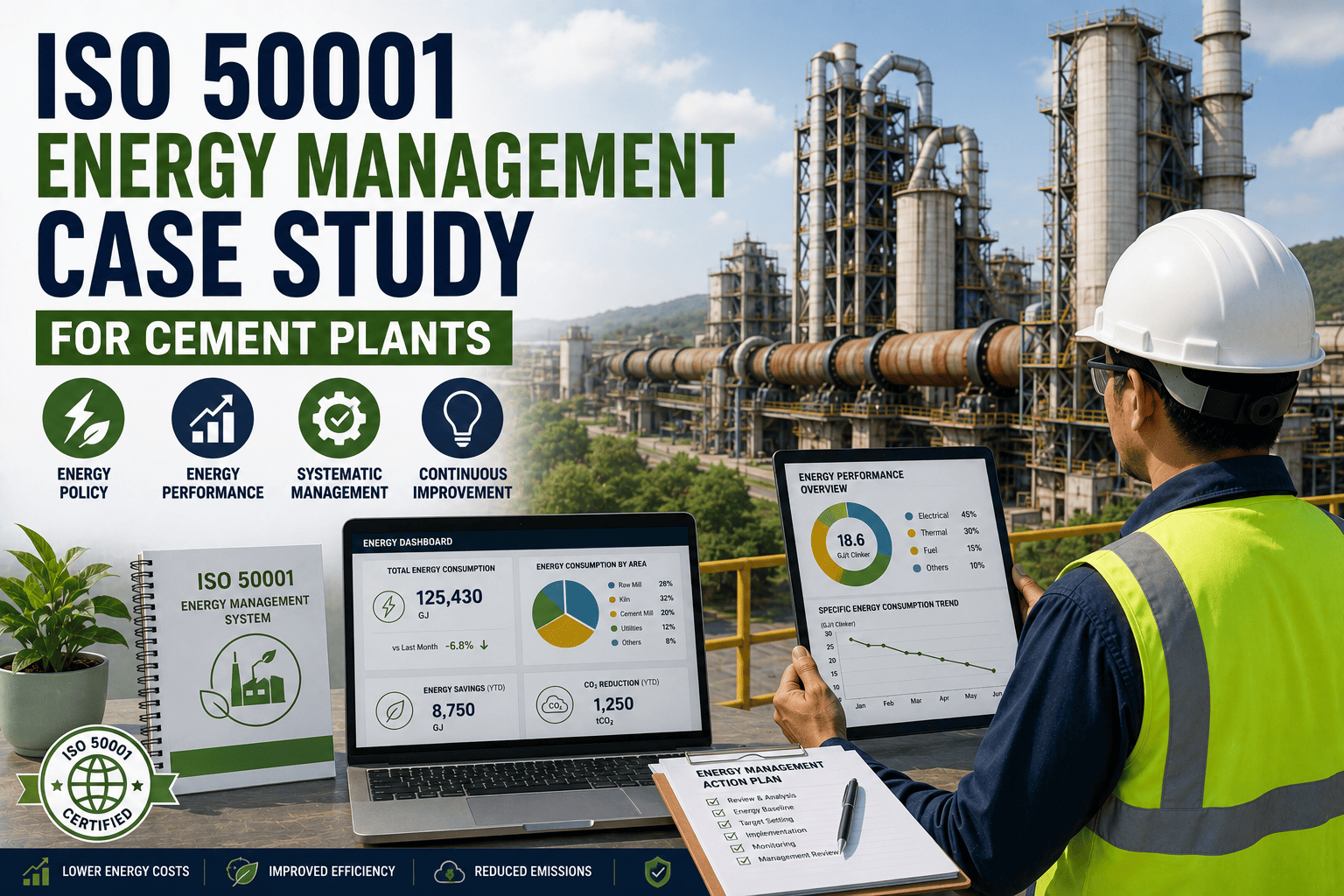
ISO 50001 asks a cement plant to prove something most maintenance teams already know intuitively, that energy performance is being tracked, managed, and improved. The hard part is the proof: energy baselines in one spreadsheet, EnPI calculations in another, calibration records in a filing cabinet, and corrective actions nobody can find when the auditor asks for them. This case study looks at how a cement plant moved its ISO 50001 documentation into its CMMS, and what happened to audit prep time, EnPI reporting accuracy, and energy intensity once everything lived in one system. Sign up to see the same energy management workflow built for your own plant.
The Challenge
Energy data for the kiln, mill, and compressed air system was pulled together manually every quarter from separate spreadsheets, meter logs, and maintenance records. EnPI figures often didn't match between departments because everyone was calculating them slightly differently. Audit prep turned into weeks of chasing down calibration certificates and corrective action records that existed somewhere, but nobody could produce quickly on request.
Results After Moving ISO 50001 Data Into The CMMS
-65% Audit Prep
Time saved preparing for ISO 50001 surveillance audits once records lived in one searchable system
-11% Energy Intensity
Reduction in kWh per tonne of clinker after EnPI trends made inefficiencies visible in real time
Zero Major NCs
Major nonconformities in the most recent surveillance audit, down from repeated documentation gaps before
What ISO 50001 Documentation Looks Like Inside The CMMS
✓
Energy baseline set once and tracked against every reporting period automatically
✓
EnPI dashboards calculated the same way every time, across kiln, mill, and compressed air
✓
Meter calibration records logged with due dates and reminders instead of a filing cabinet
✓
Corrective actions assigned, tracked, and closed out with a full history attached
Audit Prep Time: Spreadsheets vs Centralized Records
Typical time to compile energy baselines, EnPI reports, calibration records, and corrective actions ahead of a surveillance audit, before and after centralizing documentation in the CMMS.
Walk Into Your Next Audit Already Prepared
Oxmaint keeps energy baselines, EnPI dashboards, calibration records, and corrective actions in one place, so ISO 50001 evidence is a click away instead of a scramble. Sign up for a free trial to build your own energy management workflow, or book a demo to walk through this case study in detail.
Energy Management Before And After
| Area |
Before |
After |
| Energy baseline and EnPI |
Calculated differently across departments, in separate spreadsheets |
One standard calculation, tracked automatically across the plant |
| Meter calibration records |
Paper certificates filed by hand, easy to misplace |
Digital records with due dates and automatic reminders |
| Corrective actions |
Tracked in emails and meeting notes, hard to prove closure |
Assigned and closed in the CMMS with a full audit trail |
| Surveillance audit prep |
Roughly three weeks of gathering scattered evidence |
A few days, with evidence already organized and current |
The Results
The energy management system stopped being something the plant rebuilt from scratch before every audit. EnPI dashboards stayed current between reporting periods instead of being reconstructed at the end of one, calibration records showed up the moment an auditor asked for them, and corrective actions had a visible history instead of a paper trail scattered across inboxes. The team spent less time proving compliance and more time actually improving energy performance.
Frequently Asked Questions
Q
Why do ISO 50001 audits take so long to prepare for at cement plants?
Energy data usually spans several systems, kiln, mill, and compressed air meters, plus separate calibration and corrective action logs, so pulling it into one consistent picture by hand takes weeks rather than days.
Q
Can a CMMS actually replace a dedicated energy management system?
It doesn't need to replace one, it complements it by keeping the maintenance-side evidence, calibration, corrective actions, and equipment condition, in the same system that feeds EnPI tracking, so the two stop living in disconnected records.
Q
Does better energy documentation actually lower energy intensity, or just prove compliance?
Both, once EnPI trends are visible in real time instead of reconstructed quarterly, inefficiencies on the kiln, mill, or compressed air system get caught and corrected while they're still small, rather than after they've shown up in the bill.
Make ISO 50001 Compliance A Byproduct, Not A Project
Oxmaint keeps energy baselines, EnPI dashboards, calibration records, and corrective actions current all year, so audit evidence is always ready. Sign up for a free trial to build your own energy management workflow, or book a demo to walk through the full case study.