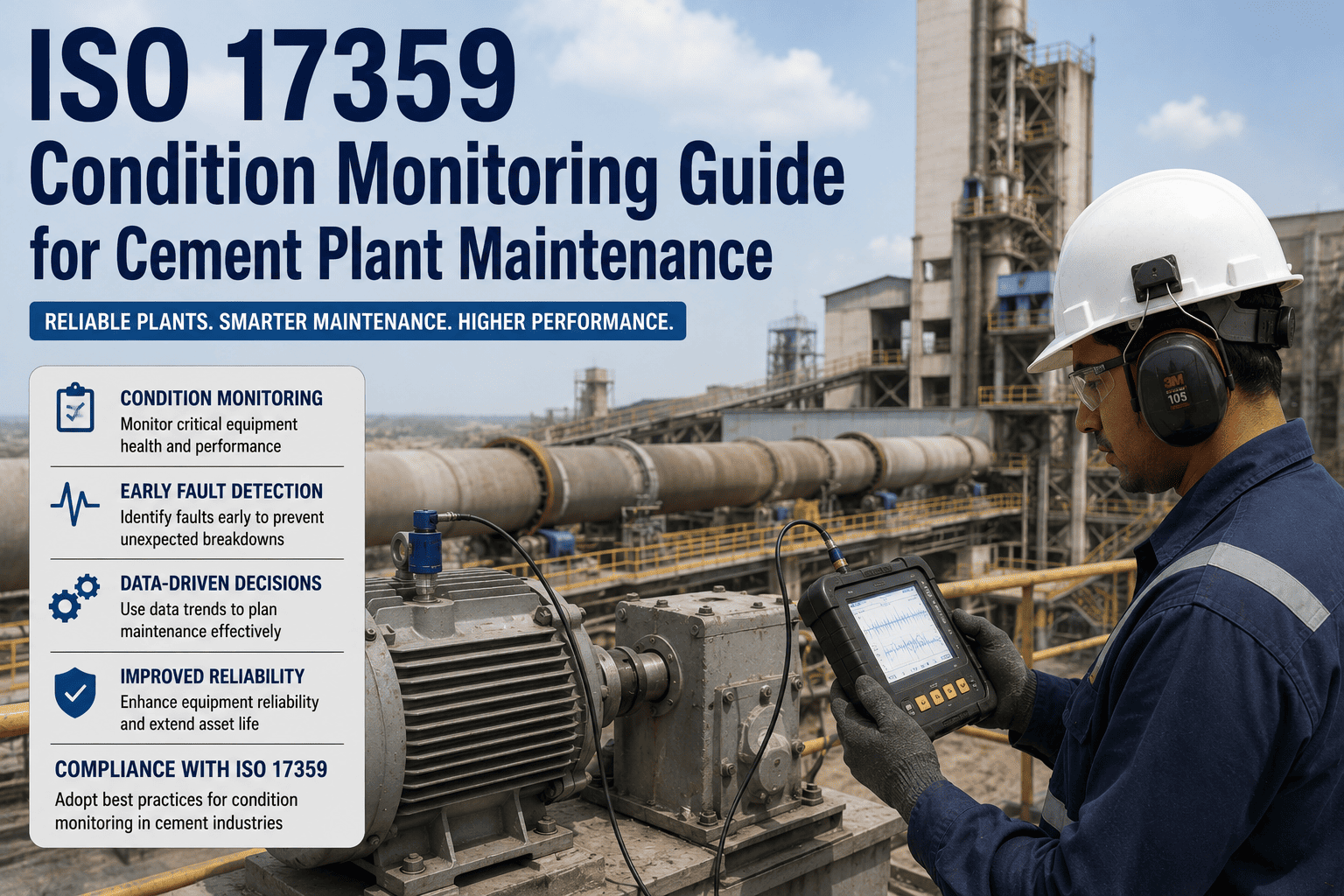
Most cement plants already own vibration sensors, oil sampling kits, and thermal cameras — what they're missing is the framework that ties it all together. ISO 17359 doesn't tell you to buy more sensors, it tells you how to decide which machine gets monitored, with what technique, at what interval, and what reading actually means trouble. Without that structure, condition monitoring data just piles up unread until a failure makes it relevant in hindsight. A CMMS like OxMaint turns an ISO 17359 program into scheduled inspections, alarm-linked records, and audit-ready history — sign up free and your first monitoring plan is live today.
The Building Blocks of an ISO 17359 Program
Asset Criticality Analysis
Ranking equipment by failure impact and cost, since ISO 17359 expects monitoring depth to match how critical a machine actually is.
Vibration Monitoring
Continuous or route-based vibration data on rotating equipment, used to catch bearing and imbalance faults before they escalate.
Oil Analysis
Lab sampling of gearbox and hydraulic oil to detect wear metals and contamination well before mechanical symptoms appear.
Thermography
Infrared scanning of motors, bearings, and electrical panels to spot heat signatures that signal friction or loose connections.
Alarm Limit Setting
Baseline readings and threshold limits per machine class, so a reading is judged against what's actually normal for that asset.
Data Interpretation and Reporting
Trend review and decision rules that turn raw readings into a work order before failure, not a post-mortem after it.
Where Condition Monitoring Pays Off Most
Monitoring Checklist by Frequency
OxMaint auto-assigns these tasks to your team, with readings and history logged per asset.
Common Program Gaps and How CMMS Closes Them
| Program Gap | Risk | Root Cause | OxMaint Prevention |
|---|---|---|---|
| Unranked criticality | Wrong assets get monitored | No formal criticality analysis | Criticality scoring built into asset records |
| Missed vibration routes | Undetected bearing faults | Manual route scheduling | Auto-assigned weekly route checklist |
| Stale alarm limits | False alarms or missed faults | Baselines never revisited | Annual alarm review task with reminders |
| Siloed technique data | Slow or missed diagnosis | Vibration, oil, thermal data kept separate | Single asset timeline across all techniques |
| Skipped oil sampling | Late-stage gearbox wear | No tracked sampling calendar | Monthly sampling checklist with lab result logging |
| No trend follow-up | Data collected but unused | No structured review process | Weekly trend review with flagged work orders |
OxMaint vs. Competitors
| Capability | OxMaint | MaintainX | UpKeep | Fiix | Limble | IBM Maximo |
|---|---|---|---|---|---|---|
| Asset criticality scoring | Yes | No | Limited | Limited | No | Yes |
| Multi-technique monitoring templates | Yes | No | No | No | No | Custom |
| Alarm limit and baseline tracking | Yes | Limited | Limited | Limited | Limited | Yes |
| Cross-asset trend history | Yes | No | Limited | Limited | No | Yes |
| Multi-site fleet view | Yes | Limited | Limited | Yes | Limited | Yes |
| Setup | Minutes | Hours | Hours | Days | Hours | Months |
Implementation Roadmap
Results
Data Security
Frequently Asked Questions
What does ISO 17359 actually standardize?
ISO 17359 provides general guidelines for setting up a condition monitoring program, covering criticality analysis, technique selection, and alarm limit decisions.
Do all assets need the same monitoring depth?
No. ISO 17359 expects monitoring frequency and technique to scale with an asset's criticality, so low-impact equipment needs far less attention than a kiln drive.
Why combine vibration monitoring with oil analysis?
Different fault types show up in different data first, so combining techniques catches problems that a single method might miss until later.
Can OxMaint manage condition monitoring across multiple plants?
Yes. OxMaint provides one dashboard across every plant with asset-specific monitoring checklists, trend history, and portfolio-wide reporting.