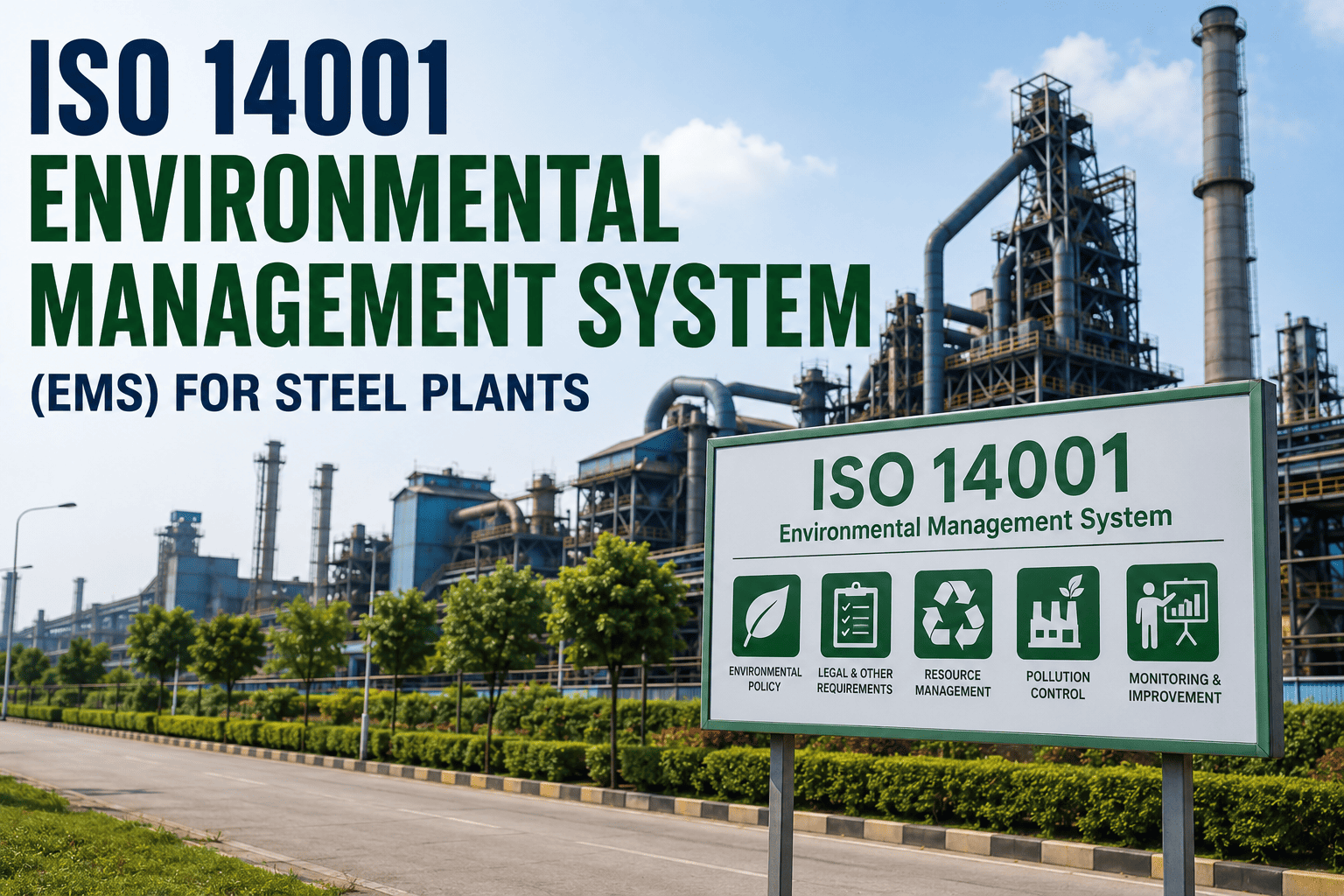
ISO 14001 doesn't ask a steel plant to have zero environmental impact — it asks for a system that actually knows what its impacts are and keeps working to reduce them. That distinction matters at audit time. A plant that can show its aspects and impacts register, its legal compliance tracking, and a documented history of corrective actions passes. A plant relying on institutional knowledge and scattered spreadsheets usually doesn't. A CMMS like OxMaint turns EMS documentation, compliance tracking, and audit evidence into one system — sign up free and your first EMS checklist is running today.
Core Elements of an ISO 14001 EMS
Environmental Policy
A documented top-level commitment to environmental performance that sets the direction for every other EMS element.
Aspects and Impacts Assessment
A structured register identifying every activity's environmental aspect and impact, ranked by significance.
Legal Compliance Register
A tracked list of applicable environmental permits and regulations, with evidence that each requirement is actually being met.
Objectives and Targets
Measurable environmental improvement goals tied to the plant's most significant aspects, tracked over time.
Operational Controls
Documented procedures for managing significant aspects day to day, from spill response to waste handling.
Internal Audit and Management Review
Periodic self-assessment and leadership review that closes the PDCA loop and drives continual improvement.
Key Environmental Aspects in a Steel Plant
EMS Checklist by Frequency
OxMaint auto-assigns these tasks to your team, with evidence and sign-off logged per aspect.
Common EMS Gaps and CMMS Prevention
| Gap | Risk | Root Cause | OxMaint Prevention |
|---|---|---|---|
| Outdated aspects register | Missed significant impacts | Register never revisited | Annual update task with reminders |
| Untracked legal obligations | Permit noncompliance | No centralized compliance register | Quarterly legal review with due-date tracking |
| Stalled objectives | No demonstrable improvement | No progress tracking cadence | Monthly objectives progress checklist |
| Inconsistent operational controls | Nonconformance findings | Procedures not verified in practice | Weekly control verification checklist |
| Incomplete audit evidence | Failed internal or external audit | Records scattered across departments | Centralized evidence repository per aspect |
| No management follow-through | EMS becomes a paper exercise | No structured review reporting | Annual management review summary |
OxMaint vs. Competitors
| Capability | OxMaint | MaintainX | UpKeep | Fiix | Limble | IBM Maximo |
|---|---|---|---|---|---|---|
| Aspects and impacts register | Yes | No | No | No | No | Custom |
| Legal compliance tracking | Yes | Limited | Limited | Limited | Limited | Yes |
| Objectives and targets tracking | Yes | No | No | Limited | No | Custom |
| Audit evidence repository | Yes | Limited | Limited | Limited | Limited | Yes |
| Multi-site fleet view | Yes | Limited | Limited | Yes | Limited | Yes |
| Setup | Minutes | Hours | Hours | Days | Hours | Months |
Implementation Roadmap
Results
Data Security
Frequently Asked Questions
What is the aspects and impacts register in ISO 14001?
It's a structured list of every activity's environmental aspect, such as an emission or discharge, paired with its potential impact, ranked by significance to focus improvement efforts.
Does ISO 14001 require zero environmental impact?
No. It requires a documented system that identifies impacts, sets objectives, and demonstrates continual improvement over time, not a specific performance threshold.
How often should the legal compliance register be reviewed?
A quarterly review is typical, since permit conditions and regulations can change and each obligation needs current evidence of compliance.
Can OxMaint support ISO 14001 across multiple steel plants?
Yes. OxMaint provides one dashboard across every site with aspect-specific checklists, compliance tracking, and portfolio-wide reporting.