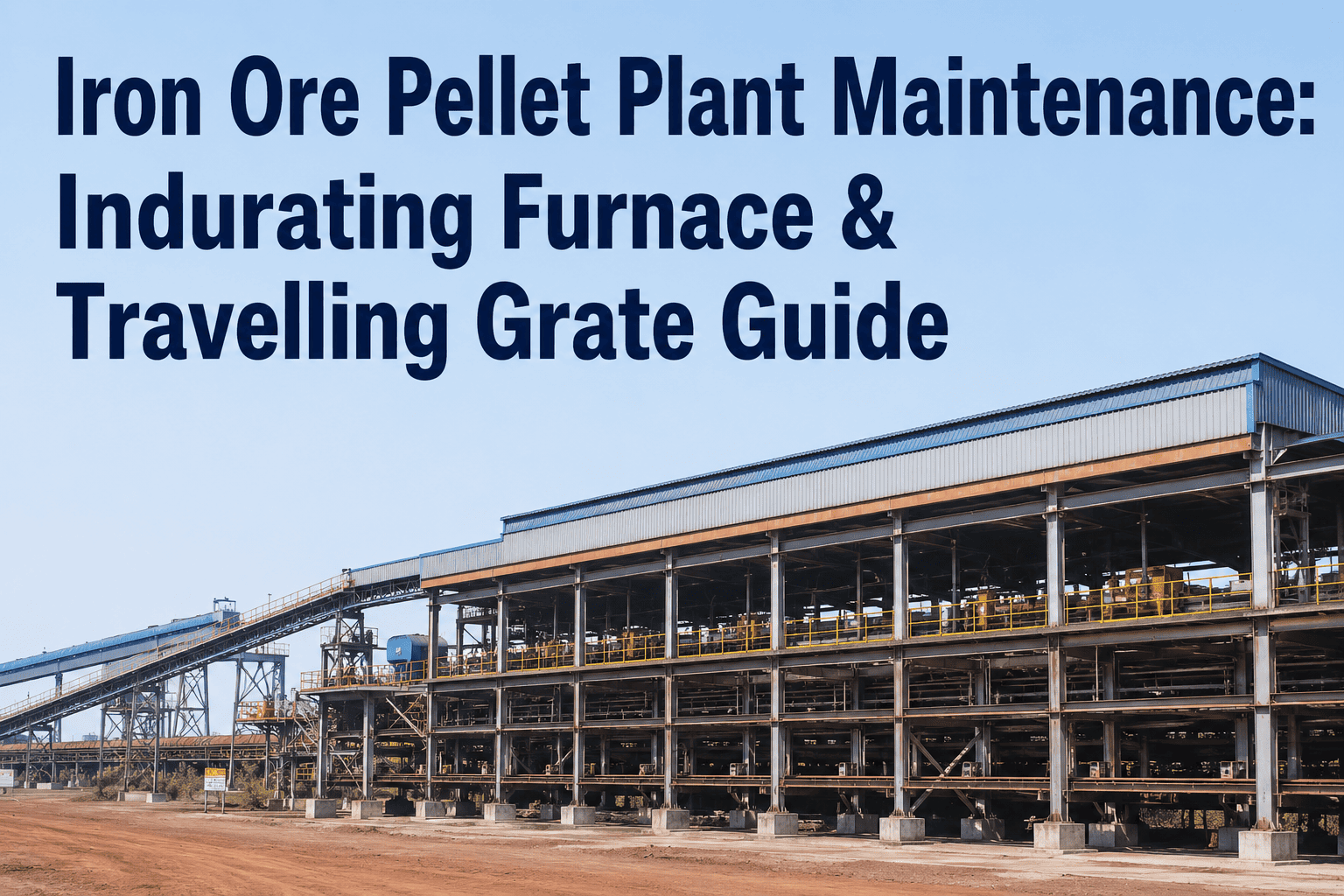
A pellet plant lives or dies on two things staying in sync, the green balls formed on the balling discs and the heat profile they pass through on the travelling grate and indurating furnace. Undersize or oversize balls throw off bed permeability before the pallet cars even reach the furnace, and a burner zone running out of calibration can undo hours of careful balling in minutes. Sign up to see how Oxmaint keeps balling discs, travelling grate and indurating furnace assets on one reliability record.
9-16mm
Typical green ball size window a balling disc must hold to keep bed permeability consistent
1300°C+
Peak indurating zone temperature that burner and refractory condition must sustain evenly
100+ Cars
Move continuously on a travelling grate, each one a wear point in the loop
1 Batch
Of off-spec pellets is enough to disrupt downstream blast furnace or DRI feed quality
Pellet Quality Is Decided in Two Places, Not One
It is tempting to treat the balling discs and the indurating furnace as two separate maintenance zones, but pellet quality is decided by both together. A disc producing slightly oversize balls loads the travelling grate bed unevenly, and that uneven bed then bakes unevenly under the furnace burners no matter how well the burners themselves are tuned. Reliability here means watching the whole pellet path, from disc speed and tilt through grate car condition to furnace zone temperature, as one connected process.
Component Checks Across the Pellet Path
| Component |
Common Wear or Failure Mode |
Preventive Task |
| Balling discs |
Rim and scraper wear letting ball size drift outside the target band |
Disc tilt, speed and scraper clearance check per shift |
| Travelling grate pallet cars |
Grate bar burn-through and wheel bearing wear from continuous heat cycling |
Grate bar and wheel condition inspection on rotation |
| Indurating furnace burners |
Nozzle fouling and flame pattern drift causing uneven zone temperature |
Burner nozzle cleaning and flame pattern check on schedule |
| Furnace refractory |
Thermal spalling and lining erosion from repeated heat cycling |
Refractory thickness and hot spot survey per campaign |
| Grate drive chain & sprockets |
Link elongation and tooth wear under continuous drive load |
Chain elongation measurement against wear-limit chart |
Discs, Grate Cars and Furnace Zones in One Record
Oxmaint registers balling discs, travelling grate cars, burners and refractory sections as tracked assets with their own inspection history, so an off-spec pellet batch can be traced back to the exact zone or disc that caused it. Sign up for a free trial to see it against your own pellet plant, or book a demo and we will walk through your line.
Set Thresholds Before Quality Drifts
| Parameter |
Healthy Baseline |
Trigger for Action |
| Green ball size |
Within the target 9-16mm band across the disc face |
Adjust disc tilt or speed once oversize or fines exceed set limit |
| Furnace zone temperature spread |
Even profile across the bed width per burner zone |
Inspect burner nozzles once zone spread widens past baseline |
| Grate car condition |
Grate bars intact, deck plate flat, wheels rolling freely |
Pull car for repair once bar loss or bearing drag is detected |
Fixed-Schedule Repairs vs Predictive Maintenance
Fixed-Schedule Repairs
Grate bars and burner nozzles serviced on a calendar cycle regardless of actual wear
Off-spec pellet batches usually caught only at downstream screening
Furnace stops handled one zone at a time as issues surface
Predictive Maintenance
Ball size, zone temperature and grate car condition trended against real data
Drifting disc or burner zone flagged before pellets reach screening
Worn grate cars and burner parts grouped into planned shutdown windows
How Oxmaint Supports Pellet Plant Reliability
Oxmaint tracks balling discs, travelling grate cars, burner zones and refractory sections as individual assets, logging inspection readings and wear trends against each one. A disc drifting outside its ball size band or a furnace zone running hotter than baseline triggers a work order early, before it ever shows up as an off-spec pellet batch. Book a demo to see it mapped against your own pellet plant.
Frequently Asked Questions
Q
Why do balling disc and furnace maintenance need to be planned together?
Because oversize or undersize green balls change how the bed sits on the travelling grate, which in turn affects how evenly the furnace burners can heat it, so a disc issue often surfaces as a furnace quality problem.
Q
What usually causes uneven temperature across a furnace zone?
Nozzle fouling or a drifting flame pattern on the burners is the most common cause, and it is typically caught by comparing zone temperature spread against a known healthy baseline rather than waiting for a visible pellet defect.
Q
Why do travelling grate cars need to be tracked individually?
Each car is linked in a continuous loop, so a car with a pattern of repeat grate bar burn-through or bearing drag can be identified and pulled for repair before it drags on the cars around it or forces an unplanned stop.
Q
How can a pellet plant move from fixed schedules to predictive maintenance?
Register each disc, grate car, burner and refractory section as a tracked asset, then log condition readings against it so drifting quality is caught and corrected before it reaches downstream screening.
Catch Pellet Quality Drift Before It Reaches Screening
Oxmaint gives pellet plant teams balling disc tracking, travelling grate car inspections, furnace zone monitoring and predictive maintenance across the entire indurating line. Sign up for a free trial to explore it yourself, or book a demo and we will walk through it against your own plant.