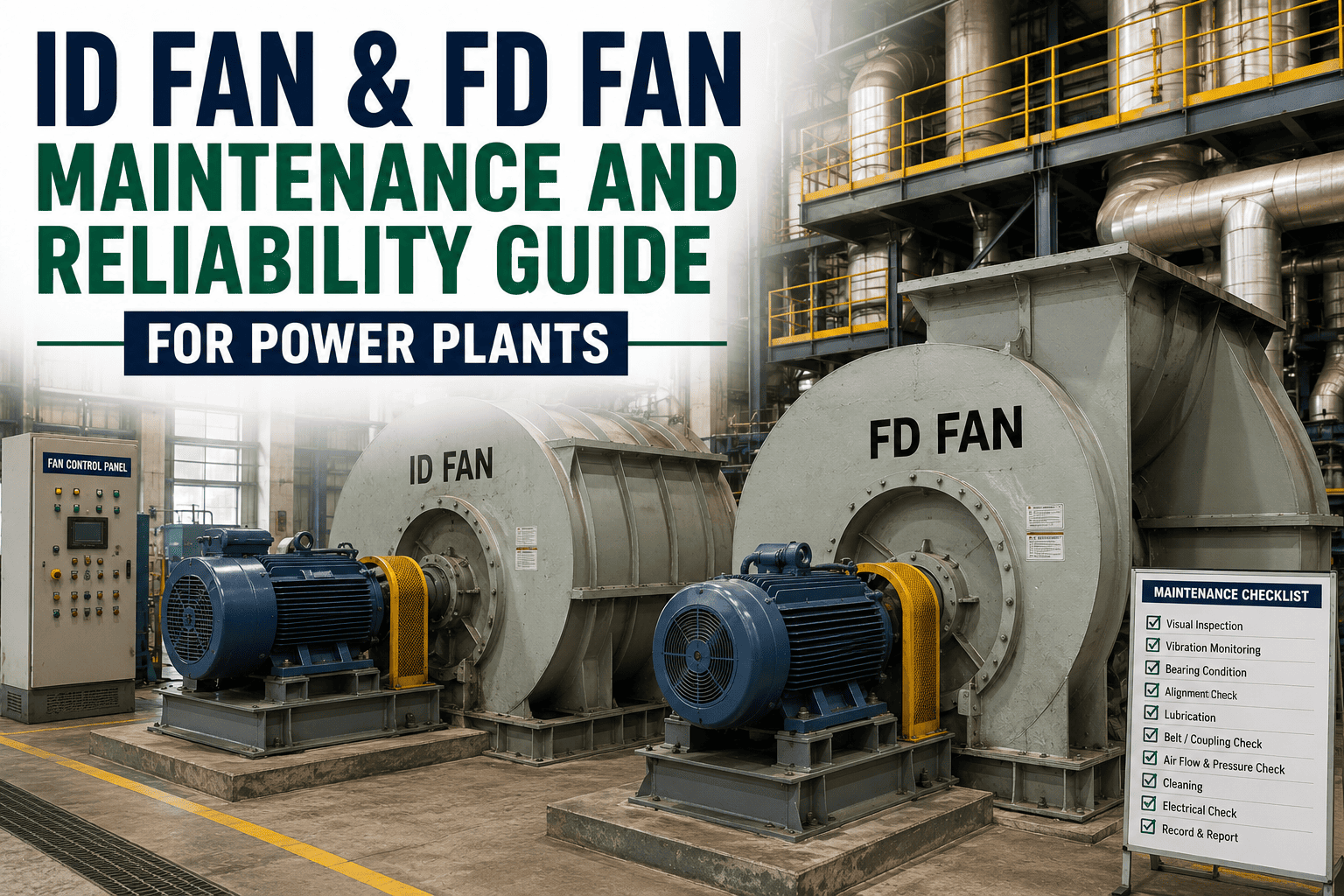
An ID fan pulling flue gas out of the furnace and an FD fan pushing combustion air in are doing opposite jobs, but they fail the same three ways, dust building unevenly on the blades, a bearing running hotter than it should, and a shaft that's drifted out of alignment as the casing heats up. None of these show up as a sudden trip, they show up first as a slow climb in vibration that gets waved off as normal until the fan is running unbalanced for weeks. Sign up to track vibration and bearing temperature against every draft fan on the unit, or book a demo to see it set up for your fleet.
Why It Matters
Losing a single ID or FD fan does not just take that fan offline, it usually forces the whole unit down since draft and combustion air both have to stay balanced for the boiler to run safely. Imbalance from blade buildup, bearing wear, and shaft misalignment are behind the large majority of unplanned draft fan outages, and all three leave a trail in vibration data weeks before they cause damage.
Three Failure Modes Behind Most Draft Fan Outages
Blade Imbalance
Fly ash and particulate deposit unevenly on the impeller, shifting the centre of gravity off axis
Bearing Wear
Raceway defects from heat or poor lubrication generate impulses long before overall vibration jumps
Shaft Misalignment
Thermal growth of the casing during operation shifts the shaft centre relative to the motor
Checks Worth Doing On Every Round
Overall vibration trended, not just checked: a fan that's slowly climbing week over week is telling you something a single pass-fail reading never will
Bearing temperature logged at each round: a gradual rise often shows up before the vibration signature changes enough to notice by ear
Impeller inspected for uneven buildup: a small deposit is normal wear, a chunk that suddenly breaks free can throw the rotor badly out of balance in seconds
Damper and inlet vane response timed: an actuator that strokes slower than its design response shows up as sluggish draft control before it fails outright
Foundation and coupling checked at each outage: looseness here can mimic imbalance on a vibration reading and send a crew chasing the wrong fault
Give Every Draft Fan A Vibration Baseline
OxMaint tracks vibration and bearing temperature against each ID and FD fan and raises a work order the moment a reading starts trending toward trouble, not after it crosses an alarm. Sign up for a free trial to load your first fan, or book a demo to see it configured for your unit.
Failure Mode, Root Cause & Early Warning Sign
| Failure Mode |
Root Cause |
Early Warning Sign |
| Blade Imbalance |
Uneven fly ash or particulate buildup on the impeller |
Gradual, steady rise in overall vibration at running speed |
| Bearing Wear |
Raceway defect from heat, contamination, or poor lubrication |
High-frequency impulses in vibration, then rising bearing temperature |
| Shaft Misalignment |
Thermal growth shifting the casing relative to the motor |
Elevated vibration at twice running speed, coupling wear |
| Erosion Damage |
Abrasive particulate wearing blade profile and casing liner |
Falling draft pressure or airflow at the same damper position |
The Takeaway
ID and FD fans rarely fail without warning, imbalance, bearing wear, and misalignment all leave a vibration trail weeks ahead of a trip. Watch the trend on every fan, not just the pass-fail reading at the last route check, and most draft fan outages become plannable work instead of emergencies.
Frequently Asked Questions
Q
Why do ID fans usually vibrate more than FD fans?
An ID fan handles flue gas directly out of the furnace, so it deals with far more dust, unburnt particulate, and thermal stress than an FD fan pulling in relatively clean combustion air. That heavier particulate load makes uneven blade buildup and erosion more common on the ID fan side, which is why it tends to show higher baseline vibration and needs closer watching.
Q
Should a fan be balanced as soon as vibration rises?
Not automatically. Balancing a dirty or mechanically damaged impeller only masks the real problem temporarily, since the underlying deposit or wear is still there. The better order is to check impeller cleanliness, bearing health, and alignment first, and only balance the rotating assembly once the mechanical condition has actually been restored.
Q
Can a foundation problem look like fan imbalance on a vibration reading?
Yes, structural looseness at the foundation or bearing pedestal can raise vibration in a way that closely resembles rotor imbalance, and chasing a balance job on a fan with a loose foundation rarely fixes the reading for long. Checking foundation bolts, pedestal condition, and coupling tightness before scheduling a balance job avoids that wasted trip.
Catch A Draft Fan Problem Weeks Before It Trips The Unit
OxMaint tracks vibration and bearing temperature against every ID and FD fan and fires a prioritized work order the moment a reading crosses into unsafe territory. Sign up for a free trial to start logging your fans, or book a demo to see it configured for your fleet.