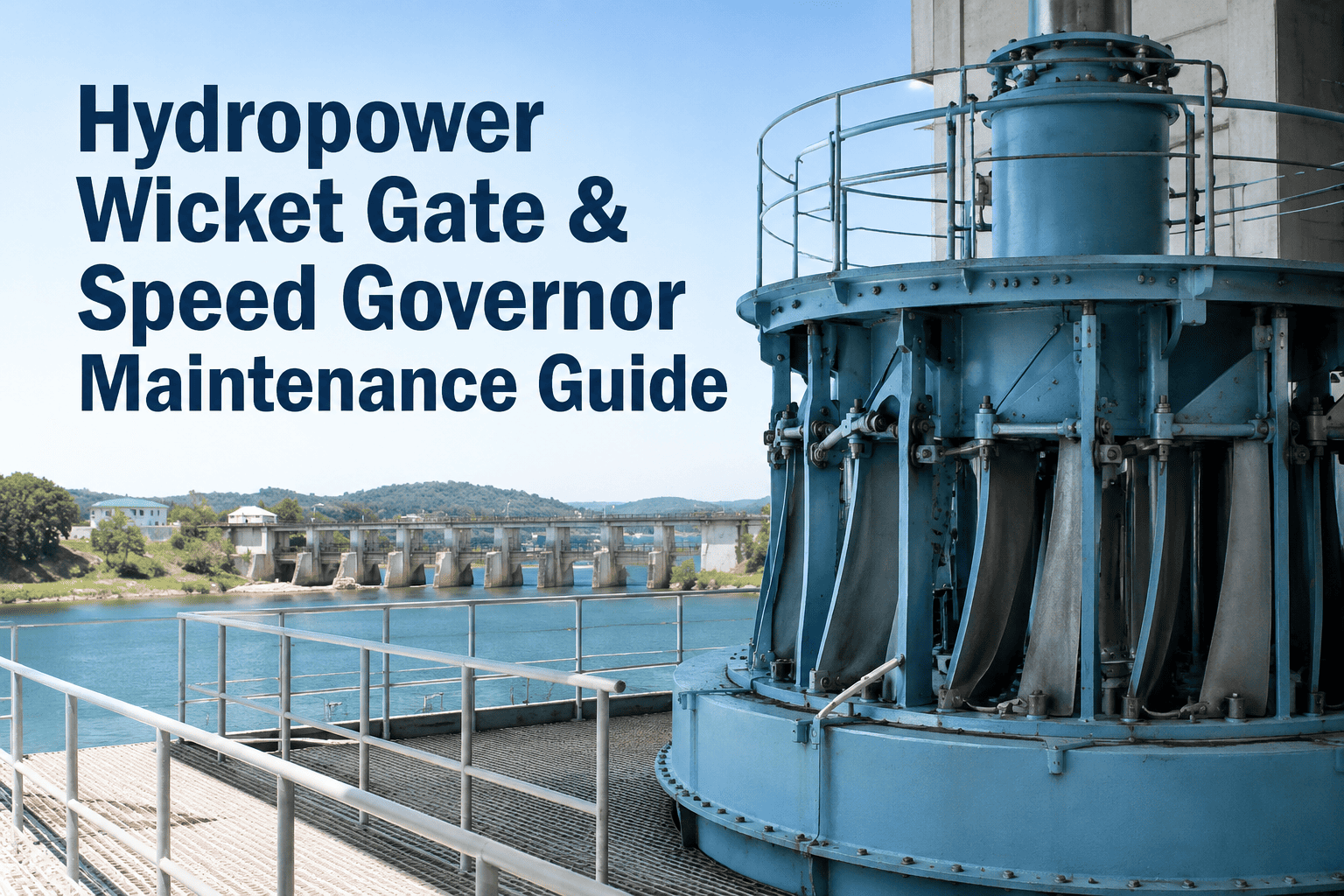
A wicket gate that's a few degrees out of alignment doesn't stop a turbine from spinning. It just lets water slip past uncontrolled, wastes head that should be turning the runner, and slowly wears the linkage pins that are supposed to keep every gate moving in unison. The speed governor sitting behind that gate ring has the harder job of reacting to load changes in seconds, and it can't do that job well if the hydraulics or linkage it depends on are already worn. Sign up to track wicket gate and governor inspections against every unit's maintenance history instead of a logbook in the powerhouse.
Why It Matters
Wicket gates and the governor that drives them work together on every single load change a unit makes. A worn linkage pin or a sluggish servomotor doesn't just cost efficiency, it slows the turbine's response to grid demand, which on some systems can mean a real penalty for missed regulation.
Two Systems, One Job: Controlling Water Into The Turbine
| System |
What It Does |
Where Wear Shows Up First |
| Wicket Gate Ring |
A ring of gates around the runner opens and closes together to meter water flow |
Linkage pins and bushings, which loosen with every open-close cycle |
| Servomotor & Hydraulics |
Converts hydraulic pressure into the force that moves the gate ring |
Seal wear leading to internal leakage and slower stroke response |
| Speed Governor |
Reads turbine speed and adjusts gate position to hold frequency under load changes |
Control valve drift and sensor calibration error over time |
The Wear Points That Cost The Most If Missed
Linkage Pins & Bushings
Play in the linkage means gates no longer close evenly, letting water slip past even in the closed position
Servomotor Seals
Internal leakage past worn seals shows up as a slower, softer response to governor commands
Gate Alignment
One gate lagging the rest of the ring creates uneven flow and extra stress on its own linkage
Governor Calibration
A sensor that drifts out of calibration makes the governor react to the wrong speed reading
Catch Linkage Wear Before It Reaches The Governor
Oxmaint logs gate stroke times, linkage clearance, and governor response readings against every unit, so wear shows up as a trend instead of a forced outage. Sign up for a free trial to start tracking your units, or book a demo to see it set up for your powerhouse.
A Maintenance Routine For Gates And Governor Together
Measure Gate Stroke Time At Every Outage
A gate that's slowing to open or close compared to its baseline is often the first sign of hydraulic or linkage wear
Check Linkage Clearance Against Manufacturer Tolerance
Pins and bushings should be measured, not just visually inspected, since play often isn't visible until it's severe
Sample Hydraulic Fluid For Contamination
Water or particulate contamination in the governor's hydraulic oil accelerates seal wear well before a leak appears
4
Recalibrate Governor Sensors On Schedule
A drifted speed sensor can make the governor over- or under-correct long before an operator notices anything unusual
How Linkage Wear Turns Into Lost Efficiency
Pin Wear Begins
Slight play develops after repeated cycling
Gate Misalignment
One or more gates no longer close fully in sync
Flow Leakage
Water bypasses the closed gate position, wasting head
Governor Strain
The governor works harder to compensate for uneven flow
A worn pin is a scheduled bushing replacement during a planned outage. Left through several more seasons of cycling, the same wear can throw off the whole gate ring's alignment, turning a small part swap into a full linkage overhaul.
The Payoff
Units measured on stroke time and linkage clearance get a bushing or seal replacement during a planned outage. Units left until the gate ring is visibly out of alignment need a far larger overhaul, plus the lost head and efficiency the whole time it went unmeasured.
Frequently Asked Questions
Q
How often should wicket gate linkage be inspected?
Most plants check linkage clearance at every scheduled outage, with a full measured inspection at least annually since visual checks alone often miss early-stage pin wear.
Q
What causes a governor to respond slowly to load changes?
A slow governor response is usually traced to worn servomotor seals causing internal hydraulic leakage, or to a control valve that has drifted out of proper calibration.
Q
Why do wicket gates leak even when fully closed?
Closed-position leakage almost always points to worn linkage pins or bushings letting one or more gates sit slightly open, rather than a problem with the gate seal itself.
Stop Losing Head To Gates That Wear Out Of Sync
Oxmaint logs stroke times, linkage clearance, and governor calibration against every unit, so maintenance decisions are backed by data instead of a walk-down. Sign up for a free trial to bring your powerhouse online, or book a demo to see it configured for your plant.