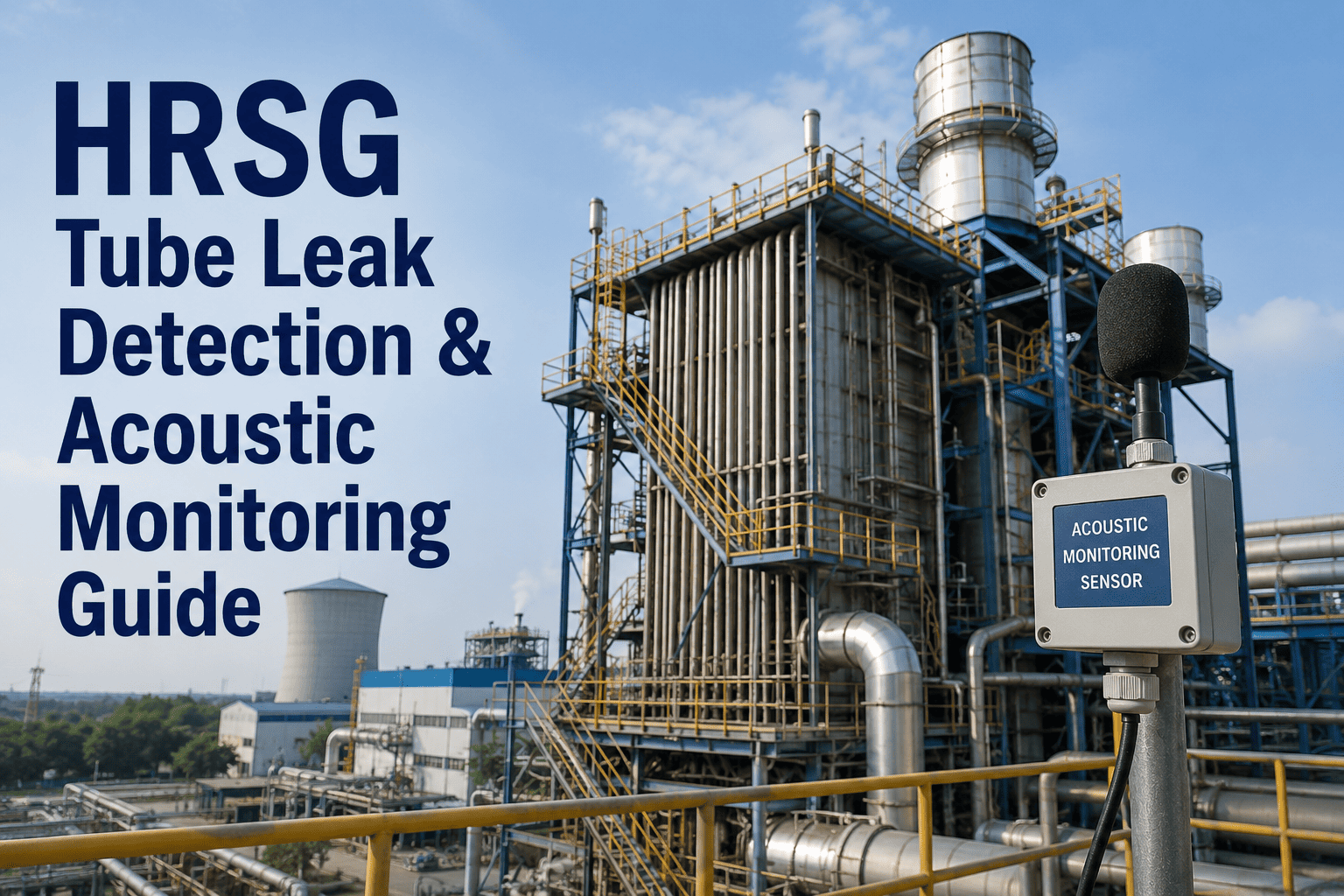
An HRSG tube leak rarely starts as a rupture. It starts as a pinhole too small to see, releasing steam into the gas path at a rate that acoustic sensors can pick up long before wall thickness data or a forced outage would. The gap between that first pinhole and a tube that fails outright is where a monitoring program either earns its cost or a plant learns the difference the expensive way. Sign up to log acoustic alarms, chemistry trends, and tube inspection findings against every HRSG in your fleet.
Why It Matters
A single tube failure can force an immediate unit trip, and secondary damage from escaping steam can turn a one-tube repair into a multi-tube replacement across an entire bank. Early detection through acoustic monitoring and steam chemistry buys the plant a planned shutdown instead of a forced one, which is the difference between a scheduled repair and days of lost generation.
The Detection Layers That Catch A Leak Early
Acoustic Leak Detection (ALDS)
Sensors mounted along the gas path pick up the high-frequency signature of escaping steam within hours of onset
Sodium & Cation Conductivity
A rising sodium or conductivity trend in steam chemistry flags condenser or tube-side contamination reaching the cycle
Makeup Water Monitoring
An unexplained rise in makeup water demand often means steam is leaving the cycle somewhere it shouldn't be
Manual Tube Inspection
Scheduled outage inspection confirms wall thickness and catches tubes approaching their limit before they leak at all
How A Leak Escalates Without Intervention
Pinhole
Acoustic alarm range
Wall Loss
Chemistry trend shifts
Through-Wall
Makeup water climbs
Each stage narrows the plant's options. A pinhole caught by acoustic monitoring is a planned repair at the next outage. A rupture reached without any intervening alarm is an unplanned trip, secondary tube damage, and a much longer outage to fix it.
Catch The Pinhole, Not The Rupture
Oxmaint logs acoustic alarms, chemistry trends, and makeup water data alongside inspection history for every HRSG in your fleet, so an early signal doesn't get lost between shifts. Sign up for a free trial to bring leak detection tracking to your units, or book a demo to see it configured for your fleet.
Comparing The Detection Methods
| Method |
Detects |
Typical Response Time |
Main Limitation |
| Acoustic (ALDS) |
Steam escaping into the gas path |
Hours |
Needs a baseline to separate leak signal from background noise |
| Sodium / Conductivity |
Contamination entering the steam cycle |
Hours to days |
Confirms a chemistry shift, not the exact tube or location |
| Makeup Water Trend |
Steam or water loss from the cycle |
Days |
Slow to trend, easy to miss without daily logging |
| Manual Tube Inspection |
Wall thickness loss before a leak starts |
Only at scheduled outages |
Can't catch a failure developing between outages |
Responding To An Acoustic Alarm
Confirm The Alarm Against Baseline
The signal is checked against normal background noise for that load and sensor location to rule out a false positive
Cross-Check Chemistry And Makeup Water
A genuine leak usually shows a matching shift in sodium, conductivity, or makeup water demand around the same time
Localize The Bank And Plan The Repair
Sensor location narrows the leak to a tube bank, letting the outage team scope the repair before the unit even comes offline
4
Inspect Neighboring Tubes For Secondary Damage
Escaping steam can erode adjacent tubes, so the repair scope always includes a check of the surrounding bank, not just the leaking tube
The Payoff
A tube leak caught at the acoustic alarm stage is a planned repair measured in hours. The same leak caught only after a forced trip is measured in days, with a wider repair scope and a harder conversation about why it wasn't caught sooner. The gap between those two outcomes is almost entirely a function of how consistently the early signals get watched.
Frequently Asked Questions
Q
How early can acoustic leak detection actually catch a leak?
Acoustic sensors can pick up the sound signature of a leak while it's still pinhole-sized, well before it would show up as a measurable wall thickness loss or a chemistry shift large enough to trigger its own alarm. The main requirement is a clean baseline, since background noise varies by load and sensor location.
Q
Is chemistry monitoring a substitute for acoustic detection?
No. Chemistry monitoring is a strong confirming signal but tends to lag acoustic detection, since it depends on enough contamination or steam loss to shift a trend. The two work best together, with acoustic detection catching the leak early and chemistry data confirming it isn't a sensor anomaly.
Q
What causes most HRSG tube failures in the first place?
Flow-accelerated corrosion, thermal fatigue from cycling operation, and fireside erosion account for most HRSG tube failures, with cycling duty in particular accelerating wear compared to steady baseload operation. Regular tube inspection at scheduled outages is what catches these mechanisms before they reach the leak stage.
Never Let An Acoustic Alarm Sit Unread
Oxmaint brings acoustic alarms, chemistry trends, and tube inspection history into one record for every HRSG in your fleet, so an early signal gets acted on instead of missed at shift change. Sign up for a free trial to bring leak detection tracking to your units, or book a demo to see it configured for your fleet.