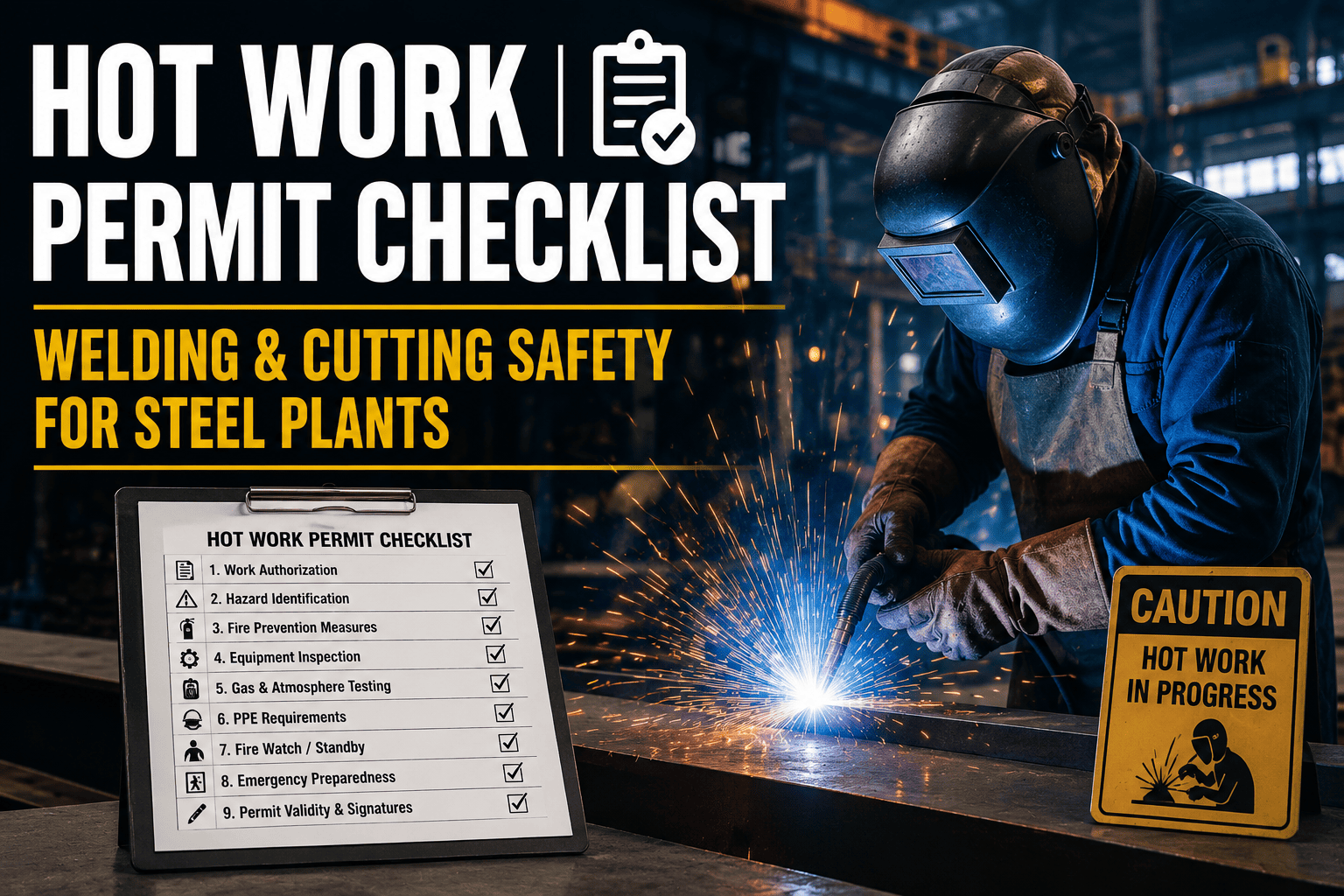
A hot work permit is only as good as the checks made before the torch is lit. Welding, cutting and grinding throw sparks that can travel metres and smoulder for hours inside insulation, packaging or dust before anyone notices. Sign up to issue and track every hot work permit against the job and area record, or book a demo to see it running on your plant floor.
Why It Matters
Most hot work fires don't start during the job, they start after the crew has packed up and left. A spark lodged in a wall cavity or under a floor plate can sit quiet for an hour before it catches. A permit that skips the fire watch step or the post-work check is the gap most steel plant incident reports come back to.
Six Checks Before Any Permit Is Signed
Authorization
Permit signed by a competent supervisor, job scope and duration clearly stated
Area Inspection
Work area checked in a 10 metre radius for combustibles, dust and open floor gaps
Fire Watch
Trained fire watch present through the job and for 30 to 60 minutes after it ends
Extinguishing Gear
Correct class extinguisher within reach, checked and in date, not just present
Equipment Check
Torches, hoses, cables and gas cylinders inspected for leaks, wear or damage
Closeout
Final area check, permit signed off and closed, no job left open overnight
The Pre-Work Walk-Round
Combustibles cleared: paper, wood, oil residue and packaging removed or moved beyond 10 metres from the work point
Floor and wall openings: gaps, drains and ducts covered so sparks cannot fall through to a level below
Gas cylinder condition: hoses free of cracks, valves closing fully, cylinders secured upright
Ventilation: confirmed adequate for fumes if the job is in a confined or enclosed space
PPE confirmed: welding shield, gloves and flame-resistant clothing checked on the crew before work starts
Stop Chasing Paper Hot Work Permits
OxMaint logs every hot work permit against the job, the crew and the area, flags an open permit past its fire watch window, and keeps the closeout trail ready for audit. Sign up for a free trial to load your permit register, or book a demo to see it set up for your plant.
Stop The Job On The Spot If You See This
No fire watch posted, or the fire watch leaves the area before the job is fully closed out
Combustible material within 10 metres that was missed or moved back after the inspection
A gas hose showing cracks, a loose fitting, or a cylinder stored lying on its side
A permit still open with no supervisor sign-off after the crew has left the area
Hazard, Cause & Corrective Action
| Hazard Found |
Likely Cause |
Corrective Action |
| Combustibles left in area |
Inspection rushed or material moved back before work began |
Clear the radius again, re-inspect, and hold the permit until confirmed |
| Fire watch absent |
Crew short-staffed or watch reassigned mid-job |
Suspend work until a trained fire watch is back in position |
| Damaged gas hose or cylinder |
Wear from repeated use or improper storage |
Tag out equipment, replace hose or cylinder before restarting |
| Permit not closed out |
Crew left before final area check or supervisor unavailable |
Complete the final check and closeout signature before the shift ends |
The Takeaway
A hot work permit is not paperwork to get through before the job starts, it is the record of every check that keeps a spark from becoming a fire an hour later. Walk the area, confirm the fire watch, close the permit properly, and log it against the job so the next crew starts from a clean record.
Frequently Asked Questions
Q
How long should a fire watch stay after hot work finishes?
Most plant procedures call for the fire watch to remain in the area for at least 30 minutes after the last spark, with 60 minutes common in areas with heavier dust or hidden voids. The watch stays until the risk of a smouldering start has genuinely passed, not until the crew packs up.
Q
What radius must be checked for combustibles before hot work?
A 10 metre radius around the work point is the standard reference used in most permit systems, though plants with high dust loads or overhead combustibles often extend this further. The check covers the floor, the walls, and anything overhead that a spark could reach or fall onto.
Q
Can a hot work permit be left open overnight?
No. A permit should be closed out the same shift the work is completed, once the final area check and fire watch period are done. An open permit with no closeout signature means nobody has confirmed the area is actually safe.
Turn Your Hot Work Permits Into An Audit-Ready Record
OxMaint keeps every hot work permit, fire watch log and closeout signature attached to the job and the crew, with overdue alerts and a full corrective action history. Sign up for a free trial to load your permit register, or book a demo to see it mapped to your plant.