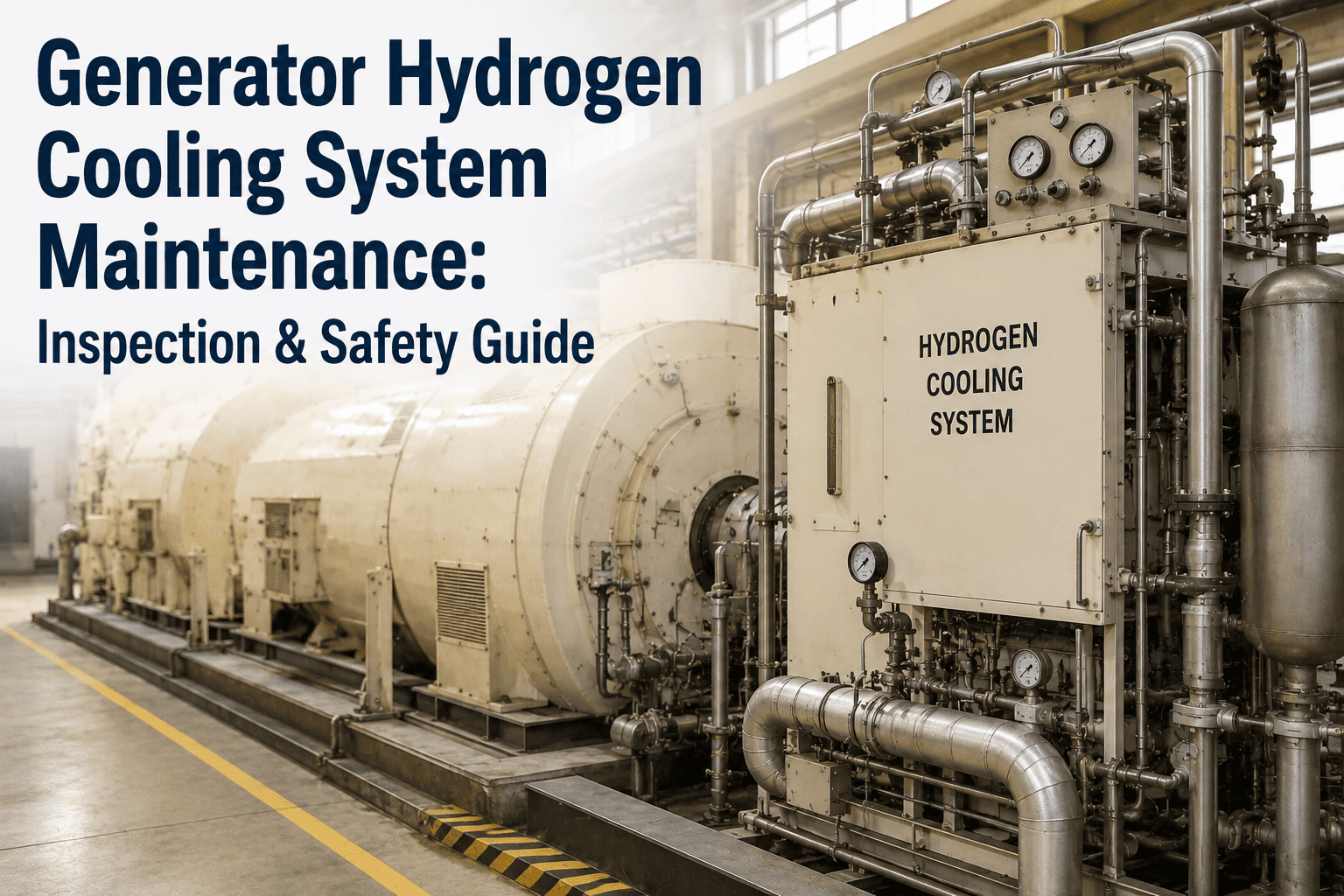
Hydrogen is the coolant of choice inside large generators because it carries heat away far better than air, but that same gas turns dangerous the moment purity drops into a flammable range. A generator running on hydrogen isn't just an electrical asset, it's a pressurized gas system with its own leak points, its own drying requirements, and its own explosion risk if purity and seal oil aren't watched closely. A CMMS like OxMaint tracks purity readings, seal oil differential pressure, and dryer performance against every generator, so a slow drift gets caught on a log sheet instead of during a gas alarm.
Keep Hydrogen Purity and Seal Oil in Safe Range
Track purity readings, seal oil differential pressure, and dryer checks across every hydrogen-cooled generator.
Four Systems That Need Independent Checks
Hydrogen Purity
Purity below the design threshold raises windage loss and pushes the gas mixture toward a flammable range.
Seal Oil Differential
Seal oil pressure that drifts out of its set differential lets hydrogen escape past the shaft seals.
Dew Point & Dryers
A rising dew point signals a saturated dryer bed, letting moisture build up inside the gas circuit.
External Gas Leaks
Flange, valve, and casing leaks lower purity gradually and create a localized safety hazard around the unit.
Continuous Analyzers vs Portable Leak Surveys
| Aspect | Continuous Purity Analyzer | Portable Leak Detection Survey |
|---|---|---|
| How It Works | Fixed analyzer samples the gas circuit continuously and logs purity in real time | Technician walks the unit with a handheld sniffer along flanges, seals, and fittings |
| Detection Speed | Flags a purity drop within minutes of onset | Only as current as the last scheduled walk-down |
| Best Suited For | Tracking gradual purity trends over days and weeks | Pinpointing the exact location of a specific leak source |
A Hydrogen System Maintenance Rhythm
Daily Purity & Pressure Log
Record hydrogen purity, gas pressure, and seal oil differential at every shift change.
Weekly Leak Survey
Walk the casing, flanges, and seal oil piping with a handheld detector to catch new leak points.
Monthly Dryer Inspection
Check dew point readings and dryer bed condition to keep moisture out of the gas circuit.
Outage Seal & Casing Check
Inspect shaft seals, casing joints, and gas coolers thoroughly during every scheduled outage.
Hydrogen Cooling Maintenance Maturity
Reactive Response
Purity and leak issues are addressed only after an alarm or a noticeable gas consumption spike.
Logged but Isolated
Purity and pressure readings are recorded each shift, but they aren't reviewed together as a trend.
Trend-Monitored
Purity, seal oil, and dew point data feed a shared trend line, catching drift well before an alarm fires.
Why This Matters for Safety, Not Just Uptime
Hydrogen becomes flammable when mixed with air outside a fairly narrow purity band, which is why a slow leak or a failing seal oil system is treated as a safety issue first and an efficiency issue second. Beyond the explosion risk, low purity increases windage losses and raises the generator's internal operating temperature, quietly reducing both safety margin and running efficiency at the same time.
Consistent purity and seal oil tracking is what keeps a hydrogen-cooled generator operating inside its safe design window shift after shift. Sign up free to start tracking purity, seal oil, and dryer performance across every generator today, or book a demo to see how a shared trend line catches drift before it becomes a gas alarm.
Keep Every Generator Inside Its Safe Purity Window
Purity monitoring, seal oil checks, and dryer inspections, tracked together in one dashboard.
Frequently Asked Questions
What hydrogen purity level is considered safe?
Generators are typically operated well above 95% purity, with alarms set to catch any drop toward the flammable range long before it's reached.
How does seal oil pressure relate to hydrogen leaks?
Seal oil is kept at a slightly higher pressure than the hydrogen gas, and any drop in that differential lets gas escape past the shaft seals.
Why does moisture inside the gas circuit matter?
Moisture reduces the insulating and cooling properties of the hydrogen and can accelerate corrosion inside the generator casing.
How often should a leak survey be performed?
A weekly handheld survey of flanges, seals, and fittings is common practice, in addition to continuous purity monitoring.
Can predictive monitoring reduce hydrogen makeup gas consumption?
Yes, catching a developing leak early typically reduces makeup gas usage significantly compared to reactive leak chasing.