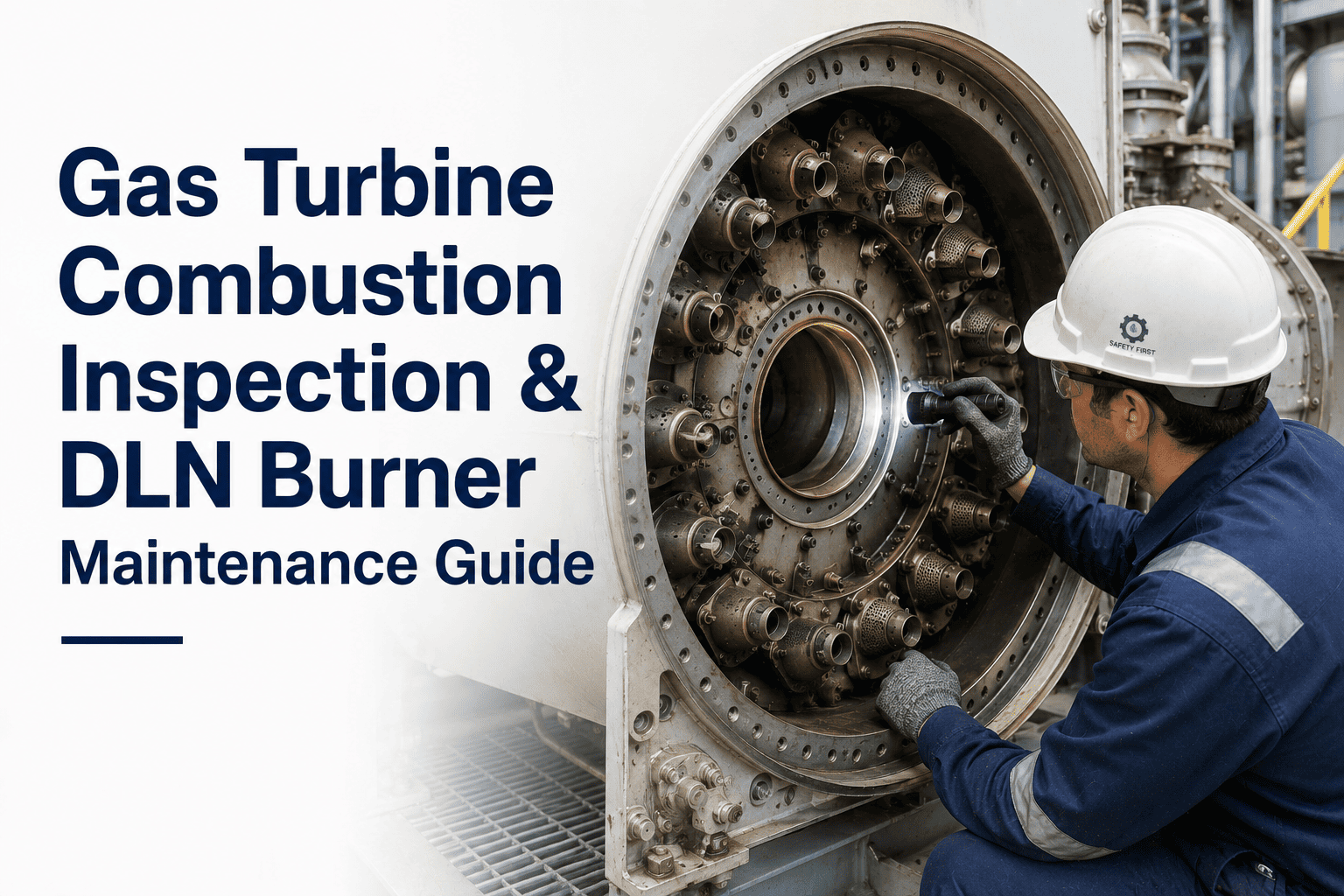
A gas turbine's combustion system decides two things at once: how much power the machine makes and how clean its exhaust is. DLN burners run lean on purpose to hold NOx down, which also means they run closer to the edge of flame instability than a conventional diffusion burner ever did. A combustion inspection is the point where that edge gets checked before it turns into a trip, a cracked liner, or an emissions violation. Sign up to log every nozzle flow test, tuning run, and combustion dynamics reading against your fleet's history.
Why It Matters
Dry Low NOx combustion holds a thinner margin between a stable flame and a lean blowout than older diffusion designs. A worn fuel nozzle, a clogged crossfire tube, or a drifting flame detector can shift that margin without tripping an alarm for weeks, showing up first as a small rise in combustion dynamics pressure or an uneven exhaust spread. A scheduled combustion inspection catches that drift on the OEM's calendar instead of on the control room's.
What A Combustion Inspection Covers
Fuel Nozzles
Flow tested against a reference nozzle, checked for tip erosion and carbon buildup that skews the fuel split between stages
Combustion Liners & Baskets
Inspected for hot spots, coating loss, and cooling hole blockage that lets local flame temperature climb
Crossfire Tubes
Checked for cracking and retainer wear, since a failed crossfire tube delays flame propagation across cans at startup
Flame Detectors & Igniters
Calibration and sightline verified so a detector isn't reading a false flame signal during a lean transient
Reading The Warning Signs Before The Outage
| Symptom |
Likely Cause |
Recommended Action |
| Rising NOx trend |
Fuel split drifting off the tuned schedule |
Re-tune combustion split, verify nozzle flow numbers |
| Combustion dynamics spike |
Flame instability near the lean blowout limit |
Adjust fuel staging, inspect nozzle tips for erosion |
| Uneven exhaust spread |
One or more cans running hotter than the rest |
Borescope the affected can, check nozzle and liner condition |
| Startup flame delay |
Worn crossfire tube or misaligned igniter |
Inspect crossfire tubes and retainers at next outage |
Catch Drift Before It Becomes A Trip
Oxmaint logs nozzle flow tests, tuning runs, and combustion dynamics readings against every can and unit in your fleet, so drift shows up as a trend instead of a surprise. Sign up for a free trial to bring combustion tracking to your turbines, or book a demo to see it configured for your fleet.
DLN Tuning, Step By Step
Baseline The Emissions And Dynamics Data
NOx, CO, and combustion dynamics pressure are logged across the load range before any adjustment is made
Check Nozzle Flow Numbers
Each nozzle is flow tested against its reference value, since a skewed fuel split is the most common driver of an off-tune combustor
Adjust The Fuel Split Between Stages
Primary, secondary, and quaternary fuel ratios are stepped in against OEM curves to pull NOx and dynamics back into range
Verify Across The Full Load Range
A tune that looks clean at base load can still spike dynamics at part load, so the full range gets walked and re-checked
5
Document The Tuned Baseline
Final nozzle values, fuel splits, and dynamics readings are recorded as the new baseline for the next inspection cycle
The Payoff
A well-tuned DLN combustor and a poorly-tuned one can look identical on a start-stop log, but they age very differently. Treating combustion inspection and tuning data as a running trend, not a one-time checklist, is what keeps a small nozzle imbalance from turning into a cracked liner and an unplanned trip.
Frequently Asked Questions
Q
How often should a DLN burner be re-tuned?
Most operators re-tune after a combustion inspection, after a fuel nozzle change, or when emissions or dynamics trends drift beyond OEM bands, whichever comes first. Fuel quality changes and ambient temperature swings can also push a tune out of range between scheduled outages.
Q
What causes combustion dynamics pressure to spike?
Dynamics spikes usually trace back to a fuel split that has drifted off its tuned schedule, a nozzle running lean or rich relative to its neighbors, or a liner cooling hole starting to block. Left unaddressed, sustained high dynamics accelerates fatigue cracking in the liner and transition piece.
Q
Can nozzle flow testing be done without pulling the nozzle?
No. Flow testing compares a nozzle's actual flow rate against a reference standard on a test bench, which requires the nozzle to be removed from the combustor. Borescope inspection can flag visible tip erosion or carbon buildup in place, but it cannot confirm the flow number itself.
Keep Every Nozzle And Tune On Record
Oxmaint tracks nozzle flow tests, tuning history, and combustion dynamics trends for every can and unit in your fleet, so the next inspection starts from data instead of guesswork. Sign up for a free trial to bring combustion tracking to your turbines, or book a demo to see it configured for your fleet.