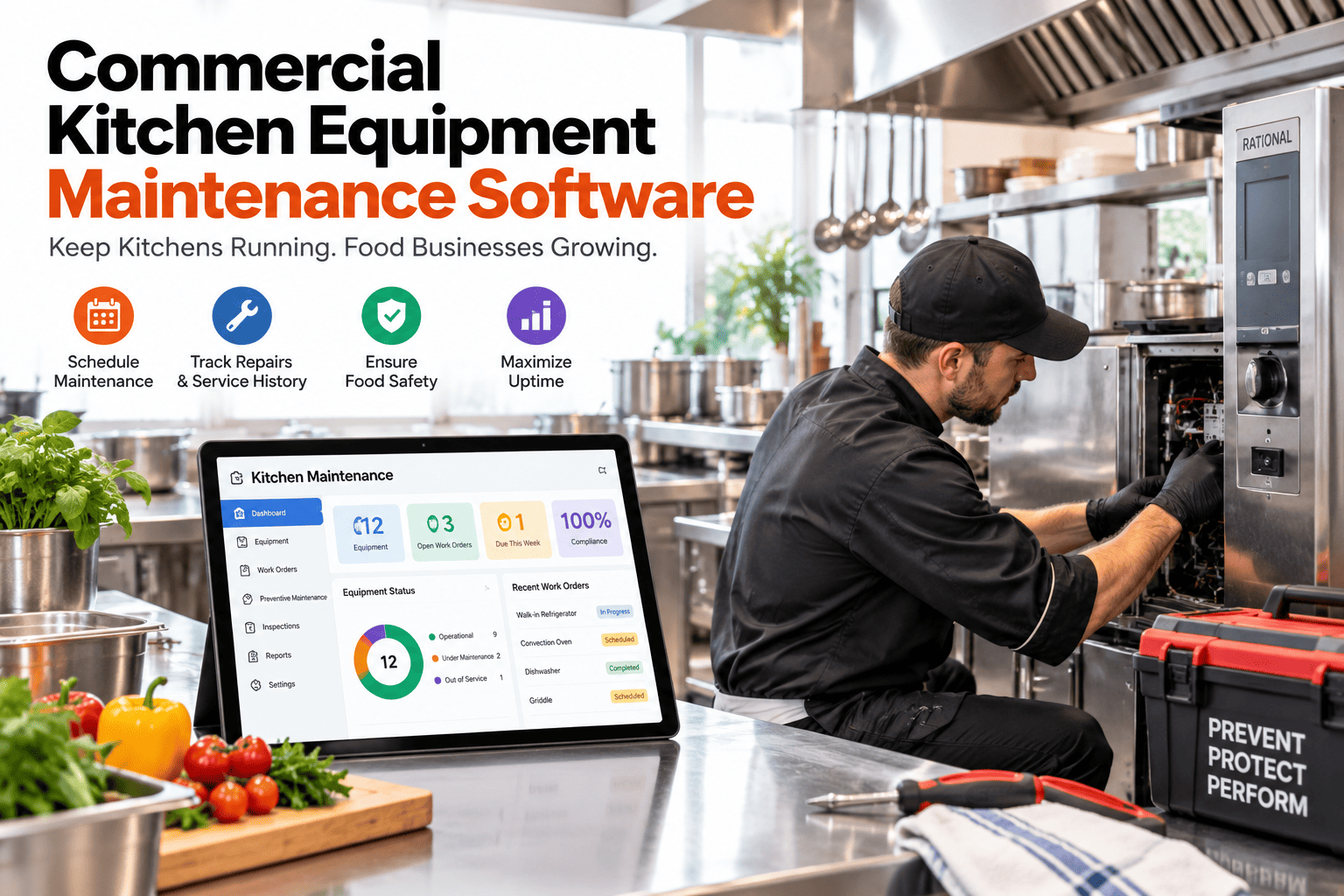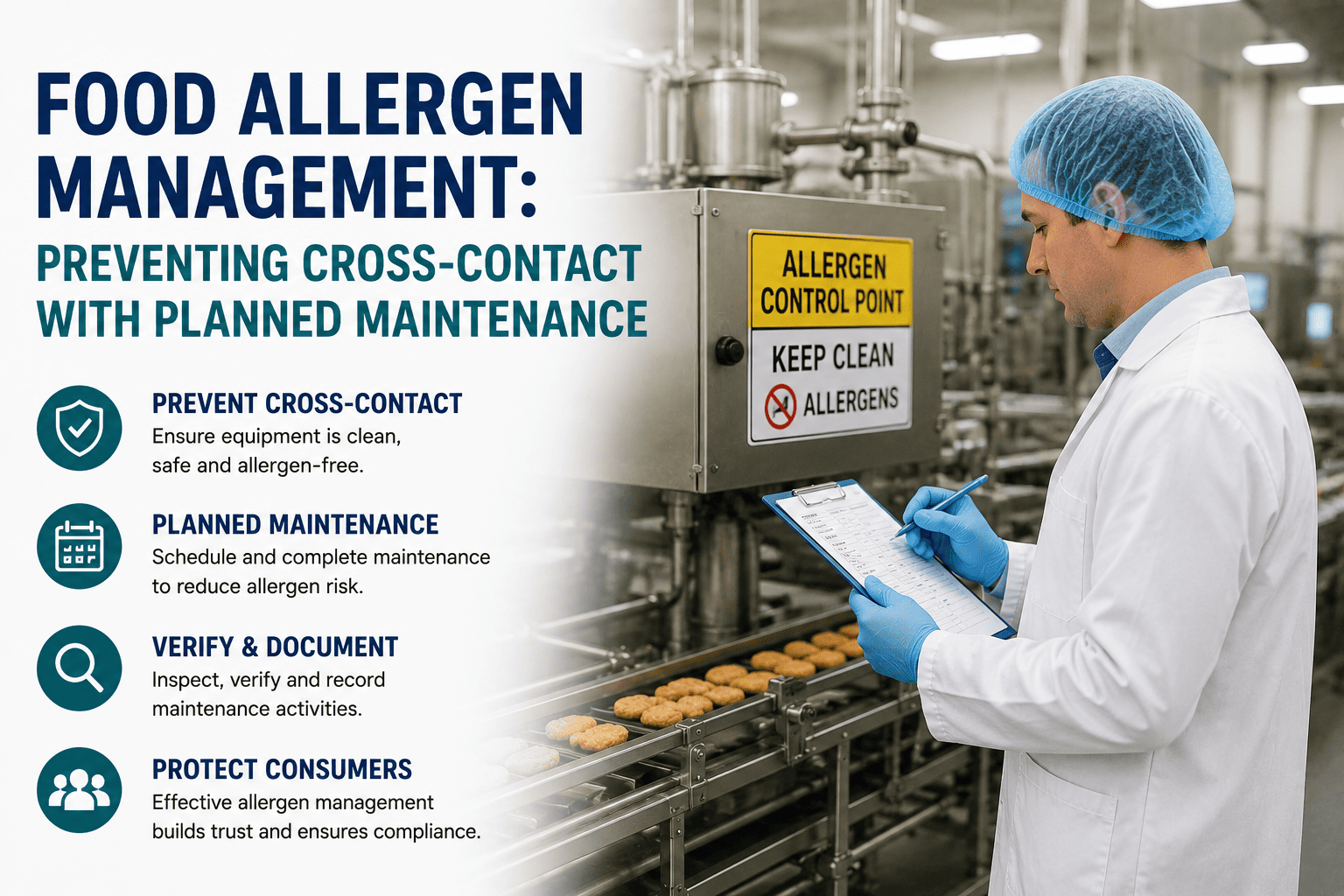
Most allergen control plans focus on ingredients, cleaning schedules and labelling, and almost none of them mention the maintenance technician. Yet a technician opening a shared machine after an allergen run can move residue on tools, gloves or a spare part just as easily as a poorly cleaned changeover can. Undeclared allergens remain one of the biggest drivers of food recalls, and maintenance is one of the quietest routes cross-contact takes. A CMMS like OxMaint builds allergen-aware checks directly into every maintenance and changeover job.
Build Allergen Checks Into Every Maintenance Job
Dedicated tools, disassembly steps and changeover verification tracked against every shared line, not left to memory.
The Risk Points Maintenance Teams Actually Control
A written allergen control plan can look complete on paper while still leaving gaps that only maintenance activity creates. These are the points where a repair or a routine service can undo an otherwise solid cleaning validation.
| Risk Point | What Can Go Wrong | Control |
|---|---|---|
| Shared tools | A spanner used on an allergen line touches a non-allergen line next | Dedicate tools by zone or allergen profile |
| Partial disassembly | Residue hides in sections a routine clean never reaches | Require full disassembly access during servicing |
| Post-repair restart | A line resumes production without a changeover verification check | Sign off changeover testing before restart is permitted |
Four Places Allergens Hide During a Changeover
Shared Equipment
Multi-product lines carry the highest cross-contact risk without dedicated allergen segregation.
Maintenance Tools
Gloves, spanners and spare parts can carry residue from one job straight into the next.
Airborne Dust
Flour and powdered ingredients travel through open environments onto adjacent lines.
Rework & Waste
Unlabelled rework carried between runs is an easy way for an allergen to reappear unnoticed.
Building Maintenance Into Your Allergen Control Plan
Dedicate Tools by Zone
Assign specific tools to specific lines or allergen profiles so nothing crosses between them.
Disassemble for Full Access
Build disassembly steps into service work orders so hidden sections are actually reached.
Validate Before Restart
Require a passed changeover test before production is allowed to resume on a shared line.
Record Every Changeover
Log each maintenance and cleaning event against the line so a pattern of gaps is visible.
Allergen Maintenance Maturity
Cleaning Only
The allergen plan covers production cleaning but maintenance activity sits outside it entirely.
Informal Awareness
Technicians know to be careful around allergen lines, but nothing is written down or checked.
Built Into the Work Order
Dedicated tools, disassembly and changeover sign-off are required steps in every service job.
Why There's No Safe Threshold
Allergen controls work differently to most food safety controls. A residue level that would pass comfortably under a microbiological limit can still be enough to trigger a severe reaction in a sensitised person, which is why a maintenance shortcut that would be harmless on any other line can't be treated the same way here. Precautionary labelling isn't a substitute for getting the physical controls right, it's meant to cover residual risk after those controls are already solid. Sign up free to bring maintenance into your allergen control plan, or book a demo to see changeover and service records tracked together.
Close the Gap Maintenance Leaves Open
Track dedicated tools, disassembly steps and changeover verification against every shared production line.
Frequently Asked Questions
Why is maintenance activity an allergen risk?
A technician working on a shared machine can move allergen residue between lines using tools, gloves or spare parts, even when production cleaning has been done correctly.
What does a changeover verification check involve?
It typically means testing the first product run after cleaning and sanitising to confirm allergen removal, with any positive result triggering recleaning and holding that product.
Should equipment be disassembled for allergen cleaning?
Where feasible, yes, since allergen residue can hide in sections a surface clean won't reach, and disassembly should be built into the maintenance procedure itself.
Is precautionary "may contain" labelling a substitute for good controls?
No, precautionary labelling should follow a proper risk assessment and cover genuine residual risk, not replace effective cleaning, segregation and maintenance controls.
How many major allergens need to be tracked?
Regulators recognise a defined set of major allergens responsible for the large majority of allergic reactions, and each one carries its own distinct cross-contact risk within a facility.