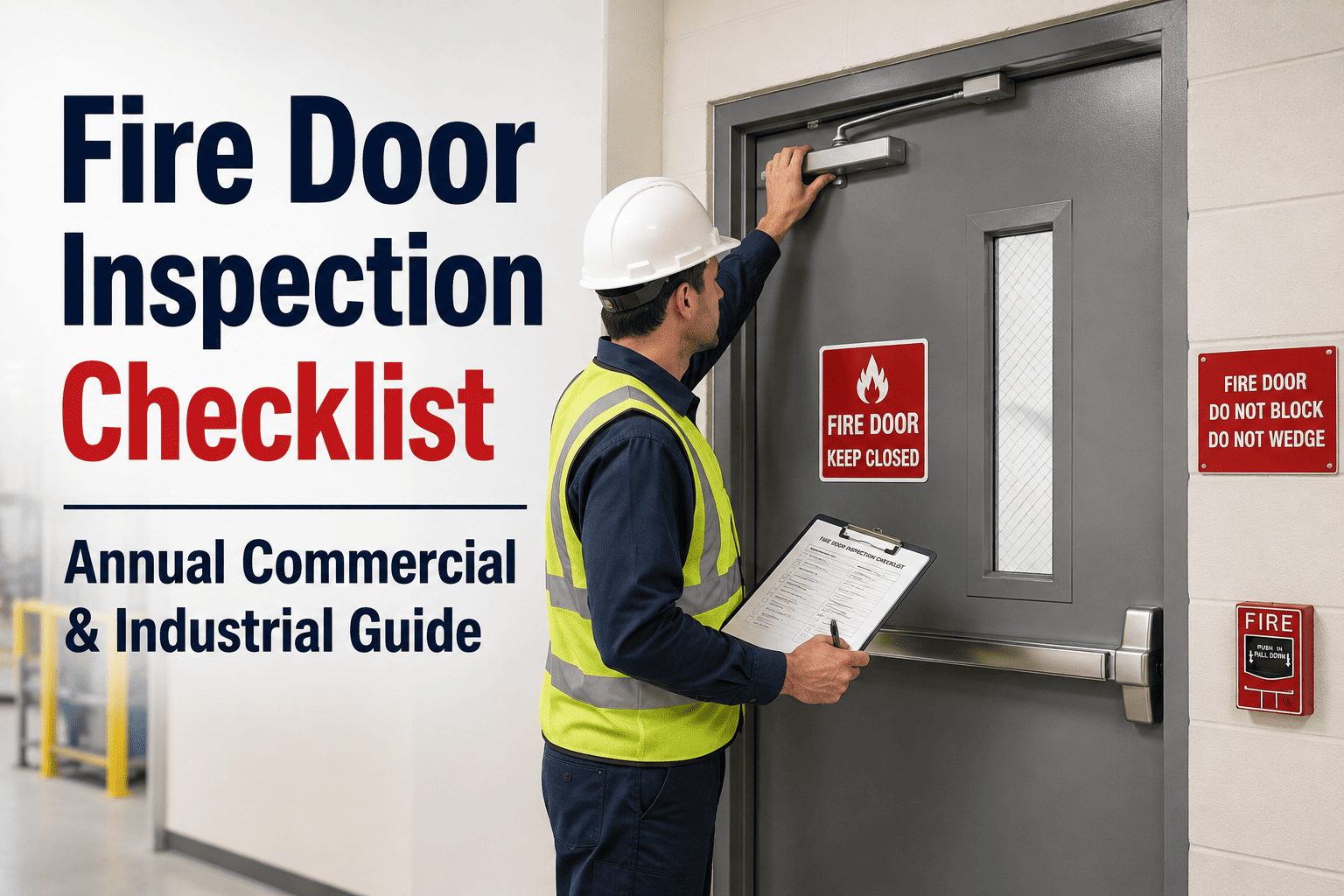
A fire door only works if every part of it still works, the leaf, the frame, the hinges, the seals and the self-closing device all have to perform together in the same few seconds. A door that looks fine from the corridor can still fail its job because of a 4mm gap, a perished seal or a hinge that has worked loose. Sign up to log every fire door inspection against the asset record, or book a demo to see how it fits your site.
Why It Matters
A fire door's job is to hold back smoke and flame for a set number of minutes, thirty or sixty, long enough for people to get out and fire crews to get in. A door that fails to latch, or has a seal missing, doesn't fail loudly, it just quietly stops doing that job, and nobody finds out until the day it matters.
Six Parts, One Fire Rating
Door Leaf
Checked for splits, holes, delamination or panels that have been cut into after installation
Frame
Checked for a secure fit to the wall, no warping, and no gaps beyond the rated tolerance
Hinges
All screws present and tight, correct fire-rated hinges fitted, no signs of movement
Seals
Intumescent and smoke seals continuous around the frame, not painted over or cut short
Closer
Door closes fully from any angle without sticking, wedging or being held open
Label
Certification plug or label on the door edge is present, legible and matches records
The Walk-Round Checklist
Gaps around the door: measured at the top and sides, generally no more than 4mm and under the threshold, no more than 8mm at the door bottom without a rated seal
Latching: door pulled from a 100mm opening and released, it should latch on its own with no manual push needed
Hinges and fixings: all screws in place and tightened, no cracked screw holes in the leaf or frame
Seals: intumescent and smoke seal run unbroken along the full length, not painted over or lifted from the groove
Vision panels and glazing: intact, correctly fire-rated glass, beading secure on both faces
Signage and label: "Fire Door Keep Shut" signage visible, certification label present and unpainted
Stop Chasing Paper Fire Door Registers
OxMaint logs every door leaf, frame, seal and closer check against its own asset record, flags overdue inspections automatically, and keeps a corrective action trail ready for audit. Sign up for a free trial to load your door register, or book a demo to see it set up for your building.
Fail The Door On The Spot If You See This
A gap wider than 4mm at the head or sides, or missing seal along any stretch of the frame
A door that needs a manual push to latch, or a closer that lets it swing open on its own
A door wedged or propped open, defeating the self-closing function entirely
A missing or painted-over certification label, meaning the door's rating can no longer be confirmed
Defect, Cause & Corrective Action
| Defect Found |
Likely Cause |
Corrective Action |
| Gap over 4mm |
Frame warping or door dropped on its hinges |
Adjust or replace hinges, re-align frame, remeasure gap |
| Seal painted or damaged |
Redecoration without masking the seal, or age-related wear |
Strip and replace the intumescent or smoke seal along its full run |
| Door fails to self-close |
Closer arm loose, worn, or wrongly adjusted |
Service or replace the closer, retest the swing from full open |
| Label missing or unreadable |
Overpainting or wear over repeated use |
Confirm rating against purchase records, fit a replacement certification plug |
The Takeaway
A fire door passes or fails on small details, a gap in millimetres, a seal run in centimetres, a latch that either catches or doesn't. None of that shows up from a distance. Walk each door, check each part in order, and record it against the door itself so the next inspection starts from where the last one left off.
Frequently Asked Questions
Q
How often should a fire door be inspected?
Commercial and industrial fire doors are typically checked in full at least once a year, with a shorter visual check on high-traffic doors every three months. Doors in busy corridors or on fire escape routes are usually inspected more often because hinges, seals and closers wear faster with repeated use.
Q
What is the maximum gap allowed around a fire door?
As a general guide, the gap at the top and sides of a fire door should be no more than 4mm, and the gap under the door no more than 8mm unless a rated threshold seal is fitted. Anything wider lets smoke and flame past before the door's rated time is up.
Q
Can a fire door look fine but still fail inspection?
Yes. A door leaf can look undamaged while its seal has been painted over, its closer is out of adjustment, or its hinge screws have loosened enough to open the gap tolerance. These are exactly the kind of defects a full walk-round checklist catches that a glance at the door does not.
Turn Your Fire Door Register Into An Audit-Ready Record
OxMaint keeps every door leaf, frame, seal, hinge and closer check attached to its own asset, with overdue alerts and a full corrective action history. Sign up for a free trial to load your existing door register, or book a demo to see it mapped to your site.