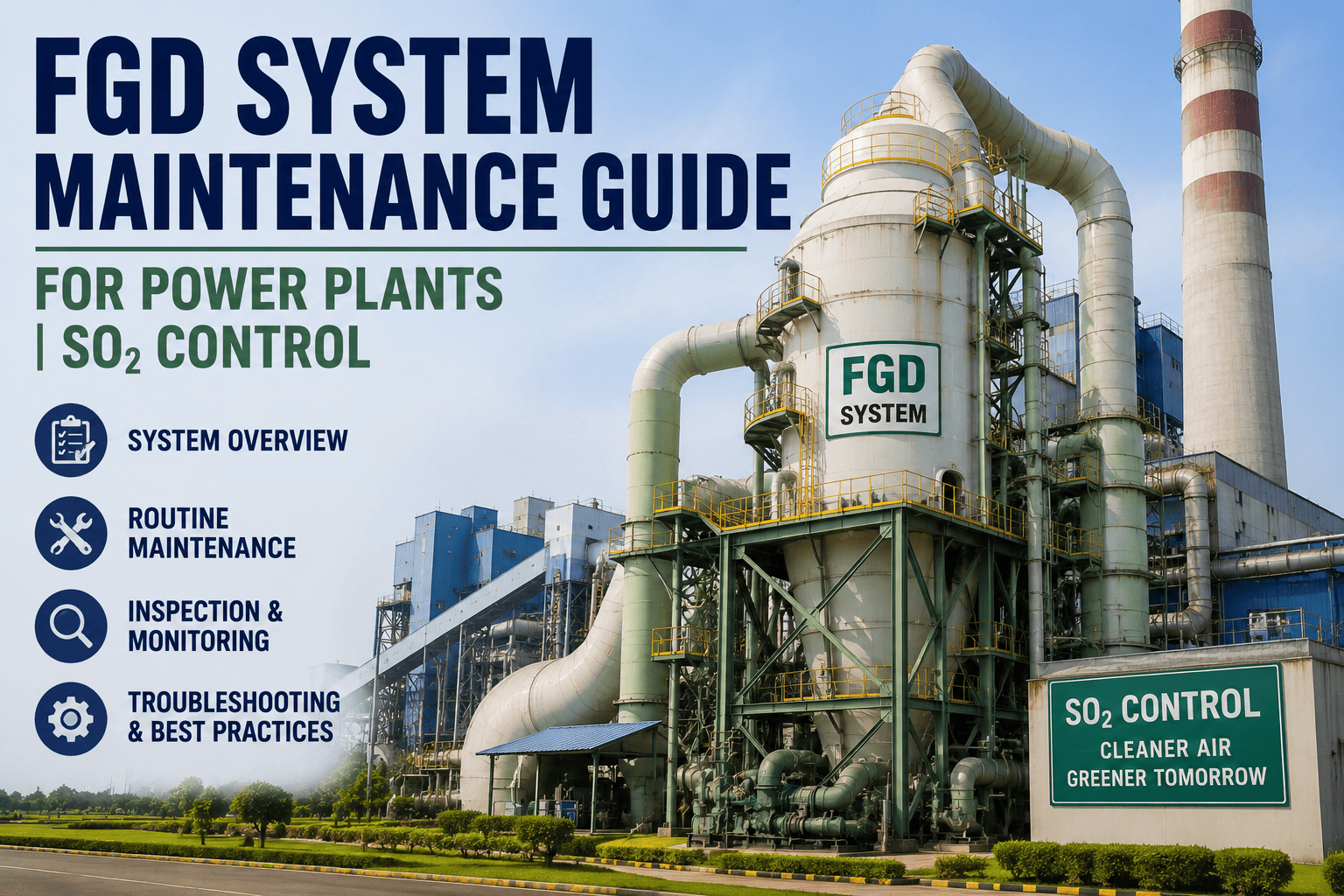
An FGD system is a slurry chemistry problem wearing a mechanical disguise. Limestone slurry scrubbing SO2 out of flue gas is abrasive, corrosive, and unforgiving of neglect, a worn recycle pump impeller or a blinded mist eliminator doesn't fail cleanly, it drifts, and the first sign is usually an SO2 removal efficiency number that's quietly slipping below permit. Sign up to track absorber performance and pump condition against your maintenance schedule in one place.
Why It Matters
SO2 removal efficiency is a permit condition, not a target to hit occasionally. Every component in the slurry loop, from recycle pumps to spray nozzles to mist eliminators, directly affects that number, and abrasive slurry means wear happens faster here than almost anywhere else in the plant.
The FGD Loop, System By System
Absorber
Vessel where flue gas contacts slurry, liner condition and spray coverage are critical
Recycle Pumps
Circulate slurry to spray headers continuously, highest wear component in the loop
Spray Nozzles
Distribute slurry across gas flow, erosion changes spray pattern and coverage
Mist Eliminators
Remove entrained droplets before exit, scaling here raises pressure drop fast
Oxidation Air System
Converts byproduct to gypsum, blower and sparger condition affects byproduct quality
Dewatering System
Hydrocyclones and vacuum filters separating solids, blinding reduces throughput
Where To Look When SO2 Removal Starts Slipping
Check slurry pH first: low pH is the single most common cause of falling removal efficiency, verify limestone feed rate
Inspect spray nozzle coverage: erosion or plugging creates gas channeling that bypasses slurry contact entirely
Check recycle pump amperage: falling amps on a slurry pump often signals impeller wear before flow visibly drops
Confirm oxidation air flow: insufficient air causes calcium sulfite carryover instead of gypsum, affecting scaling downstream
Monitor mist eliminator pressure drop: rising differential signals scale buildup, schedule wash cycle before it restricts flow
Catch A Slipping Removal Rate Before It's A Violation
OxMaint tracks recycle pump amperage, mist eliminator pressure drop, and slurry pH trends per absorber, and fires a work order the moment a reading drifts. Sign up for a free trial to run it on your own FGD data, or book a demo to see it configured for your plant.
Why Slurry Chemistry Drives Almost Everything
Most FGD maintenance issues trace back to slurry chemistry rather than a single failed part. Wrong pH wears pumps faster and reduces SO2 absorption at the same time. Poor oxidation air changes crystal structure, which changes how fast the mist eliminators scale. Treating pump wear, nozzle erosion, and scaling as separate maintenance items misses the common thread, get the chemistry right and mechanical wear slows across the entire loop at once.
Symptom, Likely Cause & Fix
| Symptom |
Likely Cause |
Fix |
| Falling SO2 removal |
Low slurry pH, limestone feed rate too low |
Adjust limestone feed, verify grinding system |
| Rising mist eliminator DP |
Scale buildup on eliminator vanes |
Schedule wash cycle, check wash water nozzles |
| Falling pump amperage |
Impeller wear from abrasive slurry |
Inspect impeller, plan replacement before failure |
| Poor gypsum quality |
Insufficient oxidation air, calcium sulfite carryover |
Check blower output and sparger condition |
The Takeaway
FGD maintenance rewards teams that watch trends, not just alarms. Recycle pump amperage, mist eliminator pressure drop, and slurry pH all move gradually before they move suddenly, and catching that gradual drift is the difference between a scheduled pump swap and an unplanned outage during an SO2 exceedance.
Frequently Asked Questions
Q
What's the most common cause of an FGD pump failure?
Abrasive wear from limestone slurry is the leading cause, particularly on the impeller and wear plates of recycle pumps that run continuously. Tracking amperage trends over time usually catches this wear well before the pump loses enough capacity to affect performance.
Q
How does oxidation air affect FGD performance?
Oxidation air converts calcium sulfite to calcium sulfate, or gypsum, which is easier to dewater and less prone to causing scale downstream. Insufficient air leaves more calcium sulfite in the slurry, which increases scaling risk on mist eliminators and reduces byproduct quality.
Q
How often should mist eliminators be washed?
Wash frequency should be driven by differential pressure trend rather than a fixed calendar interval, since scaling rate varies with slurry chemistry and load. A gradually rising DP is the trigger to schedule a wash before it restricts gas flow enough to affect absorber performance.
Keep Every Pump, Nozzle, And Eliminator In Sight
OxMaint tracks recycle pump amperage, mist eliminator pressure drop, and oxidation air performance across your FGD loop, turning gradual drift into a maintenance schedule you control. Sign up for a free trial to run it on your own plant data, or book a demo to see it configured for your unit.