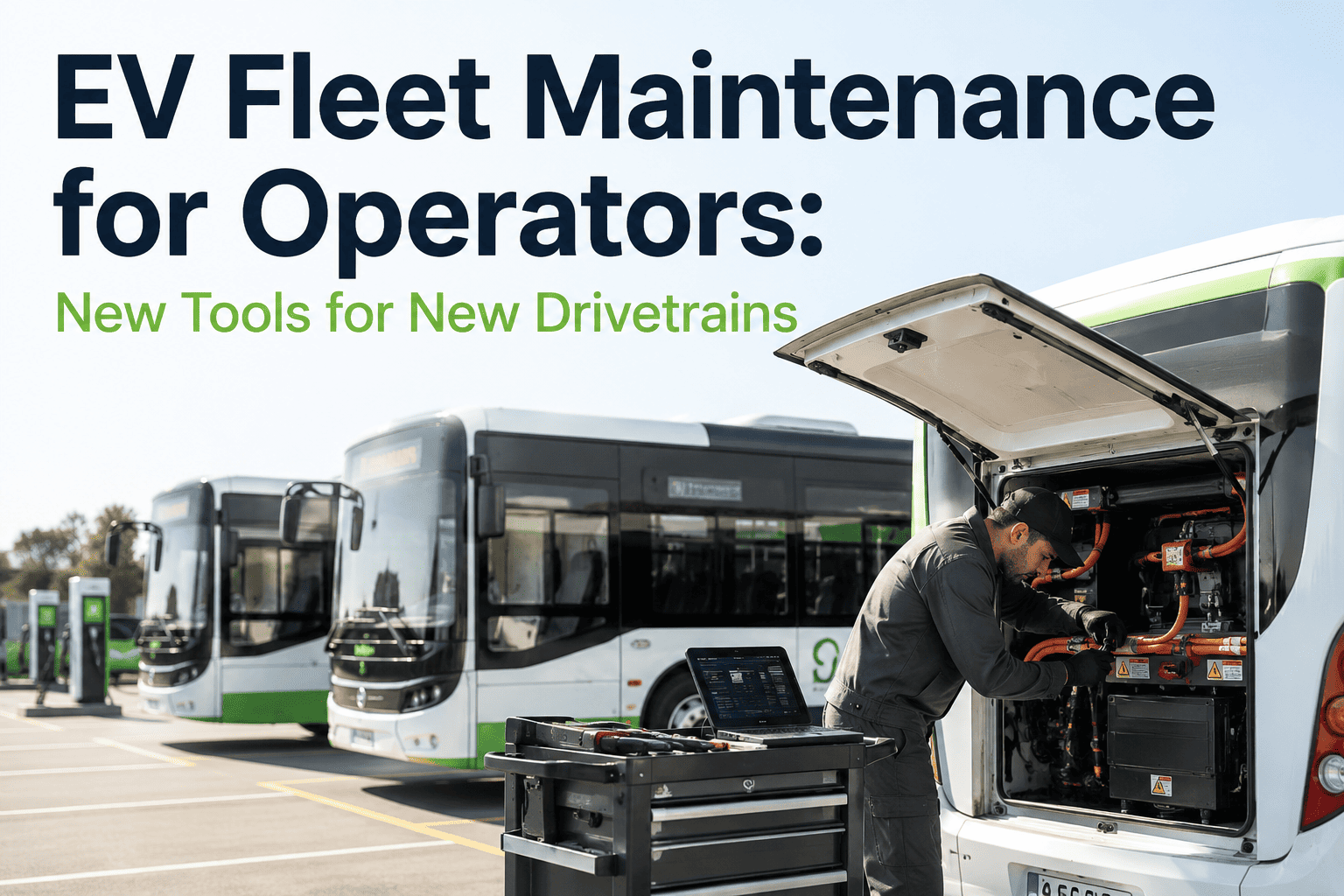
Swapping a diesel HGV or van for an electric one doesn't just change what's under the bonnet. It changes what your technicians are qualified to touch, what a "defect" even looks like, and what your maintenance schedule needs to track. Fleets that treat EVs like combustion vehicles with a plug are the ones getting caught out — not by the vehicles themselves, but by maintenance processes that were never rebuilt for them. A CMMS like OxMaint gives operators one place to run EV-specific checklists, track high-voltage battery health, and keep technician certifications current as the fleet electrifies.
Build EV-Ready Maintenance Checklists in Minutes
Track HV battery health, charging faults, and regen brake inspections alongside your existing ICE fleet records.
What Actually Changes When You Electrify
| Maintenance Task | ICE Fleet | EV Fleet |
|---|---|---|
| Daily Walkaround | Fluid levels, exhaust, engine bay checks | Charge port condition, HV cable insulation, warning lamp checks |
| Scheduled Servicing | Oil changes every 6-12 months | No oil changes; coolant loop and software update checks instead |
| Brake System | Steady pad wear from constant friction braking | Regenerative braking cuts pad wear, but calipers can seize from underuse |
| Technician Skill Level | Standard mechanical qualification | IMI EV-specific qualification, graded by voltage exposure |
| Common Defects | Oil leaks, belt and hose wear | Charging faults, 12V auxiliary battery drain, software glitches |
The Skills Ladder: IMI EV Levels Explained
Level 1: Awareness
Introductory safety knowledge for non-technical staff working near EVs, such as valeters and yard personnel.
Level 2: Routine Maintenance
Covers everyday servicing and inspection tasks on EVs, without working on live high-voltage systems.
Level 3: Repair and Replace
Qualifies technicians to diagnose, repair, and replace high-voltage components, excluding direct battery repair and live work.
Level 4: Live HV Work
The advanced qualification for master technicians working directly on live high-voltage systems and components.
Four Inspection Points New to Your Checklist
HV Battery Health
Regular state-of-health checks catch degradation long before it becomes a range or reliability problem.
Regen Brake Calipers
Less friction braking means less natural wear, but also a higher risk of caliper seizure from underuse.
Charge Port and Cable
Pins, seals, and connectors take daily wear that a traditional walkaround check was never built to catch.
Thermal Management
Coolant loops that regulate battery temperature need their own inspection line, separate from engine cooling.
Getting Your Fleet EV-Ready
Audit the Skill Gap
Map which technicians hold which IMI EV level, and where live high-voltage work still needs outsourcing.
Build EV-Specific Checklists
Replace generic ICE walkaround templates with ones that cover charging, HV cabling, and regen braking.
Track Battery Health Separately
Log HV state-of-health readings on their own trend line, distinct from general defect records.
Centralise Certifications
Keep technician qualification expiry dates visible alongside vehicle records, not in a separate spreadsheet.
EV Maintenance Readiness Maturity
Reactive and Uncertain
EVs are maintained on ICE checklists, and HV faults are sent out because no one on staff is qualified to touch them.
Trained but Manual
Technicians hold the right IMI levels, but checklists and certification records still live in separate, disconnected files.
Fully EV-Integrated
EV checklists, HV battery trends, and technician certifications all sit in one system, visible and current at all times.
Why This Can't Wait for the Full Transition
Mixed fleets are already the norm for most operators, with diesel and electric vehicles running side by side for years before any full changeover. That overlap is exactly where maintenance processes tend to fail quietly — a technician qualified for diesel work gets handed an EV defect, or an HV battery issue goes unlogged because there's no dedicated field for it. The fleets that stay ahead are the ones building EV-specific processes now, while the electric portion of the fleet is still small enough to get it right. Sign up free to start building EV-ready checklists today, or book a demo to see how a mixed ICE and EV fleet stays organised in one system.
One System for Your Whole Fleet, Diesel and Electric
EV checklists, HV battery tracking, and technician certifications, all centralised alongside your existing ICE maintenance records.
Frequently Asked Questions
Does IMI Level 3 cover high-voltage battery repair?
No, Level 3 covers diagnosis, repair, and replacement of high-voltage components, but direct battery repair sits outside its scope.
Do EVs really need less maintenance overall?
Fewer moving parts mean less routine servicing, but new checks around HV batteries, charging equipment, and software mean the workload shifts rather than disappears.
Can an existing diesel technician work on an EV without extra training?
Only on non-high-voltage tasks; anything involving the HV system requires at least an IMI Level 2 EV qualification.
What's the practical difference between IMI Level 2 and Level 3?
Level 2 covers routine EV maintenance without live high-voltage work, while Level 3 adds the ability to diagnose, repair, and replace high-voltage components.
Is specialist PPE required for routine EV maintenance?
Yes, insulated tools and rated protective equipment are required whenever a technician works around high-voltage cabling or components, even for routine checks.