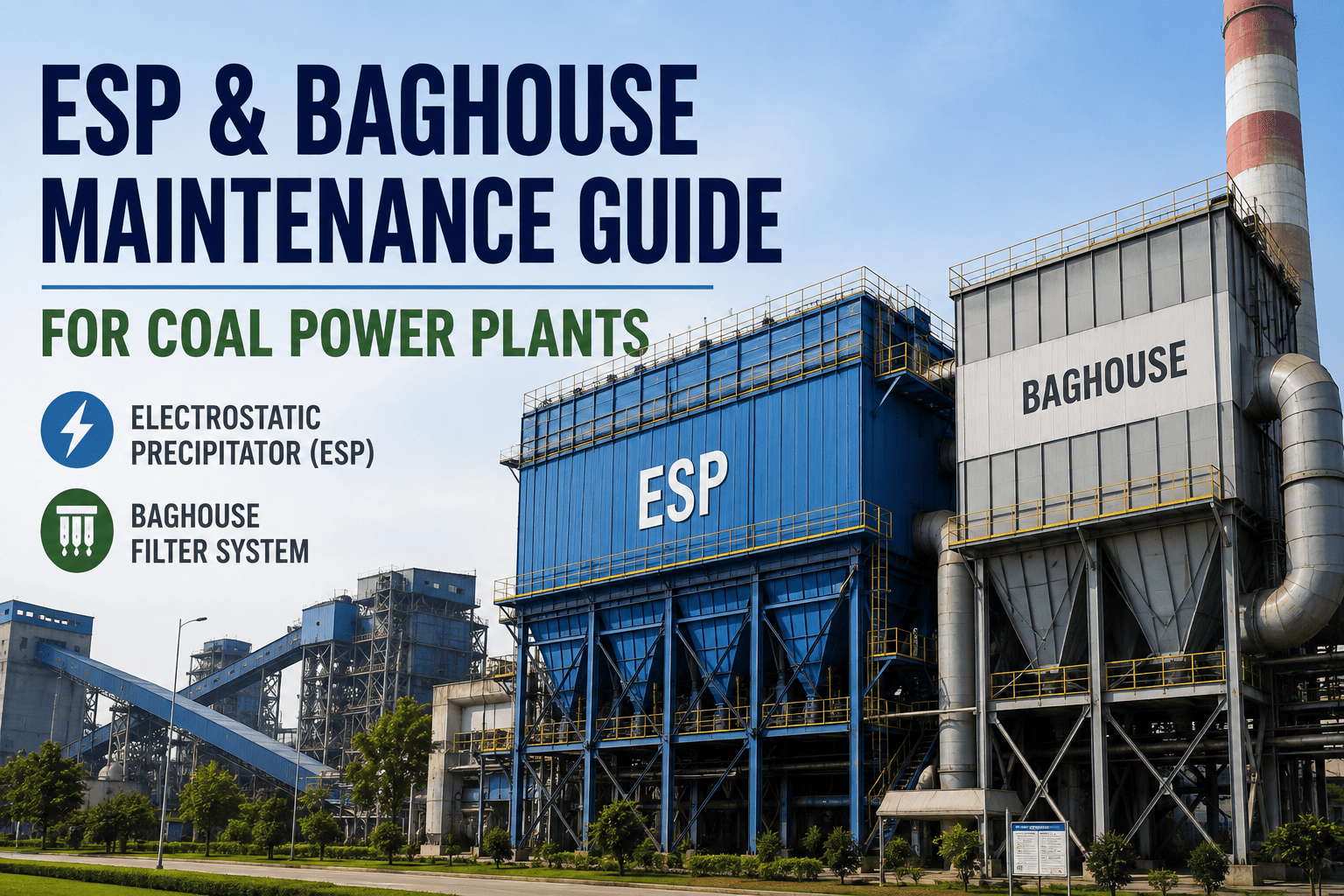
A coal plant's particulate control system is either an ESP or a baghouse, and both fail the same quiet way, gradually, until opacity spikes and someone's explaining an exceedance to a regulator. The difference is where to look first. On an ESP it's usually a TR set or rapper problem, on a baghouse it's almost always differential pressure telling you a bag has failed or a hopper is plugging. Sign up to track TR set performance and bag differential pressure trends against your maintenance schedule in one place.
Why It Matters
Particulate control isn't a set-and-forget system. An ESP field that's tripped offline or a baghouse compartment stuck in cleaning mode can push a plant toward an opacity exceedance within hours, and the failure often traces back to a rapper, a bag, or a hopper that showed warning signs days earlier if anyone was tracking the trend.
ESP: The Core Components To Watch
TR Sets
Transformer-rectifiers supplying the charging voltage, watch primary current and spark rate
Rapper System
Dislodges collected dust from plates, weak rapping is the top cause of re-entrainment
Discharge Electrodes
Wire or rigid frame elements that ionize particles, breakage causes local field loss
Collection Plates
Grounded surfaces that capture charged particles, warped plates reduce collection area
Hoppers
Collect settled dust below each field, plugging here backs up into the plates fast
Insulators
Support bushings that isolate high voltage, moisture or dust tracking causes flashover
ESP Troubleshooting: Symptom To Likely Cause
Rising spark rate with falling voltage: usually points to a broken discharge wire or excessive dust buildup on plates
Steady low current on one TR set: check for a tripped field, blown fuse, or ground fault on that section
Rising opacity with all fields energized: weak or failed rappers letting dust cake and re-entrain into the gas stream
High-voltage flashover events: check insulator compartments for moisture intrusion or dust tracking on the surface
Hopper high-level alarm: confirm dust removal conveyor is running, a full hopper backs dust up into the field above it
Catch A Failing Field Before Opacity Does
OxMaint tracks TR set voltage, current, and spark rate trends per field, and fires a work order the moment a reading drifts out of range. Sign up for a free trial to run it on your own ESP data, or book a demo to see it configured for your plant.
Baghouse: Reading Differential Pressure Right
Differential pressure across a baghouse compartment is the single most useful number on the whole system. Too low, and a bag has likely torn, letting gas bypass the fabric entirely with almost no visible warning until an opacity monitor catches it. Too high, and bags are blinding with caked dust that pulse cleaning isn't removing, choking airflow and straining the fan. Neither direction is normal, and both point to something specific enough to act on immediately rather than waiting for the next scheduled inspection.
Differential Pressure Reading, Likely Cause & Action
| DP Reading |
Likely Cause |
Action |
| Abnormally low |
Torn or unseated bag, gas bypassing fabric |
Isolate compartment, inspect and replace bag |
| Gradually rising |
Normal dust cake building between cleaning cycles |
Monitor, confirm pulse cleaning timing |
| High and not recovering |
Bag blinding, weak pulse pressure, or plugged nozzle |
Check pulse air pressure, inspect solenoid valves |
| One compartment isolated |
Damper stuck closed or compartment offline |
Verify damper position, return to service or repair |
The Takeaway
Whether it's an ESP or a baghouse, the failure pattern is the same, a small deviation in a number nobody's watching becomes an emissions event nobody can explain. TR set trends and bag differential pressure aren't just maintenance metrics, they're the earliest warning a plant gets before opacity does the talking for it.
Frequently Asked Questions
Q
How do I know if an ESP field or a baghouse compartment has failed?
On an ESP, a tripped TR set, falling current, or a rising spark rate on one field usually points to trouble there first. On a baghouse, a differential pressure reading that's abnormally low compared to the other compartments is the clearest early signal of a torn or unseated bag.
Q
How often should ESP rappers and baghouse bags be inspected?
Rapper function is typically checked continuously through control system feedback, with physical inspection during planned outages. Bags are commonly inspected on a rotating schedule tied to run hours and differential pressure trends, since visual inspection alone often misses early-stage wear.
Q
Can a hopper problem really cause an emissions exceedance?
Yes. A plugged hopper backs collected dust up into the field or compartment above it, reducing collection efficiency and, if severe enough, causing arcing or bridging that takes the whole section offline. Hopper level and discharge conveyor status deserve the same attention as the plates or bags themselves.
Keep Every Field And Every Bag Accounted For
OxMaint tracks TR set performance, rapper function, and bag differential pressure per compartment, turning scattered readings into a maintenance schedule you can act on before opacity does. Sign up for a free trial to run it on your own plant data, or book a demo to see it configured for your unit.