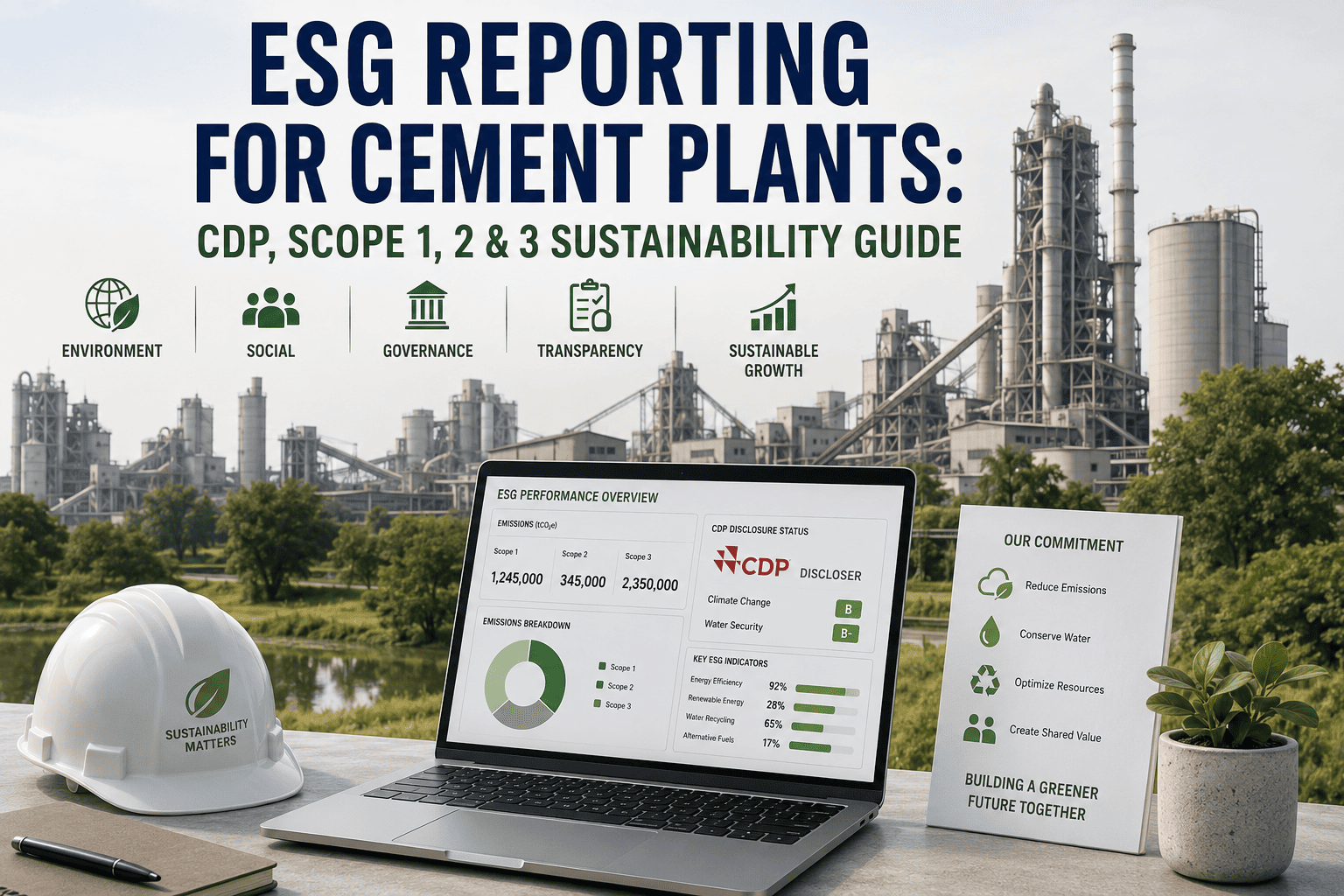
Cement is one of the highest carbon-intensity industries there is, so when a CDP questionnaire or a customer's supplier audit asks for Scope 1, 2, and 3 numbers, guesswork is not an option anymore. Sign up to see how Oxmaint turns everyday maintenance and energy data into audit-ready ESG numbers.
~7%
Share of global CO2 emissions commonly attributed to cement production
3 Scopes
Emission categories every ESG disclosure and CDP response is built around
60%+
Typical share of a cement plant's Scope 1 footprint tied to kiln fuel combustion
Annual
How often most cement groups now face a CDP or investor sustainability disclosure cycle
Why Cement Plants Can't Treat ESG As Paperwork
A CDP score or an ESG rating increasingly decides which cement suppliers get shortlisted for large infrastructure contracts. But most plants still pull emissions numbers from scattered fuel logs and manual estimates, which makes every disclosure a scramble instead of a routine report.
Scope 1, 2 and 3 Explained for a Cement Plant
| Scope |
What It Covers |
Main Source at a Cement Plant |
| Scope 1 |
Direct emissions from sources the plant owns or controls |
Kiln fuel combustion, calcination of limestone, on-site vehicle fleet |
| Scope 2 |
Indirect emissions from purchased electricity and power |
Grid power drawn by mills, fans, compressors, and lighting |
| Scope 3 |
Indirect emissions across the value chain outside the plant's direct control |
Raw material transport, purchased clinker, outbound logistics of cement |
Turn Maintenance Data Into ESG-Ready Numbers
Oxmaint captures fuel logs, energy consumption, and equipment runtime as maintenance work happens, so Scope 1 and Scope 2 inputs are ready whenever a CDP disclosure comes due. Sign up for a free trial to connect your first plant, or book a demo to see the ESG data flow.
What a CDP Disclosure Actually Asks For
| Disclosure Area |
Typical Data Requested |
| Governance |
How climate risk is reviewed and who owns emissions targets at board level |
| Emissions Data |
Verified Scope 1, 2, and 3 figures broken down by plant and activity |
| Risk & Opportunity |
How carbon pricing, regulation, or fuel-switching affects plant operations |
| Targets & Reduction |
Progress against stated reduction targets, backed by measurable plant-level data |
Manual ESG Reporting vs Data-Backed Reporting
Manual ESG Reporting
Fuel and power figures pulled together from spreadsheets right before the deadline
No consistent link between maintenance records and emissions activity
Numbers hard to verify when an auditor asks for the source
Data-Backed Reporting
Fuel logs and energy readings captured continuously as part of routine maintenance
Emissions activity data traceable to the exact asset and shift it came from
Disclosure becomes a scheduled export instead of a month-long exercise
Where a CMMS Supports ESG Reporting
Oxmaint logs fuel consumption, equipment runtime, and energy readings alongside every maintenance activity, so Scope 1 and Scope 2 activity data is already structured by plant and asset before anyone starts a CDP form or sustainability report.
Frequently Asked Questions
Q
Why is Scope 1 usually the largest number for a cement plant?
Kiln fuel combustion and the chemical calcination of limestone both happen directly on-site, and together they typically make Scope 1 the dominant share of a cement plant's total footprint.
Q
Is a CDP score the same as an ESG rating?
No, a CDP score reflects the completeness and quality of a specific climate disclosure, while a broader ESG rating from an agency also weighs governance, social factors, and other environmental data beyond emissions.
Q
Can maintenance software really help with Scope 3 reporting?
Directly it covers Scope 1 and 2 activity data best, but consistent asset and vendor records also make it easier to trace Scope 3 items like transport and purchased materials back to a verifiable source.
Make Your Next ESG Disclosure a Routine Export
Oxmaint keeps fuel, energy, and asset data structured all year, so Scope 1 and Scope 2 numbers are ready whenever a CDP form or sustainability audit comes around. Sign up for a free trial to connect your first plant, or book a demo to see the ESG data flow in action.