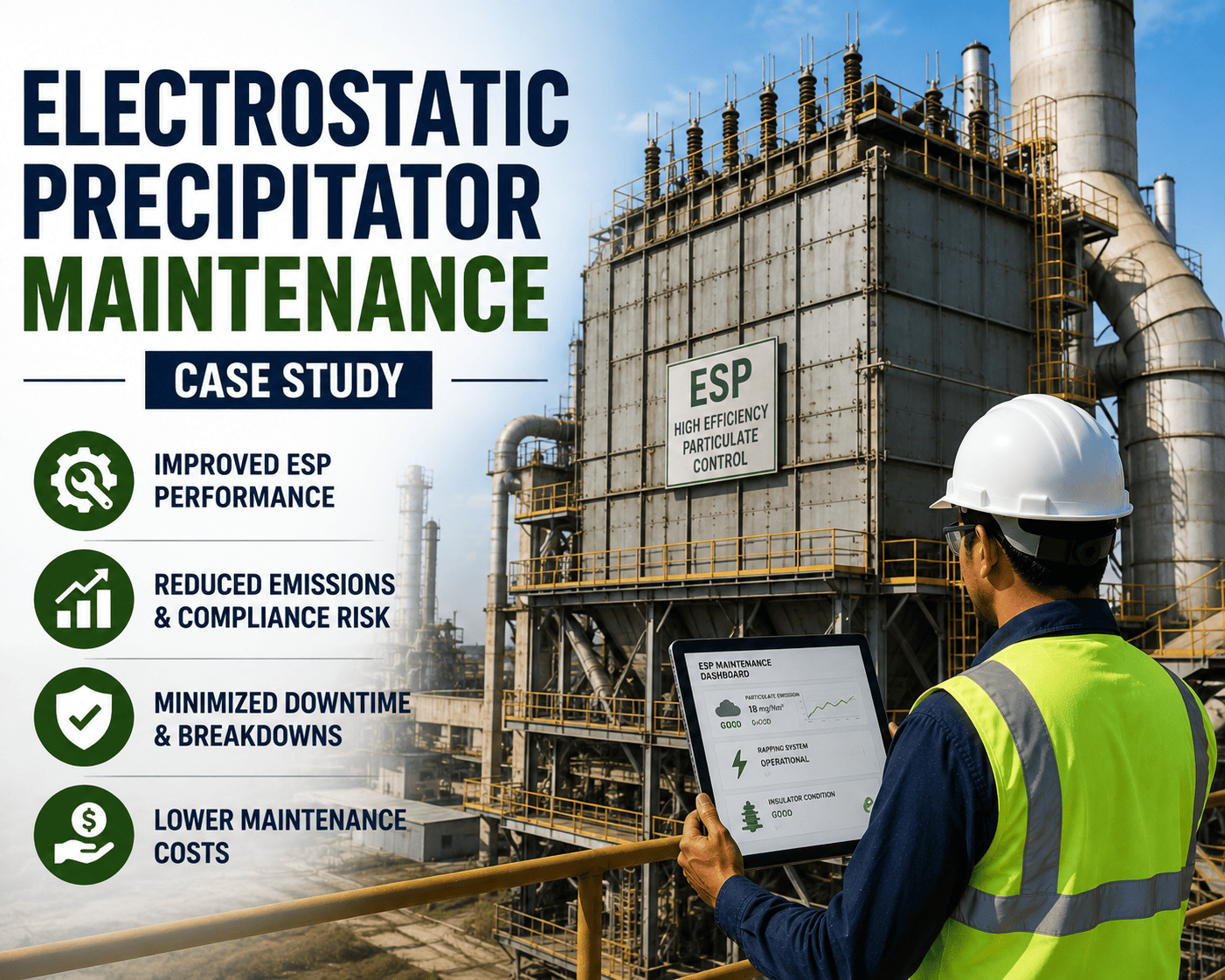
An electrostatic precipitator only has one job, keep dust out of the stack, but it's a job with almost no margin for error once emissions limits are involved. Worn discharge electrodes, a rapping system out of sync, or a drifting electrical field don't announce themselves, they just let opacity creep upward until an excursion shows up on the compliance report. This case study looks at how a cement plant used condition monitoring inside its CMMS to catch ESP degradation before it became a compliance event, and what happened to excursions, collection efficiency, and unplanned ESP downtime. Sign up to see the same ESP maintenance workflow built for your own plant.
The Challenge
ESP fields were inspected during scheduled shutdowns, months apart, with no visibility into how electrode condition or rapping performance drifted in between. Opacity readings were monitored for compliance, not diagnosed for cause, so by the time a reading crept toward the limit, nobody could say whether it was a rapping issue, a broken electrode, or a field power problem. Excursions triggered scrambling rather than a known fix.
Results After Monitoring ESP Condition Continuously
-83% Excursions
Fewer opacity excursions once field and rapper condition were tracked between shutdowns
99.6% Collection
Sustained dust collection efficiency, up from a fluctuating range that dipped near shutdowns
-41% ESP Downtime
Reduction in unplanned ESP-related stoppages after failing components were flagged early
Opacity Excursion Days: A 30-Day Snapshot
Before condition monitoring
After condition monitoring
Each square represents one day. Highlighted squares mark days with an opacity excursion. Tracking rapper cycles and field voltage between shutdowns turned a recurring pattern into a rare exception.
Dust Collection Efficiency: Before vs After
Average dust collection efficiency, before and after electrode, rapper, and field voltage condition were tracked continuously instead of checked only at shutdown.
Stop Finding Out About ESP Issues From A Compliance Report
Oxmaint tracks electrode, rapper, and field voltage condition continuously, so ESP issues get fixed before opacity ever creeps toward the limit. Sign up for a free trial to build your own ESP maintenance workflow, or book a demo to walk through this case study in detail.
ESP Maintenance Before And After
| Area |
Before |
After |
| Electrode and rapper checks |
Inspected only during scheduled shutdowns, months apart |
Rapper cycles and field voltage tracked continuously between shutdowns |
| Opacity readings |
Monitored for compliance only, with no clear cause when readings rose |
Linked directly to specific electrical field and rapper data |
| Response to an excursion |
Reactive troubleshooting after the reading was already out of range |
Rare, since degrading fields are flagged and corrected in advance |
| Dust collection efficiency |
Fluctuated, dipping toward shutdown intervals |
Held steady at 99.6% across the reporting period |
The Results
Compliance stopped being a monthly worry. Electrode and rapper condition were visible between shutdowns instead of only during them, so a degrading field showed up as a work order days before it would have shown up as an opacity excursion. The team spent far less time reacting to compliance reports and far more time keeping the ESP in the condition that made those reports uneventful.
Frequently Asked Questions
Q
Why do ESP issues often go unnoticed until an excursion happens?
Electrode wear and rapper timing drift gradually, and most plants only inspect the ESP internals during scheduled shutdowns, so a field that's been degrading for weeks has no chance to be caught until opacity actually crosses the limit.
Q
What data actually predicts an ESP-related compliance issue?
Field voltage and current trends, rapper cycle timing, and hopper dust levels tend to shift before opacity does, so tracking those against historical baselines gives enough lead time to intervene before a limit is approached.
Q
Does this help with anything beyond compliance, like maintenance cost?
Yes, catching electrode and rapper wear early usually means a smaller planned repair instead of an emergency one, and it extends the interval between major ESP overhauls since components are addressed before they fail outright.
Keep Your ESP Ahead Of Every Compliance Report
Oxmaint tracks electrode, rapper, and field voltage condition continuously, turning early ESP degradation into a work order instead of an excursion. Sign up for a free trial to build your own ESP maintenance workflow, or book a demo to walk through the full case study.