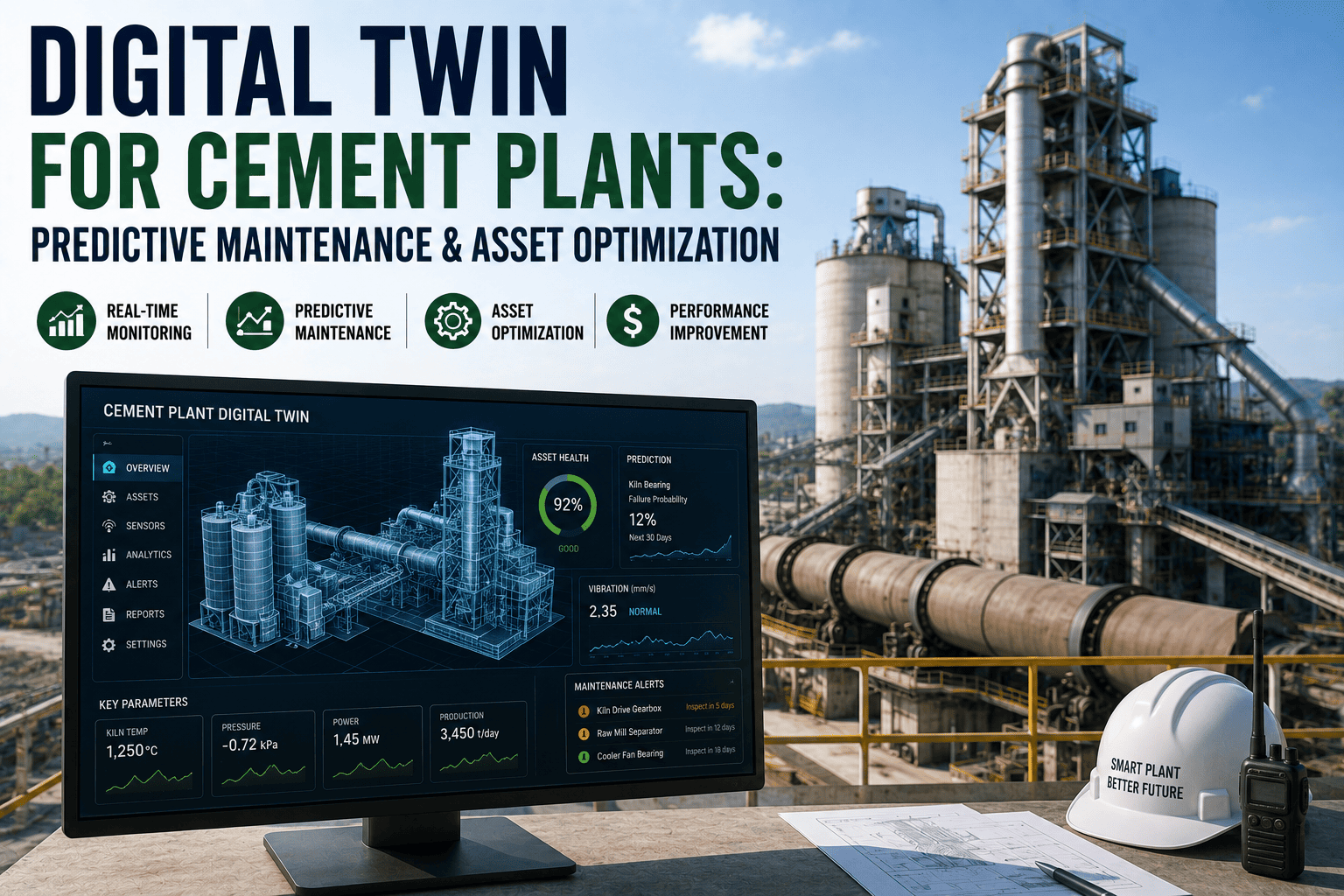
A digital twin that just displays a pretty 3D model of the plant is a dashboard with extra steps. The version that actually changes outcomes is the one wired into real maintenance records, so every actual repair, every part replaced, every shutdown duration teaches the model something it didn't know yesterday. Sign up to see how Oxmaint closes that loop between simulation and the work order.
15-30%
Fewer unplanned shutdowns typically reported after digital twin deployment
20%
Typical reduction in overall maintenance cost once the model is calibrated to real outcomes
90%+
Prediction accuracy typically reached after a few shutdown cycles of feedback and recalibration
3-4 Months
Typical timeline to stand up a basic digital twin using a plant's existing sensor data
Why a Digital Twin Is Only as Good as the Maintenance Data Feeding It
A twin built purely on manufacturer specifications and generic failure curves starts out making rough guesses, typically somewhere in the 70-80% accuracy range. What actually improves it is closing the loop: feeding back real task durations, parts that were actually replaced, and defects found on the shop floor after every intervention. Plants that skip this step end up with an expensive visualization tool. Plants that connect the twin to their CMMS end up with a model that keeps getting sharper every single shutdown cycle.
The Three Layers a Cement Plant Digital Twin Actually Needs
| Layer |
What It Simulates |
Why It Matters |
| Asset health layer |
Vibration, temperature, and current draw patterns against a component's own failure history |
Flags a developing fault weeks before it becomes a forced outage |
| Process simulation layer |
How kiln, preheater, and mill wear conditions interact during a planned shutdown window |
Reveals overlapping wear issues before real downtime gets committed |
| Maintenance feedback layer |
Actual task durations, parts replaced, and defects found during each intervention |
Continuously recalibrates the model's prediction accuracy over time |
Simulation and Real Maintenance Records, Feeding Each Other
Oxmaint connects digital twin outputs directly to your CMMS, so a predicted failure generates a real work order, and the outcome of that work order feeds straight back into the model. Sign up for a free trial to see it against your own kiln, mill, and crusher circuits, or book a demo and we'll walk through your current sensor setup.
Where the Real Return on a Digital Twin Comes From
| Benefit Area |
Typical Range |
What Drives It |
| Unplanned shutdowns |
15-30% reduction |
Failure signatures flagged before they force an outage |
| Energy consumption |
10-15% reduction |
Process simulation surfacing inefficient operating points |
| Maintenance cost |
Around 20% reduction |
Wear-based scheduling replacing calendar-based routines |
| Equipment service life |
20% or more extension |
Interventions timed before damage has a chance to compound |
Digital Twin as a Dashboard vs Digital Twin as a Decision Loop
Digital Twin as a Dashboard
A virtual model that looks impressive but only displays current sensor readings
No connection back to what maintenance crews actually did or found
Prediction accuracy stays wherever the initial model settled, no better
Digital Twin as a Decision Loop
A predicted failure automatically becomes a real work order in the CMMS
Actual repair outcomes flow back and recalibrate the model after every cycle
Accuracy climbs from an initial estimate toward a reliable, plant-specific figure
How Oxmaint Supports Digital Twin Adoption
Oxmaint sits at the connection point between the simulation and the shop floor. Predicted failure signatures from the twin generate real work orders, and every outcome, task duration, parts consumed, defects found, is logged back against the same asset record so the model keeps recalibrating. Book a demo to see how your existing sensor data could feed a twin without a multi-year integration project.
Frequently Asked Questions
Q
What actually separates a digital twin from a 3D visualization tool?
A visualization tool shows you what's happening right now. A digital twin, properly connected to a CMMS, predicts what's likely to happen next and generates the maintenance action to prevent it, then learns from whether that action was right.
Q
Why does prediction accuracy start low and take time to improve?
Initial models are built on generic equipment specifications and industry failure curves, not your plant's actual behavior. Accuracy climbs as real outcomes from each shutdown cycle get fed back in and the model adapts to your specific assets and operating conditions.
Q
Does a digital twin project mean replacing all our existing sensors?
Not usually. A basic digital twin can typically be built on top of a plant's existing sensor data, with the deeper simulation and CMMS feedback loop layered on afterward once the foundational model is running.
Q
What's the fastest way to start a digital twin project without overcommitting?
Start with one asset health layer, kiln main drive or a mill circuit, connected to your existing sensor data and CMMS, then expand into full process simulation once that feedback loop is proven.
Turn Simulation Into a Work Order, Not Just a Visualization
Oxmaint gives cement plant teams asset health modeling, process simulation, CMMS-connected feedback loops, and predictive maintenance alerts across kiln, mill, and crusher circuits in one platform. Sign up for a free trial to explore it yourself, or book a demo and we'll walk through it against your own plant.