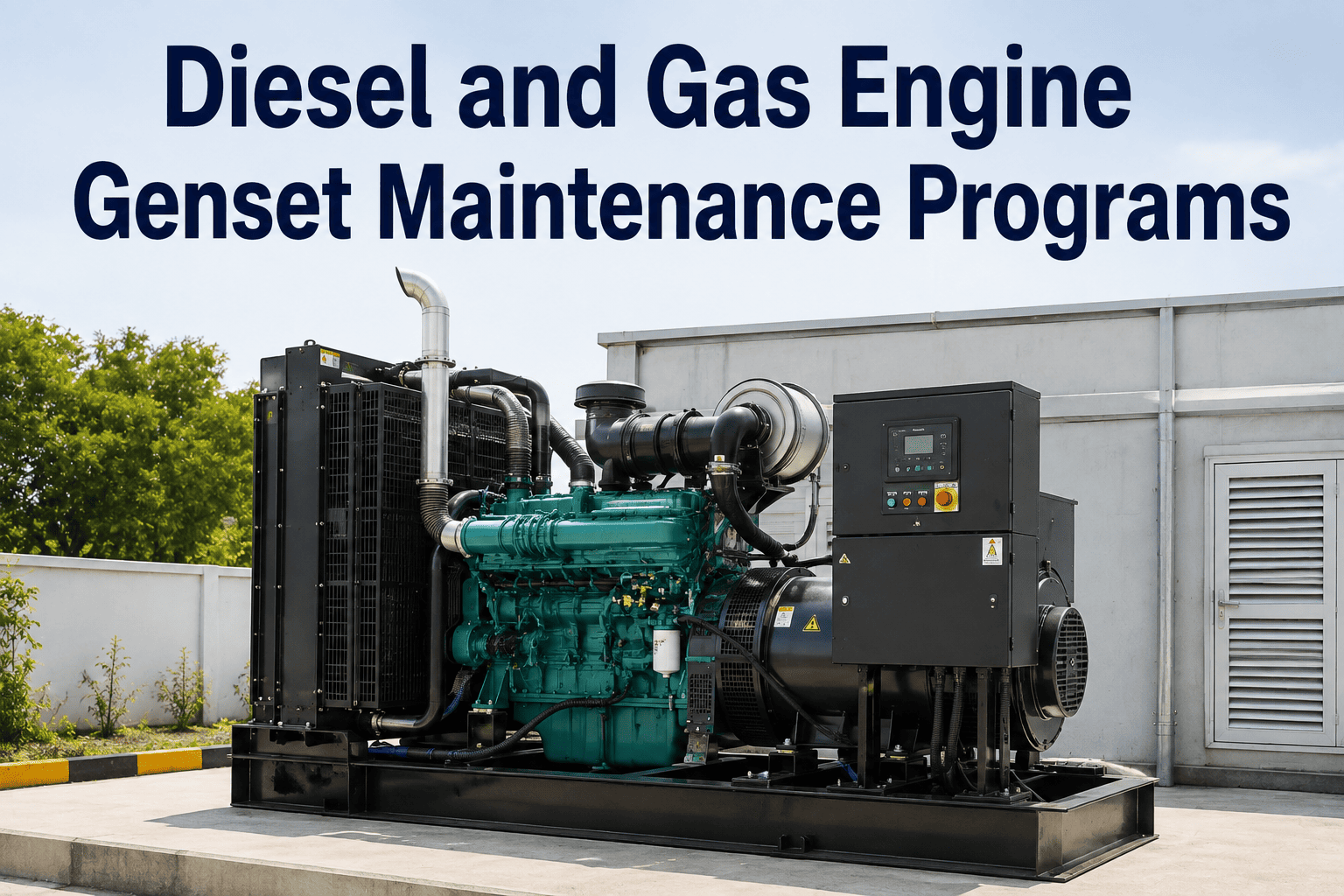
A standby genset can sit idle for eleven months and be expected to start in ten seconds on the twelfth. That's the paradox of genset maintenance — the asset that runs the least is often the one whose failure matters most. Diesel and gas engines run on two separate clocks at once: engine hours for units that work hard, and calendar time for units that mostly wait. A maintenance program that tracks only one of those clocks is already missing half the picture. Sign up to track oil changes, turbocharger inspections, and cylinder head overhauls against both hours and calendar time in one CMMS.
Why It Matters
Genset maintenance is layered by wear rate, not treated as one task list. Oil and filters wear fastest and get changed most often, valve and injector work follows on a slower cycle, and the top-end — cylinder heads, turbochargers, aftercoolers — only gets opened up every several thousand hours. Skip a layer and the fault doesn't stay contained to that layer: dirty oil accelerates cylinder wear, a restricted air filter raises exhaust gas temperature and stresses the turbo, and a missed valve adjustment shows up later as a compression problem nobody can explain.
The Three Wear Layers Of A Genset
Every engine component wears at its own rate, and a maintenance program has to match inspection frequency to how fast each layer actually degrades.
Oil & Filters
Changed roughly every 250 hours or annually for standby units, since dirty or diluted oil loses its ability to protect close engine tolerances.
Valves & Injectors
Adjusted and serviced roughly every 1,000 to 2,000 hours, catching clearance drift before it turns into a compression or timing fault.
Top-End Overhaul
Cylinder heads and turbochargers opened up around 6,000 to 15,000 hours, with major rebuilds typically double that interval.
Fast-wearing consumables catch the everyday contamination that damages an engine slowly, mid-cycle valve work catches drift before it becomes a fault, and the top-end overhaul is where accumulated wear across thousands of hours finally gets addressed directly.
Genset Maintenance Interval Reference
| Task |
Typical Interval |
Risk If Skipped |
| Oil & Filter Change |
250 hours or annually |
Contaminated oil accelerates wear on bearings and cylinder walls |
| Air & Fuel Filters |
500 hours |
Restricted airflow raises exhaust gas temperature and stresses the turbo |
| Valve Adjustment |
1,000-2,000 hours |
Clearance drift causes uneven combustion and long-term compression loss |
| Top-End & Turbo Overhaul |
6,000-15,000 hours |
Cylinder head and turbo wear compounds until output derates or fails |
Two Clocks, One Schedule
Oxmaint tracks each genset against both engine hours and calendar time, so a standby unit that barely runs still gets its annual service on schedule. Sign up for a free trial to run it on your own fleet, or book a demo to see it configured for your site.
Where Genset Programs Fail Before A Real Outage
Standby Unit Runs No Load
Monthly test run never confirmed the genset can actually carry real load
Filter Changed By Calendar Only
Dusty site conditions cut real filter life well below the published interval
Oil Analysis Trend Ignored
Wear metals climbing across samples but no one is comparing sample to sample
Battery Never Load Tested
Starting battery inspected visually but never proven under real cranking load
Overhaul Deferred Repeatedly
Top-end overhaul pushed past its interval because the unit "still runs fine"
Service Records Fragmented
Hours-based and calendar-based tasks tracked in separate, disconnected logs
Frequently Asked Questions
Q
Why does a standby genset need annual service even if it barely runs?
Calendar aging affects seals, coolant, and fuel quality regardless of runtime, and NFPA-style guidance for emergency generators calls for weekly inspections and monthly run tests precisely because low hours don't mean low risk — a unit can fail to start even with almost no accumulated runtime.
Q
When should a genset actually go in for a top-end overhaul?
Heavy-duty industrial platforms in prime power service commonly reach a top-end overhaul around 6,000 to 15,000 hours, but the better trigger is condition — oil analysis trends and compression test results — since running hours alone don't capture load profile or operating environment.
Q
Why is a no-load monthly test not enough to prove a genset works?
Running a generator with no load can mask problems that only appear under real electrical demand, such as voltage regulation faults or a turbo that can't sustain boost — a periodic load bank test is what actually confirms the unit will perform when it's needed.
Make Sure Every Genset Starts When It's Called On
Oxmaint keeps oil change dates, filter intervals, valve adjustments, and overhaul history tied to their evidence in one auditable log, so proving your standby fleet is ready doesn't mean digging through paper service cards. Sign up for a free trial to run it on your own sites, or book a demo to see it configured for your team.