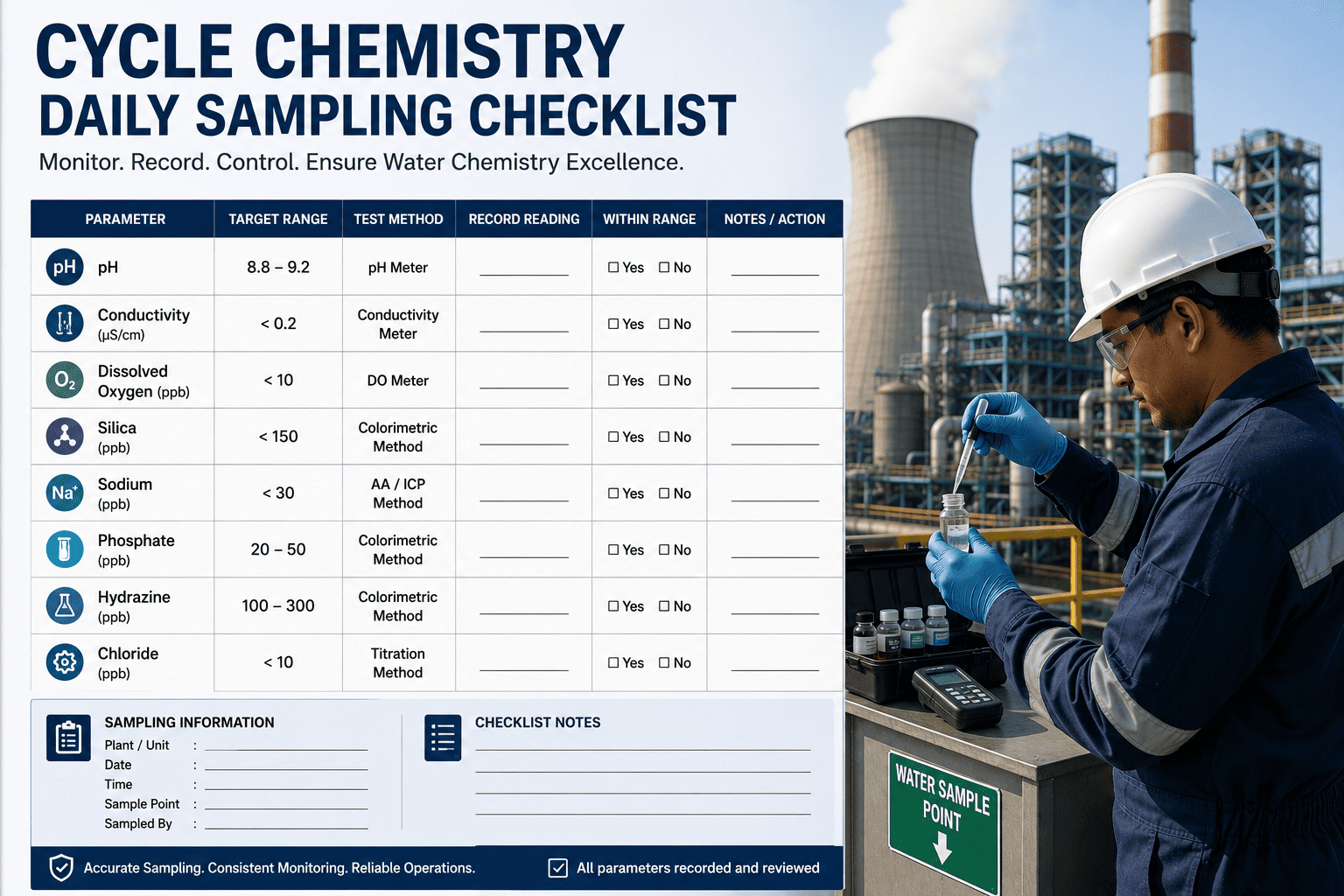
A single missed pH reading on a Tuesday night shift can turn into a turbine deposit problem six months later. That is the quiet reality of cycle chemistry — the damage is slow, expensive, and almost always traced back to a sampling round that got rushed or skipped. This checklist breaks down exactly what a daily cycle chemistry round should cover, so every shift logs the same five parameters, the same way, every time.
Why Daily Sampling Cannot Be Skipped
Boiler and turbine metal doesn't fail overnight — it fails after months of chemistry drifting quietly out of range. Corrosion, silica scaling on turbine blades, and copper transport all trace back to a sampling round that was late, incomplete, or never cross-checked against a limit.
The Five Parameters Every Shift Must Log
These five readings form the backbone of any cycle chemistry program, whichever guideline your station follows.
01
pH
Feedwater typically held near 9.0–9.6. Low pH accelerates corrosion; high pH invites caustic attack.
02
Conductivity
Cation conductivity is the earliest warning sign of contaminant ingress, often before pH even moves.
03
Dissolved Oxygen
Kept low in feedwater to limit oxygen pitting on economiser and boiler tube surfaces.
04
Silica
Even trace carryover deposits on turbine blades, cutting efficiency and forcing early outages.
05
Sodium
Tracks condenser leaks and cooling water in-leakage long before conductivity alarms trip.
Suggested Sampling Frequency
| Parameter |
Frequency |
Typical Method |
| pH / Conductivity |
Continuous + hourly log |
Online probe, verified grab sample |
| Dissolved Oxygen |
Continuous |
Online DO analyser |
| Silica |
Once per shift |
Colorimetric or online analyser |
| Sodium |
Once per shift |
Ion-selective electrode |
What Happens When Readings Drift
Corrosion
Low pH or high oxygen thins boiler tube walls over months, not days.
Scaling
Silica carryover coats turbine blades and quietly drops output.
Unplanned Outage
Chemistry excursions caught late usually end in a forced shutdown.
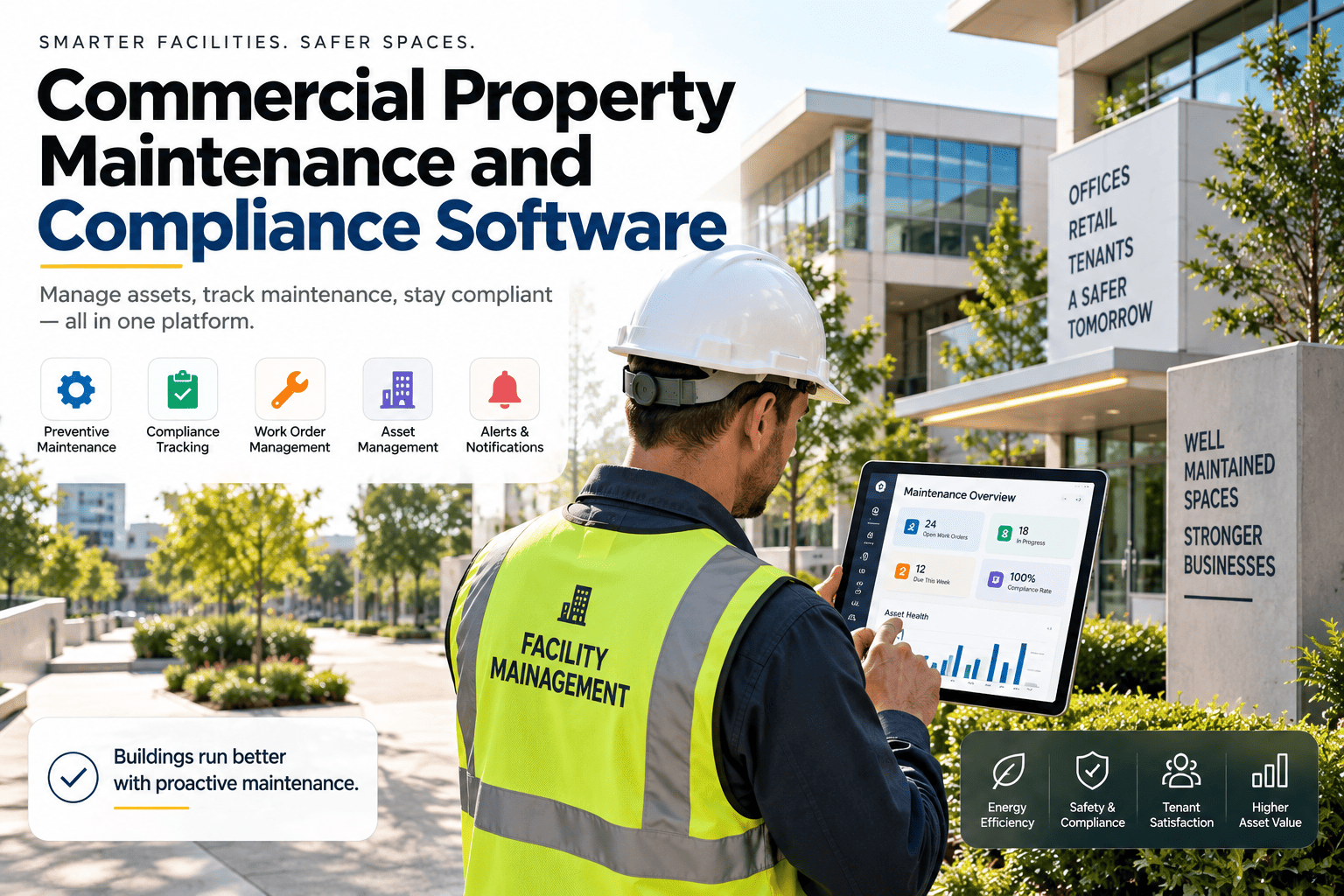
Paper logs make these trends nearly impossible to catch in time. Teams that sign up for Oxmaint move this checklist into a CMMS where every reading is timestamped, out-of-range values are flagged instantly, and the last thirty days of a parameter are visible in one chart — or book a demo to see how a real chemistry log looks inside the platform.
Q
Can the daily checklist replace our lab-verified samples?
No, shift-level readings are meant to catch drift early, not replace scheduled lab verification. Most stations keep both — routine field logging for trend visibility, and lab samples for calibration and compliance.
Q
Does moving this checklist into a CMMS need new hardware?
No, operators keep using the same online analysers and grab-sample routine. The CMMS simply becomes where the readings are entered and reviewed, from a tablet or phone at the sample point instead of a clipboard.
Q
Who gets alerted if a reading goes out of range?
Whoever the station assigns — typically the shift chemist and the control room — gets a flag the moment a value crosses its limit, instead of finding out during the next shift handover review.
Turn Your Cycle Chemistry Log Into A Trend, Not A Clipboard
Every pH, conductivity, silica, and sodium reading logged, timestamped, and flagged the moment it drifts — visible across every shift and every station. Sign up for a free trial to set up your first sampling point, or book a demo to see the full chemistry dashboard.