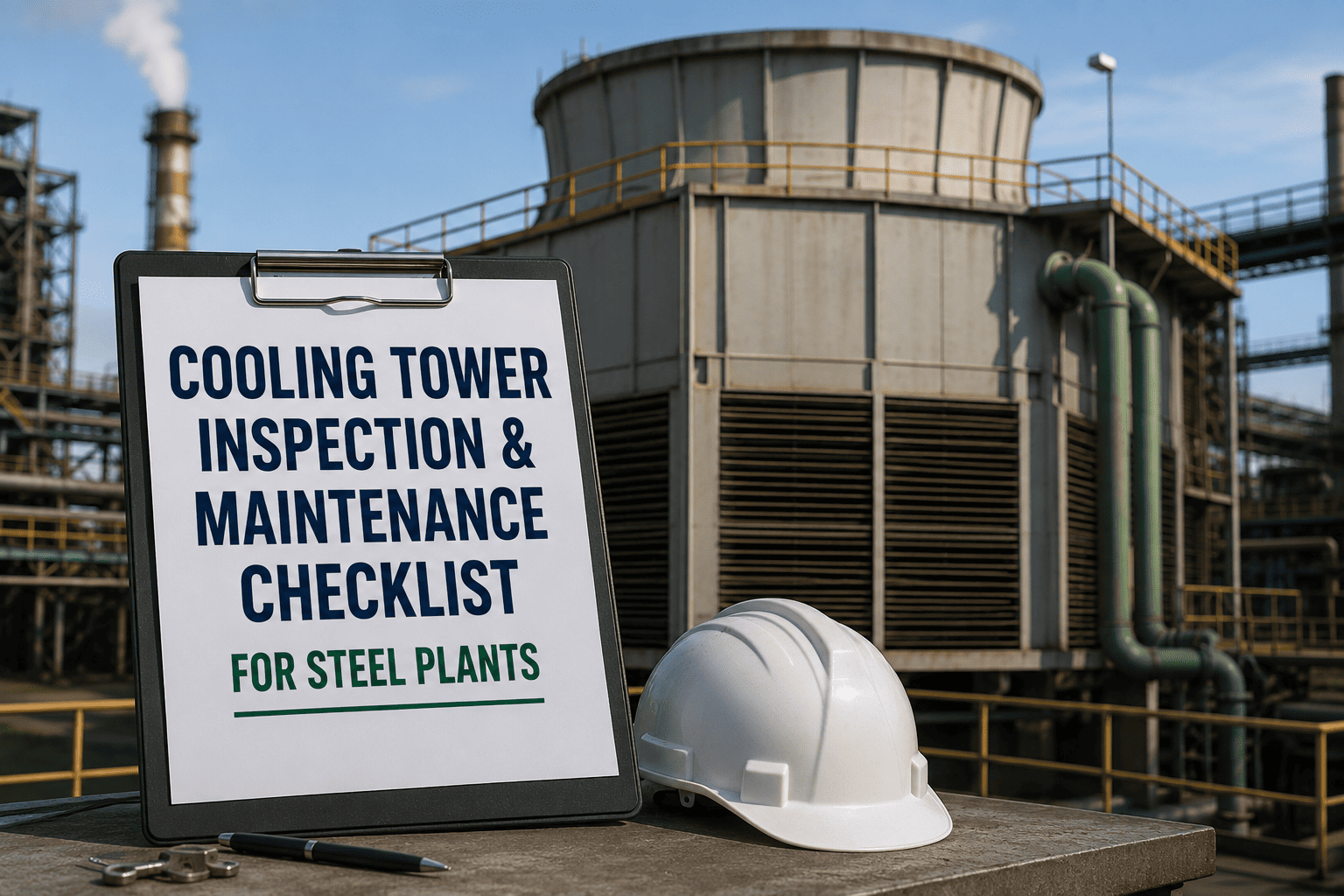
A steel plant's cooling towers run in some of the dirtiest air on site, carrying process heat away from furnaces, casters, and rolling mills around the clock. Scale on the fill, a clogged nozzle, or a gearbox running low on oil rarely causes an immediate shutdown, it just quietly steals cooling capacity until a hot summer shift finally exposes the loss. A monthly checklist run the same way every time is what catches that decline early. Sign up to log every tower inspection against its asset and get flagged the moment water chemistry or vibration drifts out of range.
Why It Matters
Cooling towers lose capacity gradually, scale on fill media, biofilm on the basin floor, or a drift eliminator panel knocked loose all reduce heat rejection long before they cause a trip. A structured checklist catches that decline as a trend, not as a surprise on the hottest day of the year.
Six Components Every Inspection Covers
Fill Media
Checked for scale, biofilm, and physical collapse that block airflow
Drift Eliminators
Panels checked for displacement or damage, the main defense against water loss
Fans & Motors
Vibration measured, bearing wear and blade imbalance caught early
Gearbox
Oil level and color checked, contaminated oil leads to gear seizure
Water Chemistry
pH, conductivity, and biocide residual tested against programme limits
Basin & Leaks
Sediment, corrosion, and joint leaks walked and documented
The Monthly Walkdown Checklist
Fill media inspected: checked for scale buildup, biological slime, or panels that have physically sagged or collapsed
Drift eliminators checked: visually inspected for displaced sections or damage that lets water droplets escape uncontrolled
Fan and motor vibration measured: readings compared against manufacturer limits to catch bearing wear before it worsens
Gearbox oil verified: level and color checked on gear-driven towers, cloudy or milky oil signals water contamination
Water chemistry tested: pH, conductivity, and biocide residual sampled and compared against the water management plan
Basin and structure walked: sediment, corrosion, and joint leaks documented, with strainer baskets cleared of debris
Stop Chasing Tower Inspections On Paper
OxMaint logs every cooling tower inspection against its asset, tracks water chemistry and vibration trends over time, and fires a work order the moment a reading crosses your limit. Sign up for a free trial to run it on your own cooling towers, or book a demo to see it configured for your plant.
Component, What To Check & Inspection Frequency
| Component |
What To Check |
Frequency |
| Fill & Drift Eliminators |
Scale, biofilm, panel displacement or damage |
Monthly during operating season |
| Fans & Motors |
Vibration levels, bearing wear, blade imbalance |
Monthly, weekly for critical towers |
| Gearbox & Drive Shaft |
Oil level, color, water contamination |
Monthly, oil change per OEM interval |
| Water Chemistry |
pH, conductivity, biocide residual |
Weekly, daily for high-risk operation |
The Takeaway
A cooling tower rarely fails all at once, it loses capacity one skipped inspection at a time, fouled fill, a slipping drift eliminator, a gearbox running dry. Keep the monthly checklist consistent and the tower keeps rejecting heat at full capacity when the plant needs it most.
Frequently Asked Questions
Q
Why do drift eliminators matter so much?
Drift eliminators are what stop fine water droplets from escaping the tower with the exhaust air. A displaced or damaged panel means more water carried out with the airflow, which increases makeup water demand and lets treated basin water reach areas it shouldn't. Any damaged section should be replaced right away rather than left for the next scheduled outage.
Q
What does discolored gearbox oil actually indicate?
Oil that has gone cloudy or milky usually means water has worked its way into the gearbox, which strips lubrication from gear surfaces and accelerates wear toward seizure. It's a cheap check that takes seconds and catches a problem that's expensive and disruptive to fix once the gearbox has actually failed.
Q
How often should mechanical components actually be inspected?
Most plants run monthly mechanical inspections of fans, motors, and gearboxes during the operating season, stepping up to weekly on towers considered critical to production cooling. Water chemistry generally needs checking more often than the mechanical components, often weekly or daily depending on risk and season.
Turn Every Tower Inspection Into A Tracked Asset History
OxMaint logs fill, drift eliminator, fan, gearbox, and water chemistry checks per asset, and fires a prioritized work order the moment a reading moves out of range. Sign up for a free trial to explore it on your own cooling towers, or book a demo to see it configured for your plant.