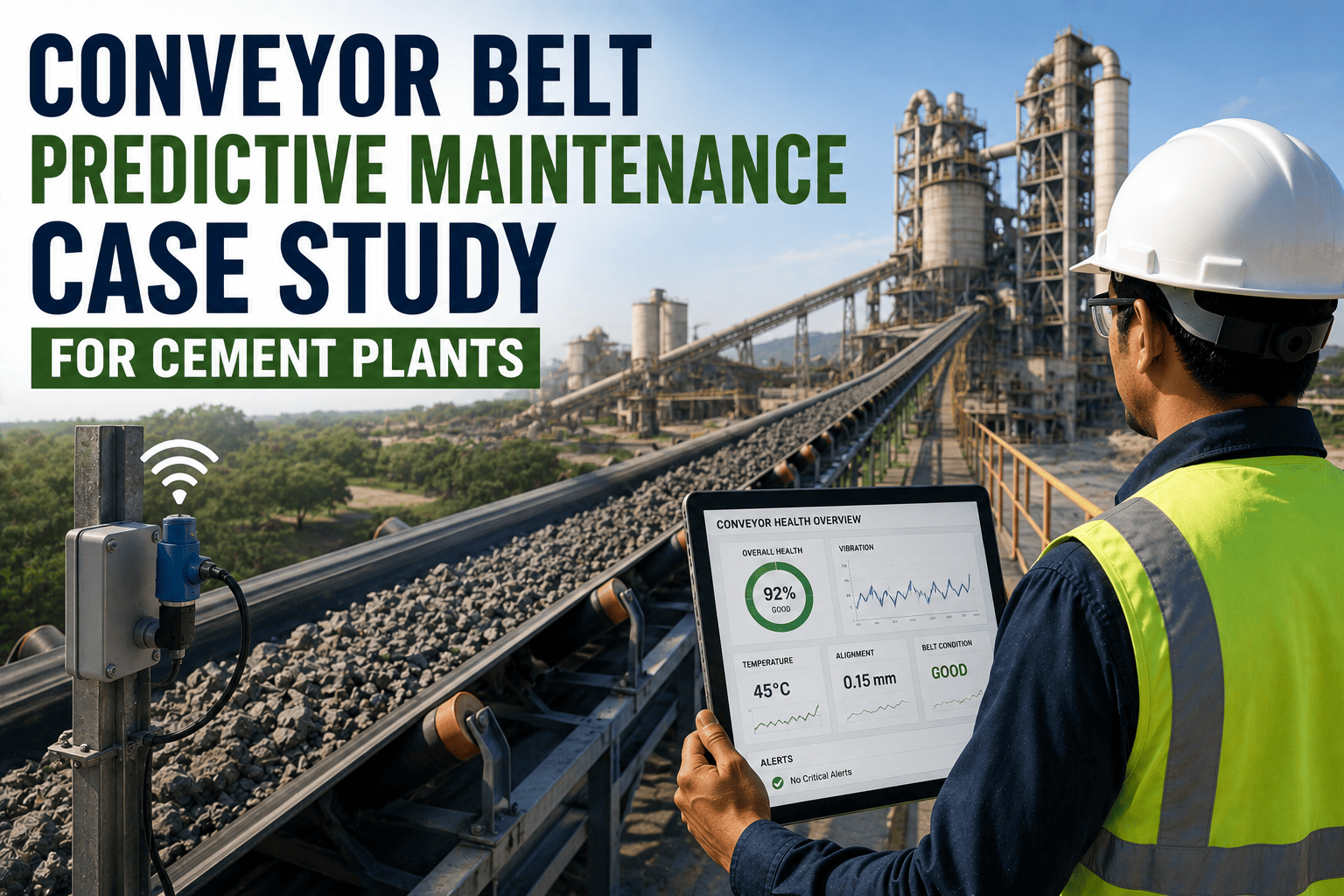
Conveyor Belt Predictive Maintenance Case Study for Cement Plants

By Mark strong on August 3, 2026

conveyor-belt-predictive-maintenance-case-study-cement-plants

A single conveyor belt failure at a cement plant can stop everything downstream of it, from raw material feed to clinker transport to finished product loadout. Most conveyor failures don't happen without warning, a misaligned belt drifts for weeks before it tears, an idler bearing runs hot long before it seizes, but without anything watching those signs, the first indication is often the belt itself stopping. This case study looks at how a cement plant added condition monitoring and predictive maintenance to its conveyor network inside its CMMS, and what happened to downtime, mean time between failures, and inspection workload. Sign up to see the same conveyor monitoring workflow built for your own plant.

The Challenge

Conveyor inspections were visual and manual, walked once a shift if schedules allowed, and easy to skip when the team was stretched thin. Belt misalignment, idler bearing wear, and splice degradation were only caught once they were visible or audible, by which point a failure was often close behind. Every unplanned conveyor stoppage cascaded into whatever process depended on it, and root cause was rarely clear until the belt was already down.

Results After Adding Conveyor Condition Monitoring

-46% Downtime
Reduction in unplanned conveyor downtime once early warning signs triggered work orders automatically
+2.4x MTBF
Increase in mean time between failures across monitored conveyor sections
-30% Inspection Hours
Fewer manual walk-down inspections needed once sensors flagged where to look

Failure Modes Caught Before They Stop The Line

1
Belt misalignment
Tracking sensors flag drift before it wears through the belt edge or damages the frame
2
Idler bearing wear
Temperature and vibration readings catch bearings heating up long before they seize
3
Splice degradation
Scheduled inspections at known splice points replace hoping someone notices in time
4
Motor and drive strain
Load and current readings reveal a drive working harder than it should before it trips

Mean Time Between Failures: Manual Checks vs Condition Monitoring

Manual Inspection
18 days
Condition Monitoring
43 days
Average mean time between failures across the monitored conveyor network, before and after sensor data replaced shift-based visual inspection as the main line of defense.
Catch Belt Failures Before They Stop Production

Oxmaint turns conveyor sensor readings into automatic work orders, so misalignment, bearing wear, and splice issues get fixed before they become a stoppage. Sign up for a free trial to build your own conveyor monitoring workflow, or book a demo to walk through this case study in detail.

Conveyor Maintenance Before And After

Area Before After
Inspection method Manual walk-downs once a shift, skipped when the team was stretched Continuous sensor readings on alignment, temperature, and vibration
Early warning signs Only caught if visible or audible during a walk-down Flagged automatically as a work order before the belt shows symptoms
Root cause after a stoppage Unclear until the belt was already stopped and inspected Visible in the sensor history leading up to the failure
Mean time between failures Roughly 18 days across the monitored network 43 days and improving as more sections were added
The Results

Conveyor stoppages stopped being a surprise. Misalignment, bearing wear, and splice issues showed up as work orders days or weeks before they would have shown up as a jammed line, and when a section did need attention, the sensor history made root cause obvious instead of a guessing game. The maintenance team spent less time walking the same belts every shift and more time acting on the sections that actually needed it.

Frequently Asked Questions

Q Why are conveyor belts such a common source of unplanned downtime?
A single conveyor often feeds or connects several other processes, so a failure anywhere along its length stops everything downstream, and most early warning signs like drift or bearing heat are easy to miss during a quick visual walk-down.
Q Does condition monitoring replace manual conveyor inspections entirely?
Not entirely, it reduces how often and how broadly manual checks are needed, since sensors handle continuous monitoring and technicians can focus walk-downs on sections the data has already flagged as worth a closer look.
Q What early warning signs matter most for conveyor reliability?
Belt tracking drift, idler bearing temperature, motor vibration, and load current tend to matter most, since each one typically trends upward for days or weeks before it turns into a stoppage, giving enough lead time to act.

Stop Finding Out About Conveyor Failures From The Line Itself

Oxmaint watches belt alignment, bearing temperature, and drive strain continuously, turning early warning signs into work orders before they become stoppages. Sign up for a free trial to build your own conveyor monitoring workflow, or book a demo to walk through the full case study.


Share This Story, Choose Your Platform!