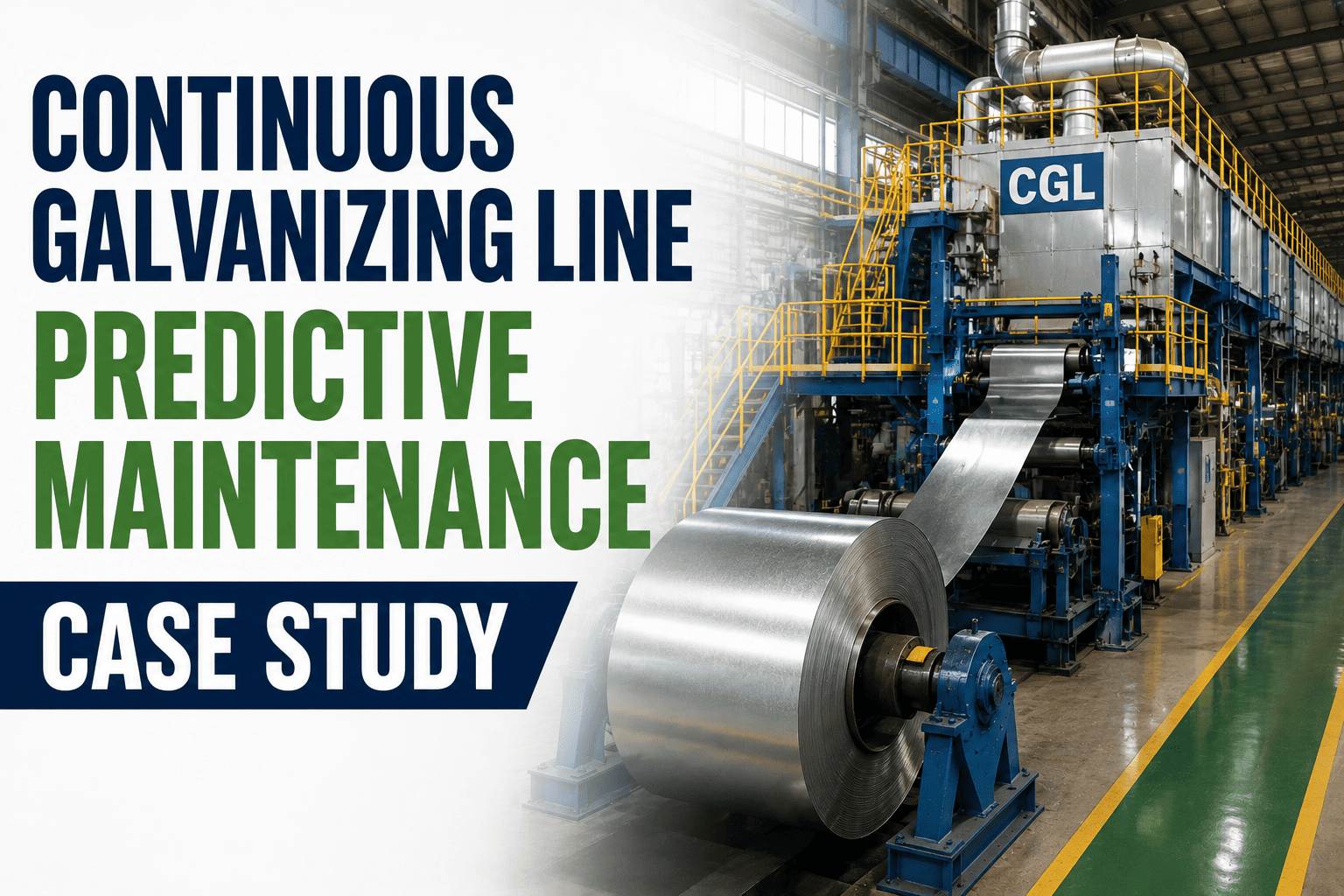
Continuous Galvanizing Line Predictive Maintenance Case Study

By Mark strong on August 1, 2026

continuous-galvanizing-line-predictive-maintenance

Pot roll bearings on a continuous galvanizing line are built to run submerged in molten zinc at over 450°C, and even the best ones rarely last past a two-week campaign before corrosion and wear start showing up as strip vibration at the gas knives. When that vibration shows up unplanned, it does not just stop the line, it turns out coils with uneven coating weight that get rejected downstream. This case study looks at how one CGL operation used an AI-powered CMMS to catch pot hardware degradation early, protect coating quality, and stretch roll campaigns well past the industry-standard two weeks. Sign up to see the same tracking applied to your own zinc pot data.

The Challenge

Pot roll bushings and sleeves were being replaced on a fixed calendar schedule regardless of actual tonnage passed through the bath, so some campaigns ended early with usable life left, and others ran too long and let bearing wear translate into strip flutter. Coating weight variation from that flutter, plus clogged air knife nozzles, was the plant's single largest source of downstream rejects, and pot changes that ran long ate directly into scheduled production hours.

Results After Moving To Condition-Based Pot Maintenance

+40% Roll Life
Average extension of pot roll bearing campaigns once tonnage-based alerts replaced the fixed 14-day schedule
-32% Coating Rejects
Reduction in coils rejected for uneven zinc coating weight after air knife and bearing wear were tracked together
Zero Unplanned Stops
Unplanned pot hardware failures in the two quarters following rollout, down from one every four to six weeks

How The Predictive Program Was Built

Baseline Audit
Tonnage & Vibration Tracking
Predictive Alerts
Verified Results
The team first logged every pot change, bearing type, and reject reason for a full quarter to establish a real baseline, then layered in cumulative tonnage and gas knife vibration readings inside the CMMS to trigger overhauls by actual wear instead of the calendar.
Catch Pot Roll Wear Before It Shows Up In Coating Quality

Oxmaint tracks cumulative tonnage, bearing condition, and air knife performance in one place so overhauls happen on real wear, not a fixed calendar. Sign up for a free trial to run it against your own zinc pot data, or book a demo to walk through this case study in detail.

Zinc Pot Maintenance Before And After

Area Before After
Pot roll bearing changes Fixed 14-day calendar schedule regardless of tonnage Triggered by cumulative tonnage and vibration readings
Air knife maintenance Cleaned only after coating weight complaints came in Nozzle checks scheduled and logged automatically in the CMMS
Failure detection Found after strip flutter or a rejected coil Flagged by condition alerts before quality was affected
Lockout/tagout for pot work Paper sign-off, easy to skip under time pressure Digitally enforced sign-off before any pot change begins
The Results

The line stopped losing hardware to guesswork. Bearings ran until the data said they were actually worn, air knives got cleaned before nozzle clogging showed up as a reject, and pot change lockout steps were signed off every single time instead of most of the time. None of this required slowing the strip down, it just meant the maintenance decisions were finally based on what the equipment was actually doing.

Frequently Asked Questions

Q Why do pot roll bearings fail so often on a galvanizing line?
The journal sleeve and bushing sit submerged in molten zinc above 400°C, where the bearing material reacts with the bath and corrodes, so wear accelerates well before a fixed calendar date would suggest.
Q How does pot roll wear end up affecting zinc coating quality?
Worn bearings let the roll shift under load, which induces vibration in the strip right as it passes the gas knives, and that vibration is what turns into uneven coating weight across the coil.
Q Does predictive maintenance replace scheduled pot changes entirely?
No, scheduled changes still happen, the difference is the schedule is driven by cumulative tonnage and condition readings instead of a fixed calendar date, so hardware is replaced closer to when it is actually worn.

See This Result On Your Own Galvanizing Line

Oxmaint tracks pot roll tonnage, bearing condition, and air knife performance in one CMMS, so hardware gets replaced by wear, not by the calendar. Sign up for a free trial to see it against your own zinc pot data, or book a demo to walk through the full case study.


Share This Story, Choose Your Platform!