A confined space doesn't announce that it's dangerous, a vessel, a duct or a pit can look completely still and empty while the air inside is unable to support life. Oxygen deficiency, toxic gas buildup and engulfment hazards are invisible until someone is already inside, which is why every entry in a steel plant has to be tested, permitted and monitored before a single foot goes past the opening. Sign up to run confined space entries as a digital pre-entry checklist, or book a demo to see it fit your entry points.
Why It Matters
Confined space fatalities are unusual in one grim way, more than half involve a second person who went in to rescue the first, without testing the air or wearing protection. A pre-entry checklist isn't there to slow the job down, it's there to make sure nobody enters a space whose atmosphere hasn't already been proven safe.
What Makes A Space "Confined" In A Steel Plant
Limited Entry
Large enough for a worker to enter and perform tasks, but not designed for continuous occupancy
Restricted Exit
Getting out is slow, awkward or blocked, delaying escape if conditions turn dangerous
Poor Ventilation
Little to no natural airflow, allowing gases to accumulate or oxygen to be displaced
Gas Ducts & Flues
Residual carbon monoxide or process gas can linger long after a shutdown
Pits & Sumps
Below-grade spaces where heavier gases like carbon monoxide can settle and concentrate
Storage Bins
Loose material inside creates an engulfment risk in addition to any atmospheric hazard
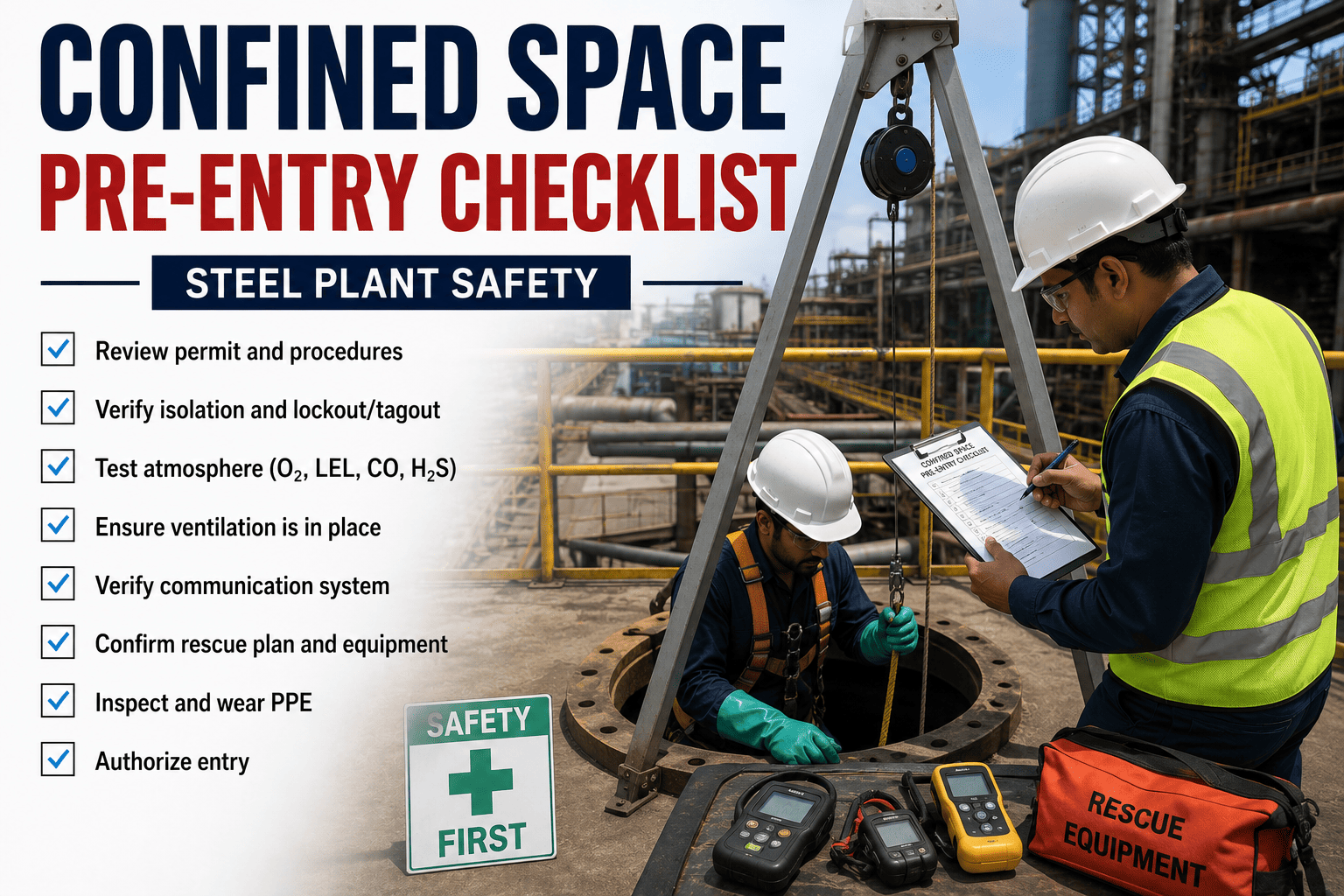
The Pre-Entry Checklist, In Order
Permit issued: confined space entry permit completed and signed by the supervisor before any preparation begins
Isolation confirmed: all energy sources and material feeds into the space locked out and verified per the LOTO procedure
Atmosphere tested: oxygen, flammable gas and toxic gas levels checked with a calibrated meter before entry
Ventilation running: forced-air ventilation in place where required, with continuous monitoring for spaces with fluctuating atmosphere
Roles assigned: entrant, attendant and entry supervisor identified by name, with the attendant stationed outside for the full duration
Rescue plan ready: retrieval line, rescue equipment and a named rescue team confirmed available before entry starts, not after
Stop Signing Off Entries On A Clipboard
OxMaint runs the pre-entry checklist as a digital permit tied to the space, records gas readings against time, and won't let entry proceed until every step is confirmed. Sign up for a free trial to load your confined space register, or book a demo to see it set up for your plant.
Safe Atmosphere Reading Thresholds
| Parameter |
Acceptable Range |
If Outside Range |
| Oxygen |
19.5% to 23.5% |
Do not enter, ventilate and retest before proceeding |
| Flammable gas |
Below 10% of the lower explosive limit |
Do not enter, identify and eliminate the source before retest |
| Carbon monoxide |
Below the site's permissible exposure limit |
Do not enter, purge and continue monitoring during ventilation |
| Hydrogen sulphide |
Below the site's permissible exposure limit |
Evacuate immediately, treat as an active hazard, not just a reading to fix |
Abort The Entry If Any Of These Happen
Any atmospheric reading drifts outside the safe range once work is already underway
The attendant leaves their position outside the space for any reason, even briefly
Communication between the entrant and attendant is lost and cannot be quickly restored
A rescue team or equipment listed on the permit is no longer confirmed available
The Takeaway
A confined space is only as safe as its last atmospheric test, which is why testing happens before entry and keeps happening while someone is inside. Permit, isolate, test, ventilate, assign roles, confirm rescue, in that order, every time, no matter how routine the space or the job feels.
Frequently Asked Questions
Q
Who is responsible for confined space atmospheric testing?
A trained and competent person tests the atmosphere with a calibrated gas meter before anyone enters, and the reading is logged on the entry permit. The same person, or another trained tester, is responsible for retesting if conditions change or work is paused and resumed.
Q
What is the role of the attendant during confined space entry?
The attendant stays outside the confined space for the entire entry, keeps continuous communication with the entrant, monitors conditions, and is authorized to order an evacuation if something looks wrong. The attendant never enters the space to attempt a rescue themselves.
Q
Does a confined space need retesting once someone is already inside?
Yes. A space that tested safe at the entry point can still change while work is underway, welding, cutting or cleaning can consume oxygen or release fumes. Spaces with any risk of a shifting atmosphere are monitored continuously, not just tested once before the entrant goes in.
Make Every Confined Space Entry A Verified Permit
OxMaint ties atmospheric readings, isolation status, roles and rescue plans to a single digital permit for every confined space on site. Sign up for a free trial to load your confined space register, or book a demo to see it mapped to your entry points.