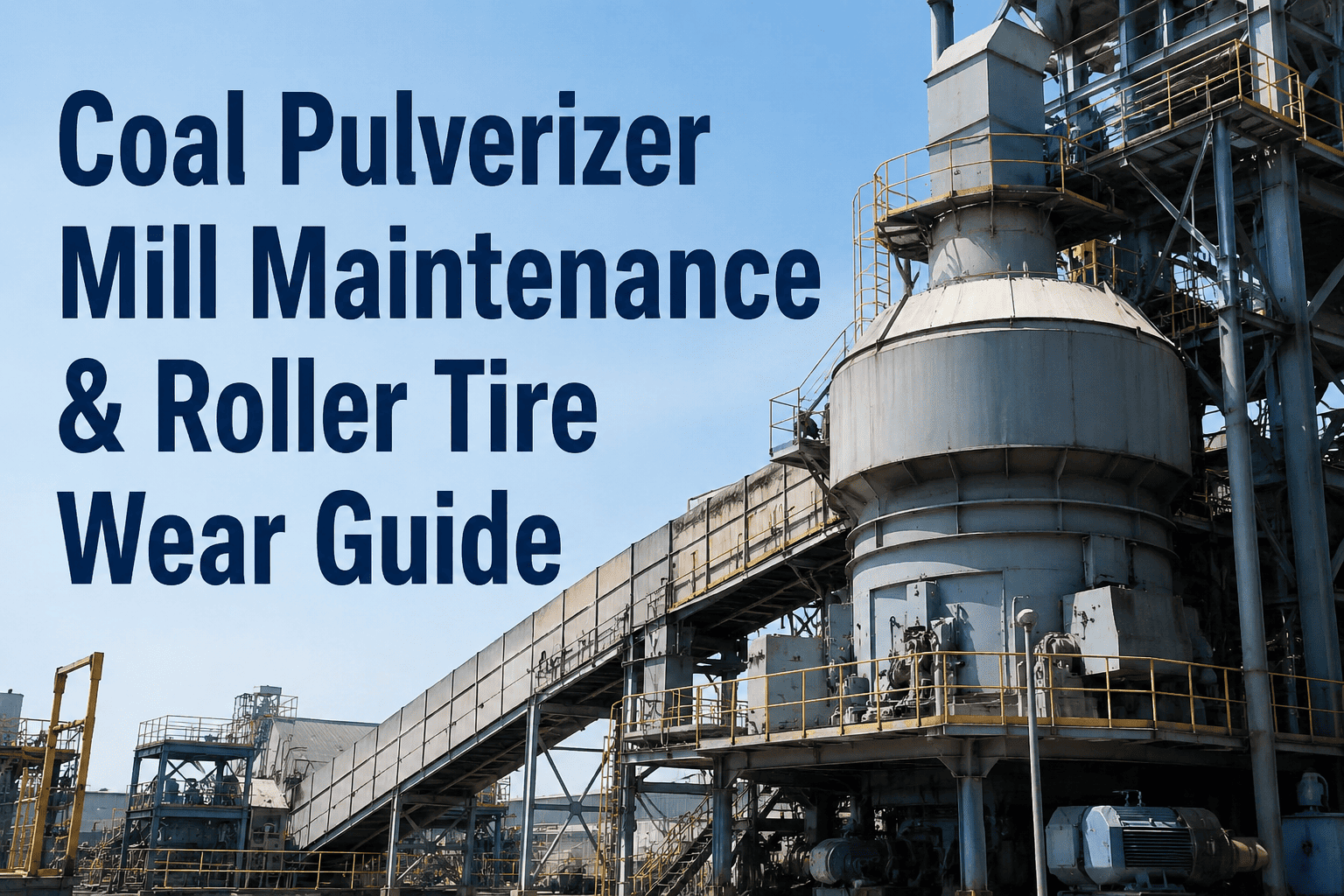
A pulverizer keeps grinding coal long after its roller tires have gone out of round, and nobody notices until fineness drops, combustion turns rough, and the boiler starts losing efficiency for no obvious reason. Roller tires, grinding rings, and journals wear gradually, which makes them easy to ignore until the damage is expensive. This guide covers what to inspect, how wear actually progresses, and what a maintained mill looks like against a neglected one. Sign up to track pulverizer wear readings against each mill inside your own CMMS instead of a logbook.
Why It Exists
Coal pulverizers grind fuel between roller tires and a grinding ring, and the fineness of that grind directly affects how completely coal burns in the boiler. As tires and rings wear, the gap between them widens, particles come out coarser, and combustion efficiency drops well before the mill shows any obvious fault. Tracking wear early keeps fineness where it needs to be.
Four Components That Wear Fastest
Roller Tires
Grinding surface flattens and loses profile, widening the gap that sets coal fineness
Grinding Ring
Track wears unevenly around its circumference, especially where coal feed is inconsistent
Journal Assemblies
Bearings and seals take the grinding load and fail quietly if lubrication is missed
Classifier Vanes
Erosion changes the particle size cutoff, letting coarse coal pass into the burner lines
How Roller Tire Wear Progresses
Early Wear
Fine surface scoring appears, fineness stays acceptable, and vibration readings remain normal
Moderate Wear
Tire profile starts to flatten, coal fineness drifts coarser, and mill power draw creeps up
Severe Wear
Grinding gap widens noticeably, throughput drops, and vibration or noise becomes audible
4
Replacement Decision
Tire and ring measurements are logged against wear limits to schedule replacement before failure
Stop Guessing When A Tire Needs Replacing
Oxmaint lets you log roller tire and grinding ring measurements against each mill over time, so wear trends are visible before fineness drops. Sign up for a free trial to start tracking your own pulverizers, or book a demo to see it running on a live mill record.
Maintained Mill vs Neglected Mill
| Factor |
Neglected Mill |
Maintained Mill |
| Coal fineness |
Drifts coarser as tires flatten, hurting combustion |
Checked against target regularly and corrected early |
| Power draw |
Climbs quietly as the mill works harder to grind less |
Tracked as a leading indicator of tire and ring wear |
| Journal bearings |
Run on missed lubrication schedules until they fail |
Lubricated and inspected on a fixed interval |
| Replacement timing |
Reactive, usually after a forced outage |
Planned around measured wear trends and outage windows |
The Payoff
A worn roller tire doesn't stop a mill from running, it just makes it grind worse while drawing more power to do it. Regular measurement of tires, rings, and journals turns replacement from an emergency into a scheduled task, and keeps coal fineness where the boiler needs it to be.
Frequently Asked Questions
Q
How is roller tire wear usually measured?
Wear is typically measured by checking tire profile and gap against the grinding ring at set intervals during outages, and comparing readings against the manufacturer's wear limits.
Q
What's the first sign a pulverizer needs attention?
A gradual rise in mill power draw combined with coarser coal fineness readings is usually the earliest sign, often appearing before any audible vibration or noise change.
Q
Can wear measurements be tracked against a specific mill over time?
Yes, in a CMMS each measurement can be logged against the individual pulverizer's asset record, building a wear trend that makes replacement planning far more predictable.
Catch Roller Tire Wear Before It Costs You
Oxmaint keeps tire, ring, and journal measurements logged against every pulverizer, so wear trends are visible long before fineness or power draw becomes a problem. Sign up for a free trial to start tracking your own mills, or book a demo to see it working on a live coal pulverizer.