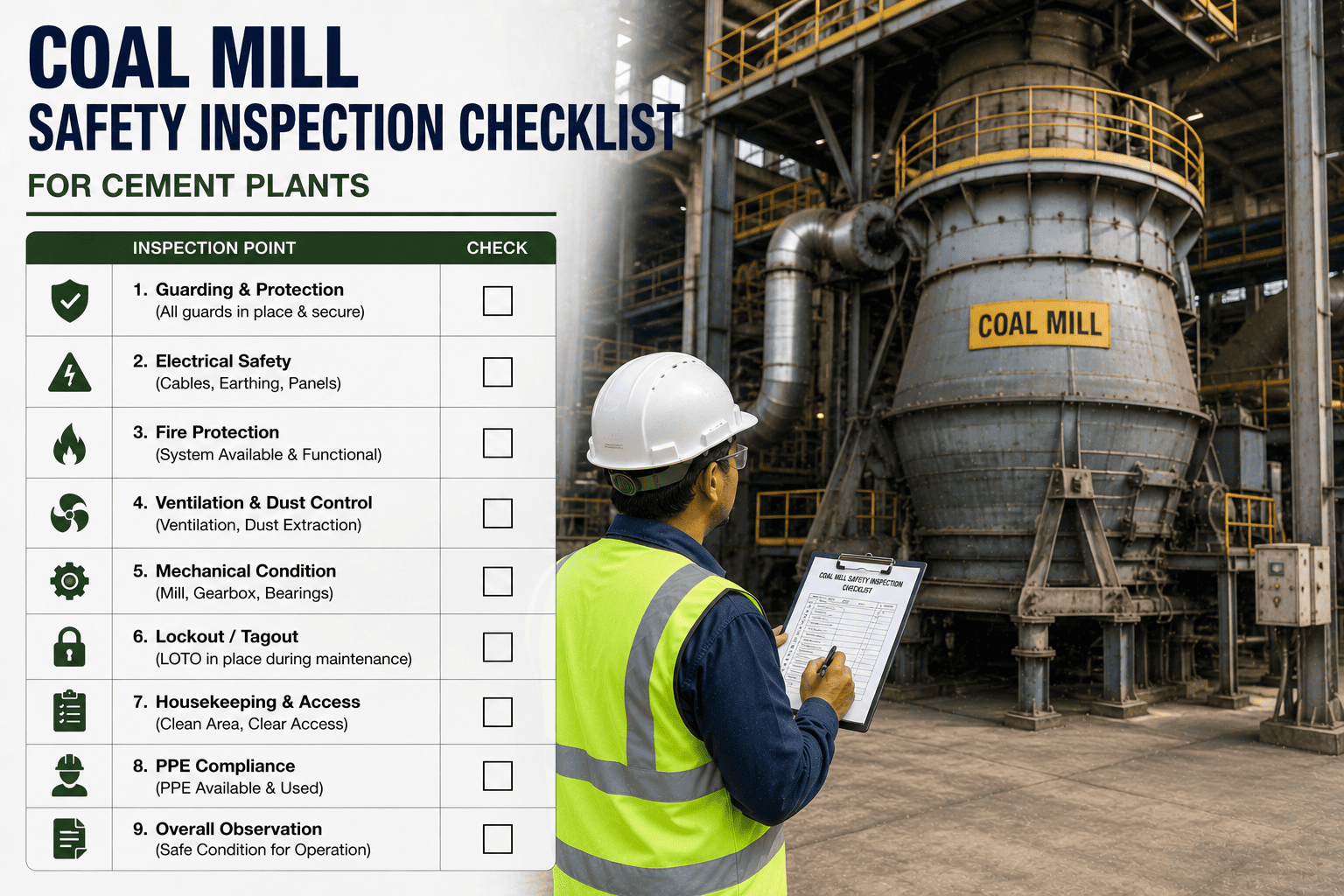
A coal mill grinds fuel into a fine, combustible dust suspended in hot, oxygen-carrying air, which is exactly the mix that turns a small spark into an explosion. A CO sensor left uncalibrated misses a smoldering fire building inside the mill, an oxygen level drifting upward loses its inerting margin, and a blocked explosion vent turns a controlled release into structural damage. This checklist covers what to verify across gas monitoring, the inerting system, and explosion protection. Sign up to turn this checklist into a guided digital procedure your safety and process crew follows on every shift.
8 Checkpoints Covered
CO monitoring, oxygen levels, inerting, and explosion protection all covered here
Continuous Watch
How CO and oxygen trends should be monitored during every run
Zero Tolerance
Room for skipping a sensor calibration or an explosion vent inspection
Full System Check
Check point covering sensors, inerting gas supply, and vent panels together
Why Coal Mill Safety Checks Can't Be Rushed
Coal dust in suspension needs only an ignition source and enough oxygen to become an explosion hazard. The same CO, oxygen, and inerting checks repeated correctly on every run are what keep that risk contained before it ever reaches a spark.
Gas Monitoring: CO & Oxygen Levels
CO Sensor Calibration & Trend
Verify CO sensors are calibrated and watch the trend line, since a slow rise can signal a smoldering fire inside the mill
Oxygen Level Monitoring
Confirm oxygen concentration stays below the set threshold, since a drift upward narrows the inerting margin
Mill Outlet Temperature
Track outlet gas temperature, since an unexplained rise often shows up alongside a developing CO trend
Make Coal Mill Safety Checks A Habit, Not A Memory
Oxmaint guides your crew through gas monitoring, inerting, and explosion protection checks step by step, with photo proof and sign-off logged against each coal mill. Sign up for a free trial to build your safety routine, or book a demo to see it in action.
Inerting System Inspection
Inert Gas Supply & Pressure
Check inert gas reserve and delivery pressure so the system can respond the moment it's called on
Injection Valve & Piping Integrity
Inspect injection valves and piping for blockage or corrosion that would delay inerting when triggered
Automatic Trip Logic Test
Test that the automatic trip sequence fires correctly on a simulated high-CO or high-temperature signal
Explosion Protection & Venting
Explosion Vent Panel Condition
Check vent panels are unobstructed and undamaged so they can relieve pressure the instant it's needed
Combustible Dust Housekeeping
Check surrounding areas for accumulated dust layers, since secondary dust clouds spread a primary event
Isolation Valve & Bag Filter Check
Verify isolation valves and bag filter condition, since a compromised filter lets sparks travel downstream
What A Skipped Check Can Cost You
| Check Skipped |
Likely Consequence |
| CO sensor calibration check |
A smoldering fire builds inside the mill without triggering an early warning |
| Oxygen level monitoring |
Oxygen drifts above the safe threshold and narrows the margin the inerting system relies on |
| Inert gas supply check |
The system can't respond fast enough when a trip condition is triggered |
| Explosion vent panel check |
A blocked or damaged panel can't relieve pressure, turning a contained event into structural damage |
Where A CMMS Fits Into Coal Mill Safety Checks
Oxmaint ties this checklist to the sensors, inerting system, and vent panels as tracked assets, logging CO trends, oxygen readings, and calibration dates so a developing risk gets flagged before the next run.
Frequently Asked Questions
Q
How often should coal mill CO sensors be calibrated?
CO sensors should be calibrated on a fixed schedule set by the manufacturer and checked against a reference reading regularly, since a drifted sensor can mask an early fire warning until it's too late.
Q
Why does oxygen level matter inside a coal mill system?
Coal dust suspended in air only becomes explosive above a certain oxygen concentration, so keeping oxygen below that threshold is one of the main defenses the inerting system provides.
Q
Can a CMMS help track coal mill safety inspections?
Yes, a CMMS can log sensor calibration dates, CO and oxygen trends, and vent panel inspections against the coal mill asset, flagging any overdue or abnormal reading before the next run.
Keep Every Run Safe From The First Spark
Oxmaint guides your crew through gas monitoring, inerting, and explosion protection checks and logs sensor and calibration data automatically. Sign up for a free trial to build your coal mill safety checklist, or book a demo to see it in action.