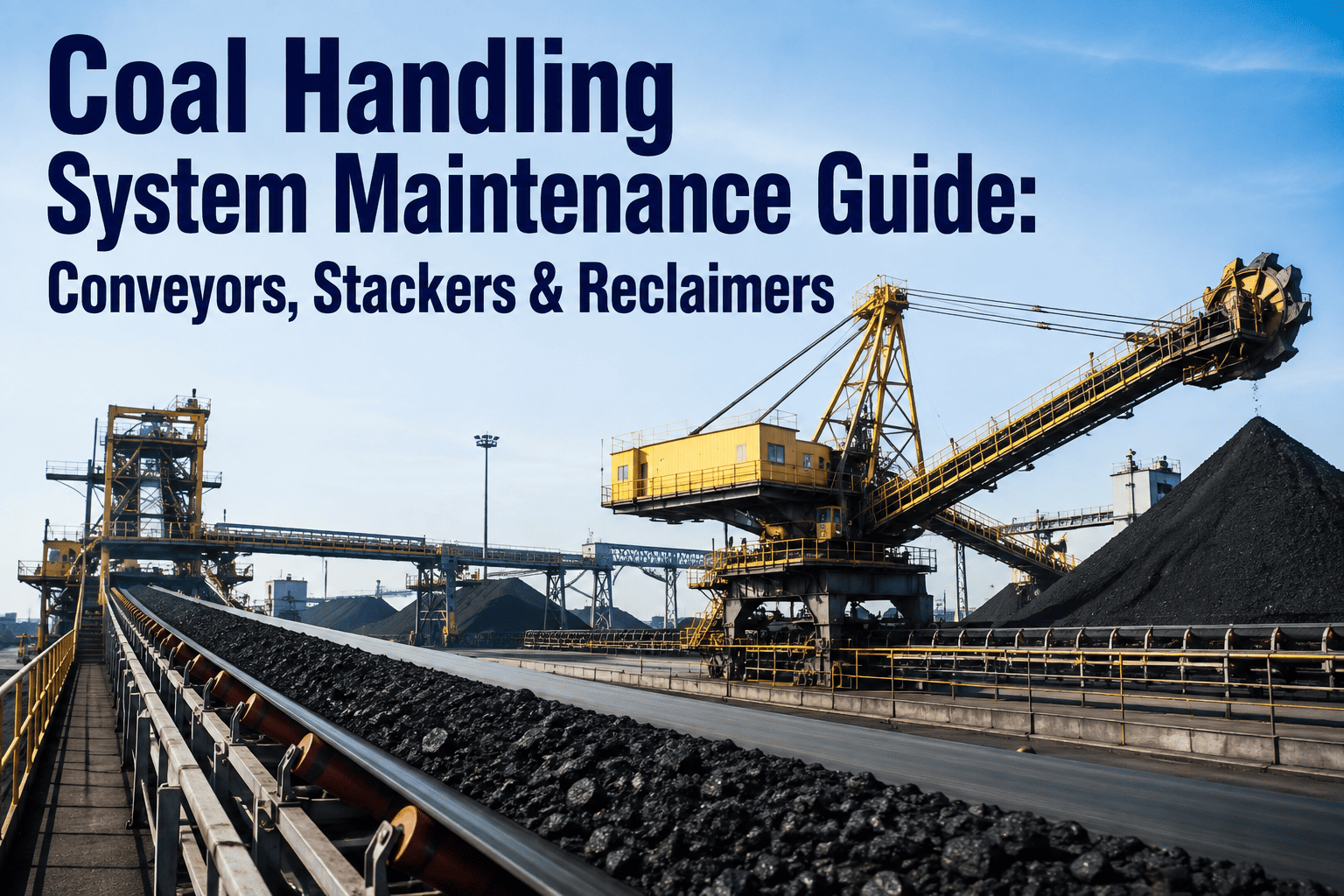
A coal handling system only needs one weak link to shut down an entire yard, a torn belt splice, a plugged transfer chute, or a reclaimer bucket that's worn past spec. Conveyors, stackers, and reclaimers cover hundreds of meters and dozens of individual components, which makes it easy for a small fault to go unnoticed until it stops coal movement entirely. This guide walks through what to inspect across the full handling line and how a structured PM program compares to reactive fixes. Sign up to run coal handling inspections through your own CMMS instead of a paper walkdown sheet.
Why It Exists
Coal handling equipment runs almost continuously and is exposed to dust, moisture, and abrasive material moving at speed. A belt that isn't tracked correctly wears its edges, a chute that isn't cleaned regularly builds up and plugs, and a reclaimer bucket that isn't checked keeps digging until it fails mid-shift. Regular inspection catches these faults while they're still a five-minute fix.
Four Systems Along The Handling Line
Conveyor Belts
Tracking, splices, idlers, and tension checked so the belt runs straight under load
Transfer Chutes
Liner wear and material buildup cleared before spillage or plugging starts
Stackers
Boom travel, slew bearings, and discharge chutes checked for smooth stockpile building
Reclaimers
Bucket wheel teeth, drive chains, and rail alignment inspected for consistent reclaim rate
A Walkdown Route That Covers The Whole Yard
Start At Coal Intake
Feeder rate and initial belt loading are checked before coal moves further down the line
Walk The Conveyor Line
Idlers, tracking, and splices are visually checked at walking pace for early wear signs
Inspect Transfer Points
Chute liners and dust seals are checked wherever coal moves from one belt to another
4
Finish At Stacker And Reclaimer
Boom movement, bucket wheel condition, and rail alignment are logged before the shift ends
Turn Yard Walkdowns Into Searchable Records
Oxmaint lets you log conveyor, chute, stacker, and reclaimer inspections against each asset from a phone during the walkdown itself, so nothing gets written down twice. Sign up for a free trial to build your own coal handling PM program, or book a demo to see it running on a live yard.
Scheduled PM vs Reactive Fixes
| Area |
Reactive Fixes |
Scheduled PM |
| Belt tracking |
Corrected only after edges are already damaged |
Checked on a set interval before drift becomes damage |
| Chute buildup |
Cleared once material has already started spilling |
Cleaned on a routine before it restricts flow |
| Reclaimer wear |
Bucket teeth replaced after a mid-shift breakdown |
Tracked against wear limits and replaced during planned stops |
| Yard downtime |
Unplanned, often affecting the whole handling line |
Limited to short, scheduled inspection windows |
The Payoff
Coal handling systems are only as reliable as their weakest transfer point. A short, consistent walkdown across conveyors, chutes, stackers, and reclaimers catches wear while it's still a minor adjustment, keeping coal moving instead of stopping the whole yard for a fault that could have been caught a week earlier.
Frequently Asked Questions
Q
How often should conveyor belts be inspected?
Most yards run a visual walkdown daily or per shift for tracking and spillage, with a more detailed splice and idler check on a weekly or monthly cycle depending on run hours.
Q
What usually causes transfer chute plugging?
Plugging is most often caused by worn or damaged liners combined with wet or fine coal building up on interior surfaces, which is why liner condition is checked at every transfer point.
Q
Can a single walkdown cover conveyors, stackers, and reclaimers together?
Yes, in a CMMS one route can include checklist items for every asset along the line, so a single inspector logs findings against each piece of equipment without switching forms.
Keep Coal Moving Without The Surprises
Oxmaint keeps every conveyor, chute, stacker, and reclaimer inspection logged against its own asset record, so wear gets caught during a routine walkdown instead of a shutdown. Sign up for a free trial to start covering your own coal handling line, or book a demo to see it working on a live yard.