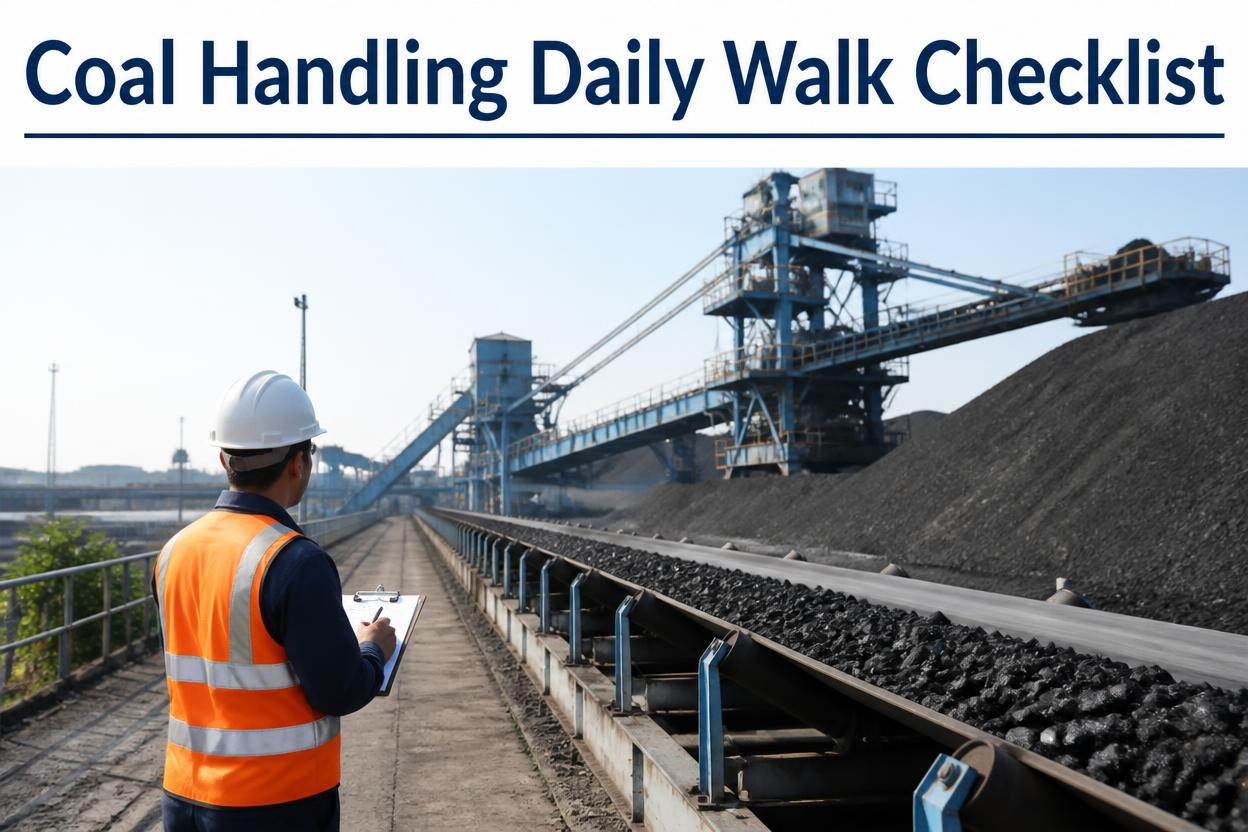
A conveyor belt tracking dead center and one running two inches off at the same transfer point look identical from thirty feet away. But that drift is exactly how belts start shredding against structure, and it only gets caught if someone walks the line close enough to check tracking, idler condition, and pulley alignment together — not glance at the belt from the walkway and call it fine. Sign up to see how a digital coal handling walk runs on your own conveyor system.
Why It Matters
Most coal handling failures aren't sudden. A belt drifts off center a little more each shift, an idler bearing runs slightly hotter each pass, a transfer chute builds up material at the same corner until it starts spilling. None of these trip an alarm on day one. They show up on a walk that checks belt tracking, idler condition, pulley alignment, and chute buildup in the same sequence every time, so a small drift gets caught before it becomes a torn belt or a blocked chute.
What A Complete Coal Handling Walk Actually Covers
Five checkpoints make up a proper walk. Miss one and the sign-off still looks complete while that section runs unmonitored until the next shift.
Belt Tracking
Belt alignment checked at multiple points along the run, not just at the head and tail pulleys
Idler Condition
Bearing temperature and roll condition checked by hand and ear, since a seized idler can run hot without any visible sign
Pulley Alignment
Head, tail, and bend pulley alignment verified, since misalignment here is what drives belt drift downstream
Transfer Chute
Buildup and spillage checked at every chute corner, not just the ones with a known history
CMMS Sign-Off
Every checkpoint timestamped and attributed to the operator, with out-of-range findings flagged automatically
Walking The Line In Order
1
Start At The Head Pulley
Check alignment and belt tracking here first, since drift usually shows earliest at the pulleys before it's visible mid-span.
2
Walk The Idler Line
Check bearing temperature and roll condition by hand at intervals along the belt, listening for the grind of a seizing bearing.
3
Check Bend And Tail Pulleys
Verify alignment at each remaining pulley, since a single misaligned pulley anywhere on the run can pull tracking off at every point downstream.
4
Inspect Every Transfer Chute
Walk each chute corner for buildup and spillage, not just the point known to cause trouble last time.
5
Close Out In The CMMS
Sign off the walk digitally so every checkpoint is timestamped, and let the system flag anything outside range to the next shift automatically.
A Walk That Flags Drift Before It Tears The Belt
Sign up for a free trial to build your coal handling walk in minutes, or book a demo to see how out-of-range findings get flagged to the next shift automatically.
Where Coal Handling Walks Break Down
Tracking Checked From The Walkway Only
A distant glance misses small drift that's only visible up close at the pulleys and mid-span
Idlers Checked By Sight, Not Touch
A visually normal idler can still be running hot, and a look-only check misses that entirely
Only The "Known" Chute Gets Inspected
Buildup starts forming at a new corner while attention stays fixed on last month's problem spot
Pulley Alignment Assumed Fine
Alignment isn't reconfirmed for weeks, so a slow shift goes unnoticed until tracking is visibly off
Paper Sheets With No Timestamp
Without a timestamp attached to each checkpoint, nobody can tell how long a warning sign was sitting there
Walk Order Changes Shift To Shift
Without a fixed sequence, comparing today's findings against yesterday's stops being reliable
Frequently Asked Questions
Q
Why does pulley alignment get checked separately from belt tracking?
Belt tracking is the symptom, pulley alignment is often the cause. Checking alignment directly, rather than only watching where the belt runs, is what catches the root issue before drift gets bad enough to be obvious from a distance.
Q
How is a digital walk different from a paper log for coal handling?
A paper sheet records that a check happened. A digital walk in a CMMS timestamps each checkpoint, attributes it to the operator, and can flag out-of-range findings automatically so the next shift sees the exception without hunting through the log.
Q
Can the checklist be adjusted for a specific conveyor layout?
Yes. The five core checkpoints apply broadly, but fields like number of transfer points, conveyor length, or stacker and reclaimer configuration can be set per site so the walk matches the actual layout on the ground.
Turn The Clipboard Walk Into A Timestamped Record
Oxmaint builds your daily coal handling walk into a mobile checklist that captures belt tracking, idler, pulley, and transfer chute findings with a timestamp on every entry, and flags exceptions before they reach the next shift. Sign up for a free trial to set up your first walk, or book a demo to see it against your own conveyor layout.