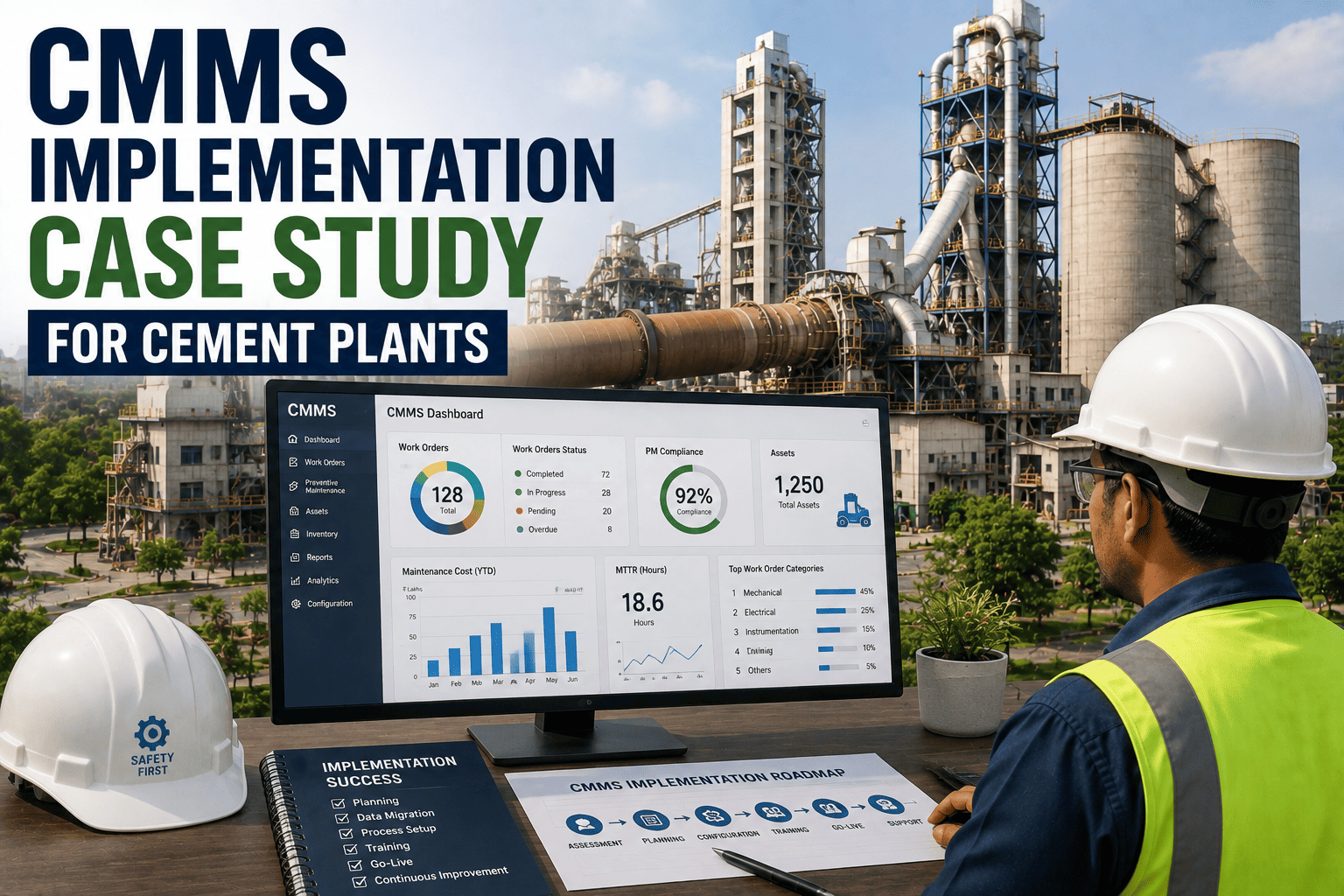
Most cement plants don't lose reliability because their maintenance teams aren't skilled, they lose it because preventive maintenance schedules live in a spreadsheet, work orders get tracked on paper, and nobody can pull a real KPI without a week of manual data gathering. A CMMS implementation doesn't add more process, it makes the process that's already supposed to be happening actually visible and trackable. Sign up to see what your own plant's maintenance data could look like once it's all in one place.
On paper or spreadsheet-based maintenance, preventive maintenance tasks get scheduled but compliance is rarely tracked in real time, so a missed inspection often isn't noticed until the equipment it was meant to catch actually fails. Work order status lives in someone's notebook, spare parts get requested verbally, and building a reliability KPI for a management review means someone manually compiling numbers from three different sources. None of this is a skills problem, it's a visibility problem.
How A CMMS Rollout Typically Moves
Oxmaint gives every plant one system for asset history, PM schedules, work orders, and reliability KPIs, updated in real time. Sign up for a free trial to see it against your own plant data, or book a demo to walk through a cement plant rollout.
Maintenance Operations Before And After
Plants that get the most out of a CMMS implementation don't treat it as software rollout and stop there, they use the KPI visibility it creates to keep tightening PM schedules and closing gaps that were invisible before. The reliability gains compound over time, since every completed work order adds to the history the next planning decision is based on.
Frequently Asked Questions
Give Your Maintenance Team One Place To See Everything
Oxmaint replaces spreadsheets and notebooks with one system for PM schedules, work orders, spare parts, and reliability KPIs. Sign up for a free trial to see it against your own plant, or book a demo to walk through a cement plant rollout.