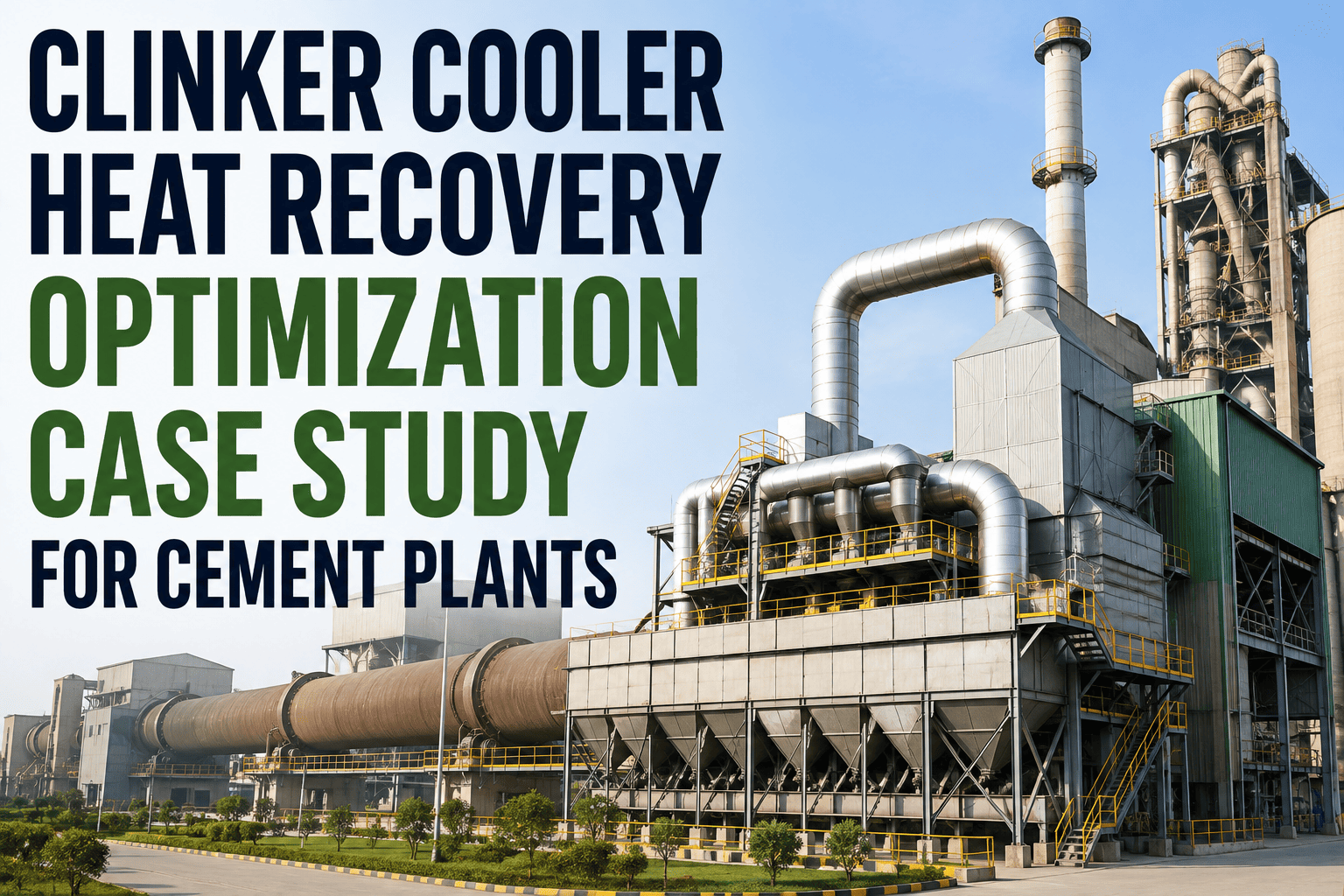
Clinker Cooler Heat Recovery Optimization Case Study for Cement Plants

By Mark strong on August 1, 2026

clinker-cooler-heat-recovery-optimization

A clinker cooler losing heat recovery efficiency rarely announces itself, fuel consumption creeps up a percent at a time, and by the time anyone notices on the monthly energy report, the grate plates or air seals have been leaking for weeks. Cement plants that track cooler performance on a CMMS catch that drift within days instead of a billing cycle, because temperature and airflow trends are checked continuously rather than reviewed once a month. Sign up to see how much recoverable heat your own cooler might be losing right now.

-8% Fuel Use
Reduction in kiln fuel consumption after restoring secondary air temperature to target
+12% Recovery
Improvement in heat recovery efficiency once grate plate wear was tracked and fixed early
6-10 Days Earlier
How much sooner air leakage and clinker bed issues surface versus a monthly efficiency review
The Problem

A grate cooler's job is to pull as much heat as possible out of hot clinker and feed it back into the kiln as preheated secondary and tertiary air. Worn grate plates, uneven clinker bed depth, and air leakage through seals all quietly rob that recovered heat, forcing the kiln to burn more fuel to hold temperature. Since these losses show up as a slow rise in fuel use rather than an alarm, they're usually caught only during a scheduled energy audit, long after the plate wear has gotten worse.

From A Temperature Drift To A Repaired Cooler

Air & Temp Data
Efficiency Trend
Alert
Work Order
Grate Repair
On a manual review cycle, this chain only runs once a month. A CMMS runs it continuously, so a slipping secondary air temperature turns into a work order the same day it starts drifting, not the next audit.
Stop Losing Recovered Heat To Worn Grate Plates

Oxmaint watches secondary and tertiary air temperature trends and turns an efficiency dip into a work order automatically. Sign up for a free trial to see it against your own cooler data, or book a demo to walk through a cement plant rollout.

Cooler Performance Before And After

Metric Before After
Efficiency loss detection Caught during the monthly energy audit Flagged 6-10 days earlier from continuous trends
Grate plate inspection Visual check on a fixed shutdown interval Triggered by actual wear trends between shutdowns
Secondary air temperature Drifted for weeks before anyone reviewed it Held near target with same-day drift alerts
Kiln fuel consumption Rising gradually as recovered heat dropped Down 8% after restoring cooler efficiency
The Results

Fuel savings from clinker cooler optimization rarely come from one big fix, they come from catching a dozen small ones before they compound. A worn plate here, a leaking seal there, each caught within days instead of a month adds up to a cooler that consistently runs closer to its design efficiency, and a kiln that burns less fuel to make up the difference.

Frequently Asked Questions

Q Why does clinker cooler efficiency loss go unnoticed for so long?
Fuel consumption rises gradually rather than spiking, so the loss usually only becomes visible when someone compares energy reports across a full month, well after grate plate wear or air leakage started.
Q How much fuel can better heat recovery actually save a cement plant?
Plants that restore secondary and tertiary air temperatures to target typically see kiln fuel consumption fall around 8%, since less makeup heat is needed to hold burning zone temperature.
Q Do we need new sensors to monitor clinker cooler heat recovery?
Most plants already have air and temperature sensors on the cooler, the gap is usually in continuously tracking and alerting on that data rather than reviewing it during a periodic audit.

Recover More Heat, Burn Less Fuel, Every Shift

Oxmaint tracks cooler air and temperature trends continuously and routes efficiency dips straight to a work order, so recovered heat stops leaking out unnoticed. Sign up for a free trial to see it against your own cooler, or book a demo to walk through a cement plant rollout.



Share This Story, Choose Your Platform!