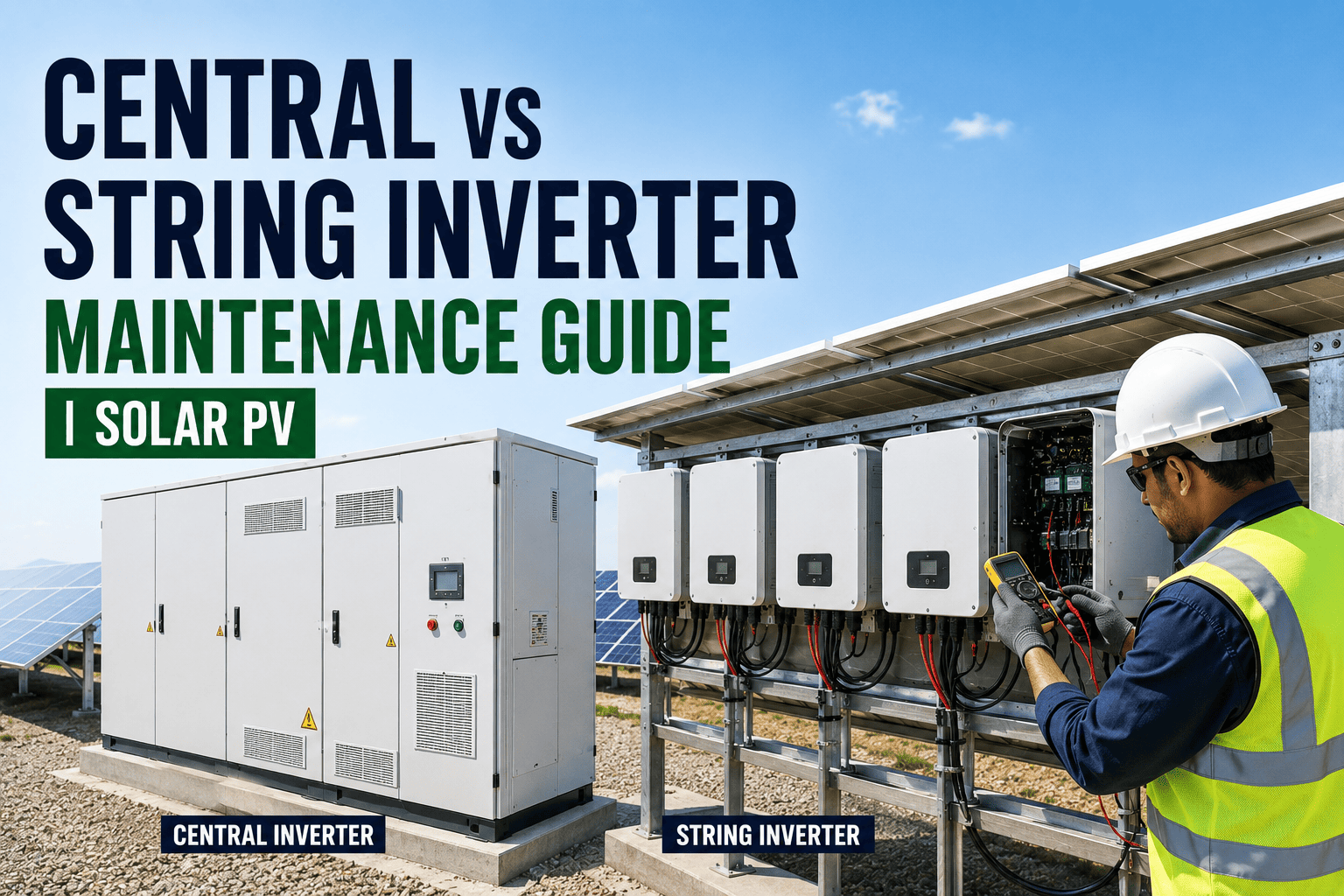
Two plants with identical panel counts can post very different uptime numbers, and the inverter architecture is usually why. A central inverter concentrates thousands of kilowatts through one cabinet, so a single blocked filter or failing fan puts the whole block at risk. A string inverter spreads that same risk across dozens of smaller units, trading one big failure for many small ones that are each easier to miss. Sign up to track inverter health, fault codes, and service history across every unit on site, central or string.
Why It Matters
Inverters convert every kilowatt the array produces, which means an inverter fault doesn't just underperform like a dirty panel, it can take an entire block offline. Heat is the common thread behind most failures, whether it's one central unit's cooling system or forty string inverters' fan filters clogging at the same time.
Central Inverters vs String Inverters, Side By Side
Central Inverters
Fewer, larger units per plant, usually liquid or forced-air cooled. A single fault can drop a whole block's output at once, so cooling and filter checks matter more per unit than per panel.
String Inverters
Many smaller units spread across the array, mostly fan-cooled. No single failure takes down much output, but with dozens of units, a failing one is far easier to overlook without monitoring.
Where Each Inverter Type Actually Fails
| Component |
Central Inverter Risk |
String Inverter Risk |
| Cooling System |
Blocked liquid loops or air filters overheat the whole cabinet at once |
Dust-clogged fan vents shorten fan life unit by unit |
| Capacitors |
Bulging or leaking DC-link capacitors are a known end-of-life signal in larger units |
Heat-cycled capacitors degrade faster in units mounted in direct sun |
| IGBT Modules |
Thermal cycling stress on a few large modules can cascade into a full shutdown |
Smaller modules fail more independently, limiting the blast radius per fault |
| Fans & Filters |
Redundant fans exist, but a filter change is a scheduled site visit either way |
Usually no redundancy, so one seized fan takes that unit fully offline |
Don't Let One Unit's Fault Hide In A Fleet Of Forty
Oxmaint logs fault codes, fan hours, and capacitor age against every inverter, central or string, so a quiet failure surfaces before it costs a block of output. Sign up for a free trial to start tracking your inverter fleet, or book a demo to see it configured for your site.
A Preventive Maintenance Routine For Both Types
Pull Fault And Event Logs Before Every Visit
Nuisance trips and repeated warnings usually appear in the log well before a unit actually shuts itself down
Clean Or Replace Filters On A Fixed Cycle
Dusty sites need this far more often than the manufacturer's default interval assumes
Track Capacitor Age Against Rated Life
Capacitors have a known service life under heat, so age is often a better predictor than a visual check alone
4
Thermal-Scan Cabinets During Peak Output
A hot spot on an IGBT or connection point shows up clearly on an infrared scan long before it trips a fault
How A Cooling Fault Turns Into A Shutdown
Filter Clogs
Airflow drops, cabinet runs a few degrees warmer
Thermal Derating
Inverter self-limits output to protect itself
IGBT Stress
Repeated heat cycling accelerates module wear
Fault Shutdown
Unit trips offline, full output lost until repaired
A clogged filter is a five-minute swap. Left running hot through a summer, the same cabinet can derate for weeks before it finally trips, costing far more output than the filter ever would have.
The Payoff
Units serviced on fault logs and thermal scans get a filter change or a capacitor swap for the cost of a routine visit. Units serviced only after they trip lose output for every day of derating that came before the shutdown, plus the cost of an emergency callout.
Frequently Asked Questions
Q
Are string inverters easier to maintain than central inverters?
Each individual string unit is simpler to service, but a plant can have dozens or hundreds of them, so tracking which one needs attention is the harder part without a monitoring system in place.
Q
What's the earliest sign of capacitor failure?
A visibly bulging or vented capacitor top is a late-stage sign. Earlier warnings usually show up as rising ripple readings or capacitance drifting from its rated value during routine testing.
Q
How often should inverter filters be checked?
Quarterly is a common baseline, but dusty or agricultural sites often need a monthly check, since a clogged filter is one of the fastest paths to a heat-related fault.
Stop Losing Output To Inverters That Fail Quietly
Oxmaint logs fault codes, filter changes, and capacitor age against every inverter on site, so maintenance decisions are backed by data instead of a guess. Sign up for a free trial to bring your inverter fleet online, or book a demo to see it configured for your plant.